


Today's post in honor of the 2011 Cephalopod Awareness Days. October 10th is Squid Day.

It's the happiest day of the year here at Squid A Day! To celebrate (or perhaps it was just a coincidence) I attended Litquake's New Writers Workshop to get some tips on publishing my squid racing novel. The writers, agents, and publishers on the panels were very generous with their time and their advice; I came away with pages of useful notes.
RETRACTION: I have decided to retract three blogs (Deriving … 4/5, 5/5, 6/5+1). I was unable to figure out a reasonable statement concerning gauge symmetry. When the blogs were initially written, I focused on the field equations, mainly the Gauss-like law, and ignored the force equations entirely. Finding a solution that works with the the field and force equations were not looked for. A consistent proposal should do all three things (fields, forces, and solutions) with grace. I have concluded it is not possible to achieve these goals with the Lagrangian as written, hence the retraction.

A particular kind of sugar molecule had a big impact on human evolution and may have directed the evolutionary emergence of our ancestors, according to a new study in  Proceedings of the National Academy of Sciences, the first evidence of a link between cell surface sugars, Darwinian sexual selection, and immune function in the context of human origins

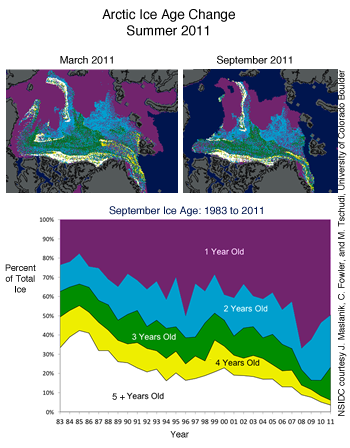
Arctic Ice October 2011

Ice extent, as measured down to 15% concentration, was only slightly above 2007 levels at the end of this year's melt season.  The ice is now about as thin as in 2007, or thinner, and the age of remaining ice continues to decline.  [edit: inserted missing clause - bolded.]
The summer sea ice melt season has ended in the Arctic. Arctic sea ice extent reached its low for the year, the second lowest in the satellite record, on September 9. The minimum extent was only slightly above 2007, the record low year, even though weather conditions this year were not as conducive to ice loss as in 2007. Both the Northwest Passage and the Northern Sea Route were open for a period during September.
Just supposing, what if you landed on a planet a lot like Earth and, bereft of modern technology, had to try and rebuild something that looks like home?   You could survive, sure, a little trial and error would get you food and shelter. Creating fire can be a little more challenging but it is just a learning curve. 

There are logistical aspects to rebuilding all of civilization, of course.  One person can't build a skyscraper (and why would you, since there would be no one else to live in it?) but what about something small, like a toaster?

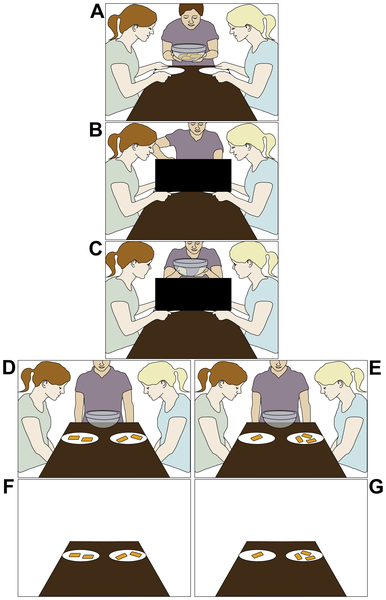
Cooperation has been/still is a major factor in the success of the human species, and in many others as well. Altruism and fairness are thought to play an important role in the development of cooperation. But when in a human life do these traits develop? For quite some time, it was thought that they developed fairly late in ontogeny.

Lately, however, there has been some incipient research into the moral and prosocial behaviors of young children. A new study investigated the sense of fairness and tendency to be altruistic in 15-month-old infants.

Fabrizio Tamburini (left) is an old friend - I have known him since 1976, when we both used to attend the gatherings of the newborn Associazione Astrofili Veneziani, at the Lido of Venice. The love for astronomy had brought us together, but we took different paths in our scientific activities. Fabrizio remained maybe more faithful to his old love for the universe, and is now a well-known and respected astrophysicist, who studies original ideas in the physics of photon propagation and more. I repeatedly invited him to write about his research here, but so far he has not accepted, mainly for lack of time... But I am sure he will soon.
Today's post in honor of the 2011 Cephalopod Awareness Days. October 9th is Nautilus Night.

500 million years ago, at the time of the Cambrian Explosion, there was no life on land. The ocean held plenty of trilobites and other animals, but  they all lived on the seafloor--almost nobody swam freely in the water. Plectronocerus, the first fossil cephalopod, evolved and crawled on the floor just like everyone else.
Laser Worms!

Laser Worms!

Oct 10 2011 | comment(s)

I'm back, after an extended hiatus due to my big move to Chicago to begin grad school.  I’ve been pummeled by work for the past month, so I’ll keep this one short and sweet.
In academia, the many, many advancements of women are not enough and so they are increasingly forced to massage statistics to make it look like they are oppressed, underpaid, blocked out of the hard sciences, etc.

In reality, women have it pretty good. Maybe even great. Men, as a special interest group, basically stink at being a special interest group because they were historically always the interest group, no 'special' needed.