






TORONTO, Canada and GRAND HAVEN, Michigan, September 25 /PRNewswire/ --

- RedMAX(TM) Products Provide Azulstar's Customers With Higher Speeds, Greater Coverage and Lower Cost Services

Redline Communications Group Inc. ("Redline") (TSX and AIM: RDL), a leading provider of WiMAX and broadband wireless infrastructure products, and Azulstar Inc., a privately held wireless service provider based in Grand Haven, Michigan, today announced the launch of MetraMax(R), Azulstar's new wireless broadband service offering. MetraMax runs on Redline's 3.65 GHz RedMAX WiMAX Forum Certified(R) system and will provide high speed and low cost services to communities in New Mexico.

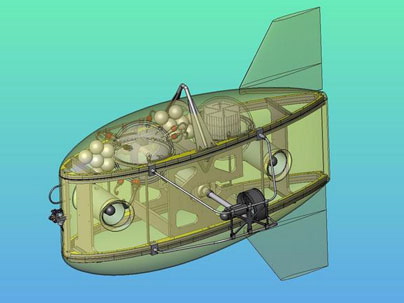
MIT researchers have designed a new robotic underwater vehicle that can hover in place like a helicopter — an invaluable tool for deepwater oil explorers, marine archaeologists, oceanographers and others.

The new craft, called Odyssey IV, is the latest in a series of small, inexpensive artificially intelligent submarines developed over the last two decades by the MIT Sea Grant College Program’s Autonomous Underwater Vehicles Laboratory. The Odyssey series revolutionized underwater research in the 1990s by introducing the thrifty and highly capable underwater robots. But the previous Odyssey vehicles still had one significant limitation: Like sharks, they could only operate while continuously moving forward.

How well students and schools succeed in mastering a curriculum that includes English Language Arts (ELA), mathematics, and the social and natural sciences, strongly influences how well the students fare in higher education. In California, student mastery in ELA and mathematics is measured with the California Standards Tests (CST).

Apparently, California is not doing very well. UC Riverside's Richard Cardullo examined several years of CST data and his mathematical models predict that nearly all elementary schools in California will fail to meet even the minimum requirements under the "No Child Left Behind Act of 2001" (NCLB) by 2014.

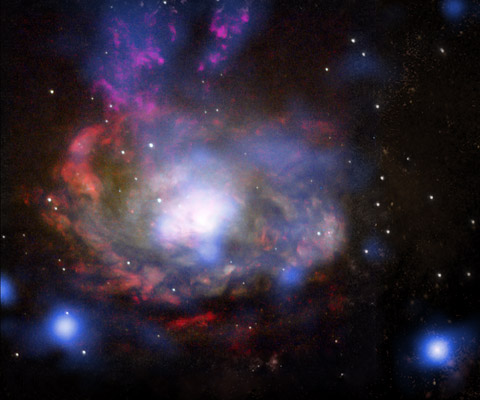
Over a decade after it exploded, one of the nearest supernovae in the last 25 years has been identified. This result was made possible by combining data from the vast online archives from many of the world’s premier telescopes.

The supernova, called SN 1996cr, was first singled out in 2001 by Franz Bauer. Bauer noticed a bright, variable source in the Circinus spiral galaxy, using NASA's Chandra X-ray Observatory. Although the source displayed some exceptional properties Bauer and his Penn State colleagues could not identify its nature confidently at the time.

It was not until years later that Bauer and his team were able to confirm that this object was a supernova. Clues from a spectrum obtained by ESO’s Very Large Telescope led the team to start the real detective work of searching through data from 18 different telescopes, both ground- and space-based, nearly all of which existed. Because this object was found in an interesting nearby galaxy, the public archives of these telescopes contained abundant observations.

Eight-year-old children have a much different learning strategy compared to twelve-year-olds and adults. Eight-year-olds learn primarily from positive feedback ('Well done!'), whereas negative feedback ('Got it wrong this time') scarcely causes any alarm bells to ring. Twelve-year-olds are better able to process negative feedback and learn from their mistakes. Adults do the same, but even more efficiently.

Dogs are often called "man's best friend," and rightly so because they never tell us we are wrong or interrupt us when we talk, are they are always happy to see us when we arrive home.

Some dogs take friendship to a whole other level by pulling us 1,100 miles in a race under the harshest conditions.

Since dogs became domesticated 15,000 years ago, they have worked with and lived next to humans, which may account for the special bond. While each of the 400 breeds and varieties have their fans, only racing sled dogs stand out as the ultra-athlete canine.

Today the new Global Carbon Budget was launched simultaneously by Global Carbon Project co-chair Michael Raupach in France at the Paris Observatory, and in the USA at Capitol Hill, Washington by GCP Executive Director Pep Canadell.

The Global Carbon Project posted the most recent figures for the worlds' carbon budget, a key to understanding the balance of carbon added to the atmosphere, the underpinning of human induced climate change. Despite the increasing international sense of urgency, the growth rate of emissions continued to speed up, bringing the atmospheric CO2 concentration to 383 parts per million (ppm) in 2007.

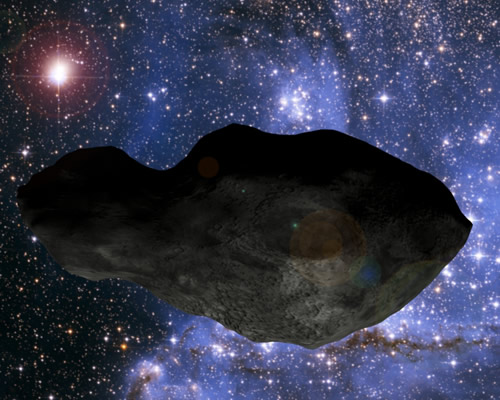
Some of the world’s rarest and most precious metals, including platinum and iridium, could owe their presence in the Earth’s crust to iron and stony-iron meteorites, fragments of a large number of asteroids that underwent significant geological processing in the early Solar System.

Dr Gerhard Schmidt from the University of Mainz, Germany, has calculated that about 160 metallic asteroids of about 20 kilometres in diameter would be sufficient to provide the concentrations of these metals, known as Highly Siderophile Elements (HSE), found in the Earth’s crust. Dr Schmidt will be presenting his findings at the European Planetary Science Congress in Münster on Monday 22nd September.

Siderophile (iron-loving) elements are a group of high-density transition metals that tend to bond with metallic iron in the solid or molten state. The HSE group includes rhenium (Re), osmium Os), iridium (Ir), ruthenium (Ru), rhodium (Rh), platinum (Pt), palladium (Pd) and gold (Au).

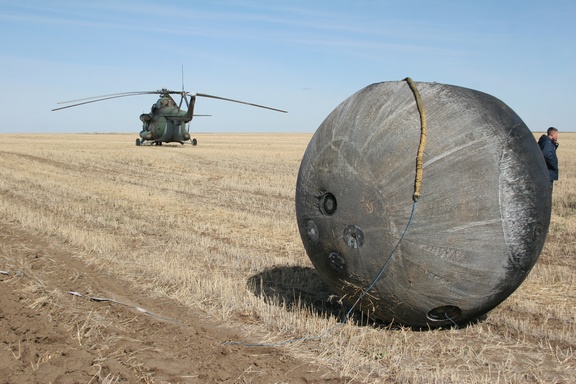
An artificial meteorite designed by the European Space Agency has shown that traces of life in a martian meteorite could survive the violent heat and shock of entry into the Earth’s atmosphere. The experiment’s results also suggest that meteorite hunters should widen their search to include white rocks if we are to find traces of life in martian meteorites.

The STONE-6 experiment tested whether sedimentary rock samples could withstand the extreme conditions during a descent though the Earth’s atmosphere where temperatures reached at least 1700 degrees Celsius. After landing, the samples were transported in protective holders to a laboratory clean-room at ESTEC and examined to see if any traces of life remained. The results were presented by Dr Frances Westall at the European Planetary Science Congress on September 25th.

Life has been discovered in the barren depths of Rome's ancient tombs but it's not zombies or Knights Templars protecting secret treasure; it's two new species of bacteria found growing on the walls, and though they're not protecting any treasure, they may be helping to protect our cultural heritage monuments, according to research published in the September issue of the International Journal of Systematic and Evolutionary Microbiology.

