




We come in peace. redgum, CC BY-NC-SA

By Seth Shostak, SETI Institute

A middle aged, male, investment banker arrives at the emergency department with complaints of nausea, vomiting, anxiety and tremor. At business lunches and then at home every evening, he was drinking too much so, worried about his health, he decided to quit drinking and had his last Scotch 24 hours before coming to the emergency room.

It's a common scenario in emergency rooms - a patient suddenly stops regular, excessive alcohol consumption and develops withdrawal symptoms.

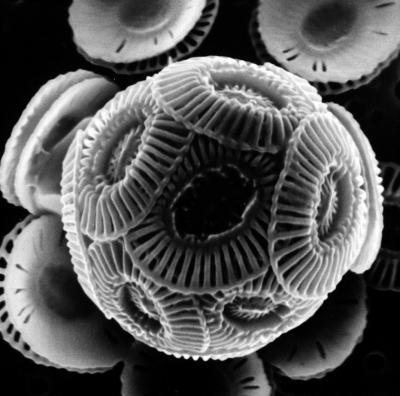
Some species of marine phytoplankton, such as the prolific bloomer Emiliania huxleyi, can grow without consuming vitamin B1 (thiamine), which contradicts the common view that E. huxleyi and many other eukaryotic microbes depend on scarce supplies of thiamine in the ocean to survive.

All living creatures need thiamine to live, as well as other vitamins. Organisms may produce some of their own vitamins, the way that human cells create vitamin D with help from sunlight, but sometimes they rely on other organisms to produce the vitamins they need and then consume them. For example, oranges and other fruits produce vitamin C, which humans need in their diets.

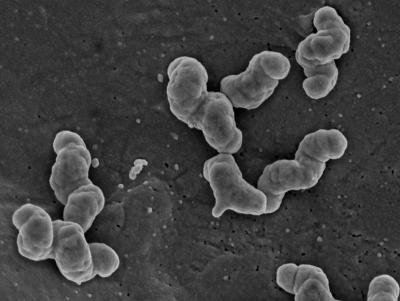
Nitrite-oxidizing bacteria are key players in the natural nitrogen cycle on Earth and in biological wastewater treatment plants but scientists have learned something new about how they are powered. 

For decades, these specialist bacteria were thought to depend on nitrite as their source of energy researchers have now shown that nitrite-oxidizing bacteria can use hydrogen as an alternative source of energy. The oxidation of hydrogen with oxygen enables their growth independent of nitrite and a lifestyle outside the nitrogen cycle. 

The exchange of chemical signals between organisms is considered the oldest form of communication.

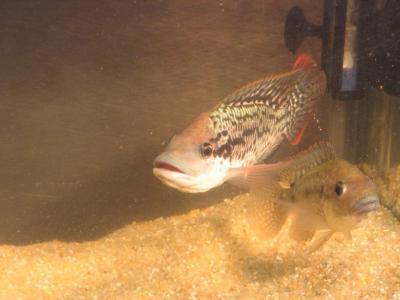
Acting as messenger molecules, pheromones regulate social interactions between conspecifics, for example, the sexual attraction between males and females. Fish rely on pheromones to trigger social responses and to coordinate reproductive behavior in males and females.

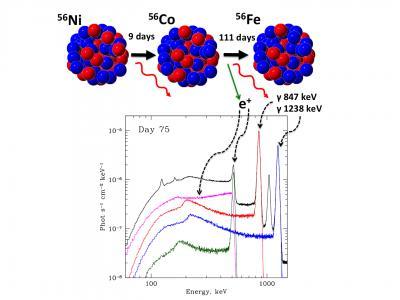
Astrophysicists have detected the formation of radioactive cobalt during a supernova explosion, lending credence to a corresponding theory of supernova explosions. 

The article's main author, Yevgeny Churazov (Space Research Institute of the Russian Academy of Sciences), and  co-authors, including Sergei Sazonov of the Space Research Institute and MIPT, reported the results of their analysis of data collected with the INTEGRAL gamma-ray orbital telescope, which they used to detect the radioactive isotope cobalt-56(56Co).

The rise of the Tibetan plateau, the largest topographic anomaly above sea level on Earth, is important for both its profound effect on climate and its reflection of continental dynamics.

For a new study, Katharine Huntington and colleagues employed a cutting-edge geochemical tool - "clumped" isotope thermometry - using modern and fossil snail shells to investigate the uplift history of the Zhada basin in southwestern Tibet. 

Using the Borexino instrument, located deep beneath Italy's Apennine Mountains and one of the most sensitive neutrino detectors on the planet, an international team of physicists has directly detected neutrinos created by the "keystone" proton-proton (pp) fusion process going on at the sun's core. 

The pp reaction is the first step of a reaction sequence responsible for about 99 percent of the Sun's power. Solar neutrinos are produced in nuclear processes and radioactive decays of different elements during fusion reactions at the Sun's core. These particles stream out of the star at nearly the speed of light, as many as 420 billion hitting every square inch of the Earth's surface per second. 

By George Veletsianos, Royal Roads University

The belief that technology can automate education and replace teachers is pervasive. Framed in calls for greater efficiency, this belief is present in today’s educational innovations, reform endeavors, and technology products. We can do better than adopting this insipid perspective and aspire instead for a better future where innovations imagine creative new ways to organize education.

Why wild animals genetically changed into domesticated forms has long been a mystery, covered by the blanket artificial selection reasoning.

A new paper in Science says that many genes controlling the development of the brain and the nervous system were particularly important for rabbit domestication.


