



The concept of quasiparticles was coined by Nobel laureate Lev Davidovich Landau, who used it to describe collective states of lots of particles or rather their interactions due to electrical or magnetic forces. Due to this interaction, several particles act like one single one.

The assumption has been that quasiparticles in interacting quantum systems decay after a certain time but the opposite is the case, according to a recent paper: strong interactions can even stop decay entirely. Collective lattice vibrations in crystals, so-called phonons, are one example of such quasiparticles.
With a new executive order, President Trump has done something that the science community has wished would have been done since the 1980s; he has ordered his administration to streamline the federal regulatory process for agricultural biotechnology so that every new product is not treated like a new invention.
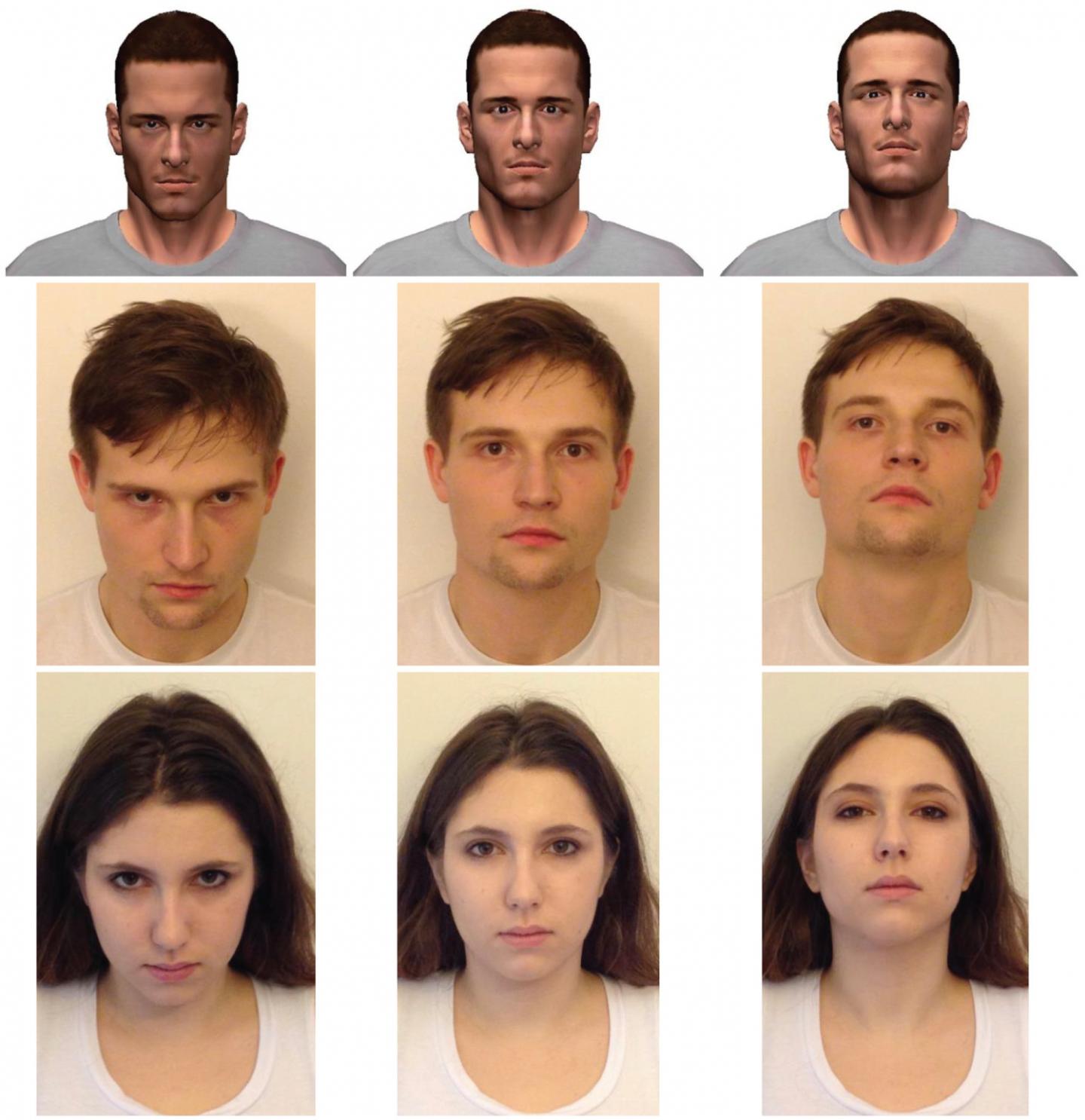
Social psychologists say we send out social cues not just with our facial expressions, but with the tilt of our heads as well.

An otherwise neutral expression looks more dominant when the head is tilted down. The authors speculate that is because tilting one's head downward leads to the artificial appearance of lowered and V-shaped eyebrows--which elicit perceptions of aggression, intimidation, and dominance.

But why does looking like a serial killer seem more dominant than someone with their head tilted back, a pose usually regarded as more confident? Dominant means something different to them than it does the public.
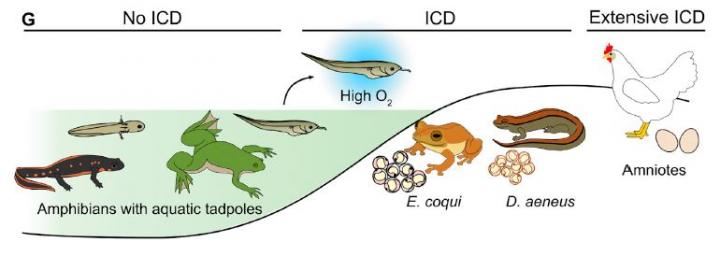
Free fingers have obvious advantages on land, and don't even get us started on opposable thumbs, but provides aquatic or gliding animals with more suitable webbed ones. But both amphibians and amniotes, which include mammals, reptiles, and birds, can have webbed digits. 

A new study has found that during embryo development, some animal species detect the presence of atmospheric oxygen, which triggers removal of interdigital webbing.

This is about that much publicized insect collapse in Puerto Rico, which the authors blamed on climate change. It turns out that they made a natural but rather big mistake, not correcting for the effects of Hurricane Hugo, which increased the numbers of birds and insects before one of their main data points. A more in depth analysis of the data finds no decrease, but rather, an increase of insects in the canopy with warming temperatures. It also finds an increase in numbers of frogs as temperatures increase.

A familiar table salt ingredient has been hiding in plain sight on the surface of Jupiter's moon Europa, finds a recent analysis. Using a visible light spectral analysis, planetary scientists have discovered that the yellow color visible on portions of the surface of Europa is actually sodium chloride, a compound known on Earth as table salt, which is also the principal component of sea salt.

The discovery suggests that the salty subsurface ocean of Europa may chemically resemble Earth's oceans more than previously thought, challenging decades of supposition about the composition of those waters and making them potentially a lot more interesting for study.

Cannabis, known as marijuana in the U.S., Cannabis has been cultivated for millennia in East Asia and like many drugs exported from there to become one of the most widely used psychoactive drugs in the world today.

But now archaeologists have tracked down its earliest known use: 2,500-year-old funerary incense burners from the Jirzankal Cemetery in the eastern Pamirs. 
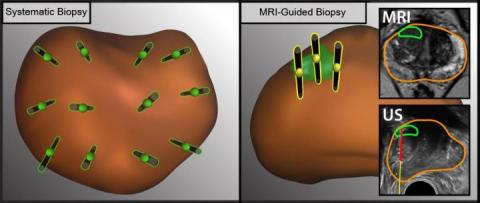
Each year, 1 million men in the U.S. undergo biopsies to determine whether they have prostate cancer because ultrasound imaging cannot clearly display the location of tumors in the prostate gland.

Ultrasound has been used to visualize the prostate in order to take a representative sampling of tissue to biopsy but with MRI doctors can see specific lesions in the prostate and only take tissue samples from those spots.

Why aren't those two sampling methods used in combination?

A multidisciplinary team has found that biopsy guided by magnetic resonance imaging increases the rate of prostate cancer detection.

Women will more often rush to the defense of mothers who give their kids formula, stick to the vaccine schedule, or who let their pre-schoolers play in the yard without a wall to protect them from predators they read about one time on the Internet. Women defend mothers against mommy shaming more often because a whole lot more women are also willing to shame mothers who don't buy food from the right store, clothe them in the right stuff, or act in a way social media zealots tell them not to do.

In my neighborhood, we call any guy who berates other fathers because they don't shop at Whole Foods or do give their kids vaccines 'that guy with no friends.'(1) But among moms the peer pressure is strong.


