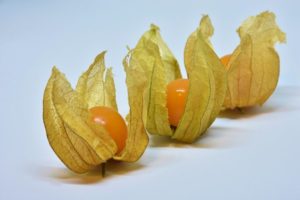
Few people have heard of the groundcherry because during legacy days of agriculture, when foods had to be optimized for various regions as easily as possible, it fared poorly compared to other farming crops due to undesirable characteristics, like falling on the ground and needing weeds.
Though people who sell the organic process think a limited monoculture past is worth paying a premium for, the future may belong to the groundcherry and other orphan crops, thanks to biotechnology and the gene editing tool CRISPR, the successor to legacy organic processes like Mutagenesis and transgenic options like Genetically Modified Organisms.
The world of particle physics is in turmoil because of a presentation by Alessandro Strumia, an Italian phenomenologist, at CERN's "1st workshop on high energy theory and gender", and its aftermath.
By now the story has been echoed by many major newscasters around the world, and discussed in public and private forums, blogs, twitter feeds. I wanted to stay away from it here, mainly because it is a sensitive issue and the situation is still evolving, but after all, why not offer to you my personal pitch on the matter? Strumia, by the way, has been an occasional commenter to this blog - you can find some of his comments signed as "AS" in threads of past articles. Usually he makes good points here, as long as physics is the subject.
Dog owners think dogs are exceptionally intelligent - a whole television show was made about a dog named Lassie who got humans out of all kinds of fantastic situations - while cat owners believe the same about their pets.
But are dogs smarter than other animals or pets? Not really, according to a review of over 300 papers which compared the brain power of dogs with other domestic animals, other social hunters and other carnivorans (which includes dogs, wolves, bears, lions, hyenas, and more).
Supreme Court nominee Brett Kavanaugh’s actions as a teenager are at the center of a public firestorm.
“I’ve been really troubled by the excuse offered by too many that this was a high school incident, and ‘boys will be boys,’ said Sen. Chris Coons during testimony by Christine Blasey Ford before the Senate Judiciary Committee on Sept. 27.
But Trump surrogates such as Kellyanne Conway have dismissed his actions are merely those of a "teenager.” The adult Kavanaugh cannot be held accountable, such logic goes, for these alleged youthful indiscretions.
On occasion there are renewed claims that even moderate alcohol consumption might "cause" breast cancer. As science advances so do claims about new ways to suggest harm. An example is recent claims about epigenetic alterations and lifestyle behaviors.
Yet there are flaws in such a simplistic approach to correlating one lifestyle option out of hundreds, like modest alcohol consumption, and breast cancer, which comprises 21 subtypes with each subtype displaying its own unique pathological signature.
Once upon a time, non-fat milk (the cream removed) was only used for fattening pigs. It was clearly a technological process to remove the cream but it is not considered "unnatural" - in 2012, the Obama administration even told schools to start serving it as a healthier alternative to regular milk. Meanwhile, the same administration delayed a salmon because it had a gene from a similar salmon that would allow it to grow all year 'round. The second technology was "unnatural."
Should we be afraid of artificial intelligence? For me, this is a simple question with an even simpler, two letter answer: no. But not everyone agrees – many people, including the late physicist Stephen Hawking, have raised concerns that the rise of powerful AI systems could spell the end for humanity.
Clearly, your view on whether AI will take over the world will depend on whether you think it can develop intelligent behavior surpassing that of humans – something referred to as “super intelligence”. So let’s take a look at how likely this is, and why there is much concern about the future of AI.
Christmas tree farms don't cause global warming, according to European Union politicians, and that is why Europeans have decided to meet their emissions targets by...burning wood.
Casual reader, be warned - the contents of this article, specifically the second part of it, are highly volatile, speculative stuff. But hey, that is the stuff that dreams are made of. And I have one or two good reasons to dream on.
The environment
The number of articles retracted related to nutrition now numbers unlucky 13 - and that bad lack shares one name in common: Brian Wansink, Ph.D.