After one quite frantic November, I emerged victorious two weeks ago from the delivery of a 78-pages, 49-thousand-word review titled "
Hadron Collider Searches for Diboson Resonances". The article, which will be published in the prestigious "
Progress in Particle and Nuclear Physics", an Elsevier journal with an impact factor above 11 (compare with Physics Letters B, IF=4.8, or Physical Review Letters, IF=8.5, to see why it's relevant), is currently in peer review, but that does not mean that I cannot make a short summary of its contents here.
Too much caffeine is bad for you. It's very risk to buy powdered caffeine for that reason. But it's addictive and people do it. Likewise, too much nicotine is bad for you and you can't shouldn't buy undiluted optically pure nicotine and start inhaling it.
But young people will do risky things. Some may smoke marijuana or cigarettes, some may get addicted to alcohol or drugs. Young people who take up vaping rather than opioids today are a lot better off than a generation ago.
The definition of "endangered" is vague but in no dictionary does it mean an animal that does not even live in a state must be placed there, with private landowners footing the bill for $20 million, in order to keep a creature from declining in population.
Peter Heine Nielsen, a Danish chess Grandmaster, summarized it quite well. "I always wondered, if some superior alien race came to Earth, how they would play chess. Now I know". The architecture that beat humans at the notoriously CPU-impervious game Go, AlphaGo by Google Deep Mind, was converted to allow the machine to tackle other "closed-rules" games. Successively, the program was given the rules of chess, and a huge battery of Google's GPUs to train itself on the game. Within four hours, the alien emerged. And it is indeed a new class of player.
There is an area close to the left ear, in the ‘temporal lobe’, that, when stimulated via strong magnetic fields, triggers religious feelings, visions of bright lights at the end of a tunnel, and, at a certain frequency, the feeling of the presence of somebody next to oneself, or somehow present, although subjects are in another room and separated from the researchers. This area is damaged in patients with the kind of schizophrenia that Vincent Van Gough suffered. His attacks of deeply religious visions started a few years before he died.
Nearly everyone is familiar with emoji, those popular icons that appear in text messages, emails and social media platforms. Emoji are often used as light-hearted adjuncts to text, or to soften the blow of a message.
Emoji can be viewed as overly simplistic in some contexts. For example, government officials were questioned when Foreign Minister Julie Bishop conducted an interview using just emoji, and described Russian President Vladmir Putin using an angry face 
Though CO2 emissions have plummeted in the United States, as developing nations achieve prosperity they will want air conditioners, sanitation and food - and those all require energy. They sure are not going to let already wealthy nations tell them they must be stuck with solar panels.
So climate change may still happen, at least if energy technology stops and fossil fuel use does not. If so, how will plant species will respond to climate change? A 16-year experiment may provide answers. Of course, the experiment is small, the size of two football fields inside the Garraf National park southwest of Barcelona, but it is home to many protected species. So even if it can't model an ecosystem it can model part of one.
In 2007, there was a ban that increased happiness for married women, but not men, according to the British Household Panel Survey.
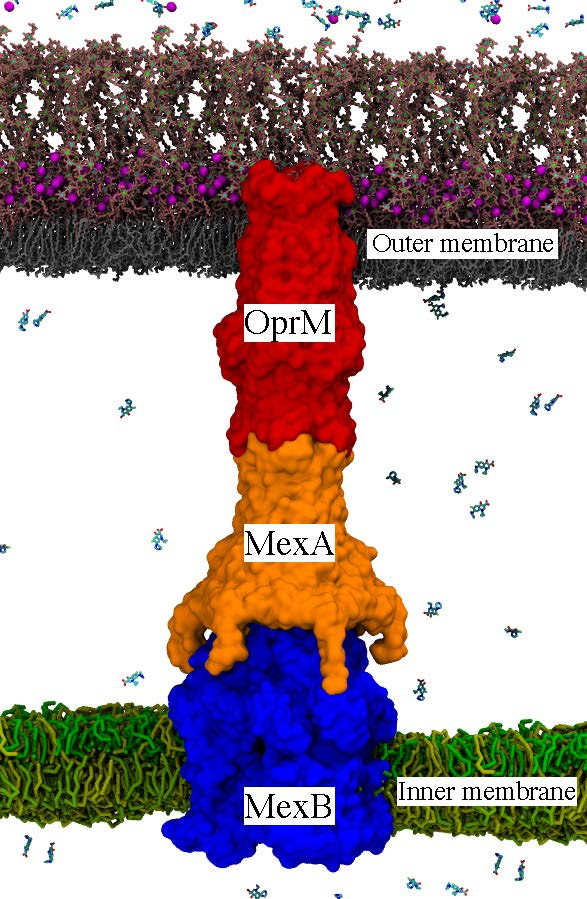
Transport proteins called efflux pumps, and their role in creating drug-resistance in bacteria, could lead to improving effectiveness of drugs against life-threatening diseases and perhaps even bring defunct antibiotics back to prominence.
When pharmacy professionals — rather than doctors or nurses — take medication histories of patients in emergency departments, mistakes in drug orders can be reduced by more than 80 percent, according to a recent paper.
Injuries resulting from medication use are among the most common types of inpatient injuries at U.S. hospitals, affecting hundreds of thousands of patients every year. Errors in medication histories can lead physicians to order the wrong drug, dose or frequency.