


That question is particularly relevant this week in light of numerous media articles reporting that exposure to a common chemical is linked to obe

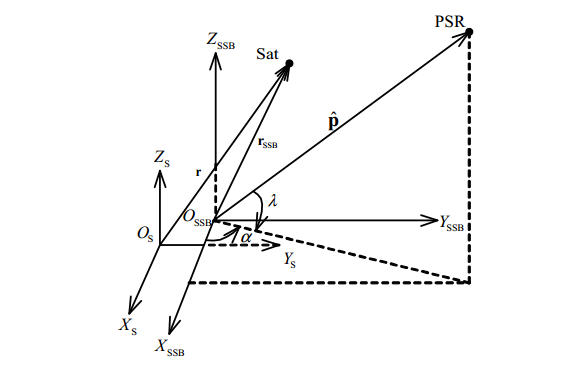
If you're not convinced that Planet Nibiru is not hiding in an multiverse pocket of dark matter or you just want to know the best way to get to constellation Boötes so you can ask the residents of Gliese 526 if they got that email you sent from Lone Signal, a new 'GPS' tool can help.

But baby steps first. 

What do a coffee machine, a mosquito, a fridge, gastric ‘flu and silence have in common?
One answer is sounds. Or lack thereof. And all have been researched by Dr. Salomé Voegelin, who is Sound Arts Course Leader, and member of CRiSAP (Creative Research into Sound Arts Practice) at the London College of Communication, University of the Arts, London.

People with Crohn’s disease, an immune disorder causing inflammation mainly in the intestines, have been forced to learn how to manage and understand their “gut.”

This, together with the chronicity of the disease and the pretty serious medications often required, means sufferers are usually very open-minded about new approaches to relieve debilitating symptoms. While the exact cause of Crohn’s is unknown, researchers believe there is a link to the “hygiene hypothesis,” the notion that there is an increase in autoimmune disease incidence rates related to clean, modern Western society.

Despite the shutdown of the Fermilab Tevatron collider, two years ago, and the subsequent disassembling of the glorious CDF detector, the CDF Collaboration continues to produce excellent physics results using the large bounty of data they have accumulated in the course of the past 10 years.

Today you can find in the Cornell arxiv a new paper by CDF, which describes a new very interesting measurement of a property of the top quark - the particle discovered at Fermilab in 1995, the heaviest known elementary particle we know. The property measured is the lifetime of top quarks.

A new hypothesis by computational physicists states that "zombie vortices" help lead to the birth of a new star.

They even find a way to make it about angular momentum, saying that variations in gas density lead to instability, which then generates the whirlpool-like vortices needed for stars to form.

Astronomers accept that in the first steps of a new star's birth, dense clouds of gas collapse into clumps that, with the aid of angular momentum, spin into one or more Frisbee-like disks where a protostar starts to form. But for the protostar to grow bigger, the spinning disk needs to lose some of its angular momentum so that the gas can slow down and spiral inward onto the protostar. Once the protostar gains enough mass, it can kick off nuclear fusion.

 Around the world, more than two billion tons of trash is generated each year. America leads the world in accurate reporting of trash levels and therefore has the distinction of throwing away more than any other country. Understanding why consumers throw recyclable products into the garbage instead of recycling them could help companies and public policy makers find novel ways to encourage consumers to step up their recycling efforts. 

A paper in the Journal of Consumer Research examines recycling habits and finds that consumers are more likely to toss a dented can or a chopped-up piece of paper into the trash than to recycle it.

A new case study outlines the instance of a 60-year-old woman who suddenly began hearing music, as if a radio were playing at the back of her head.

She couldn't identify the music but when she hummed or sang the tunes, her husband was able to recognize them. She didn't know the songs but she was hallucinating music familiar to people around her. 

Neurologists Danilo Vitorovic and José Biller of Loyola University Medical Center say the case raises "intriguing questions regarding memory, forgetting and access to lost memories."

It's best not to think too much about this before your next flight but, even while on the ground,aircraft landing gear can have shimmy oscillations during taxiing, takeoff, and landing.

Reducing the expression of a pair of proteins known as NEETs, NAF-1 and mitoNEET, significantly reduced cancer cell proliferation and breast cancer tumor size, according to a new paper.

NEET proteins transport iron molecules or iron sulfur clusters inside cells. The proteins naturally adhere to the outer surface of the mitochondria, the "power plant" that supplies cells with chemical energy. Mitochondria also play a role in a cell's life cycle, including its death.

The new research stemmed from a recent CTBP study of the shape and functions of one of the proteins, mitoNEET. The other protein, NAF-1, is closely related to mitoNEET.


