

Solar photovoltaic (PV) mass-market polycrystalline panels are typically about 15% efficiency. Pretty terrible, right?  Maybe, maybe not.  

Cars - both gasoline and electric vehicles, despite what the electric car hype machine claims - are only slightly more efficient at 15-25%, as is eating, and biology had all of existence to perfect that process. Ethanol and other biofuels, which were the darling of anti-science environmentalists in the Anything-But-Oil camp before electric cars because they are the ultimate solar-powered device, are a dismal <2% efficiency.
One of the more unusual cephalopods of my acquaintance (and I do not say this lightly) is the ram's horn squid, Spirula spirula. The species is named for its beautifully coiled internal shell, which is all most people (including me) have ever seen of it.

by Fritz Geller-Grimm
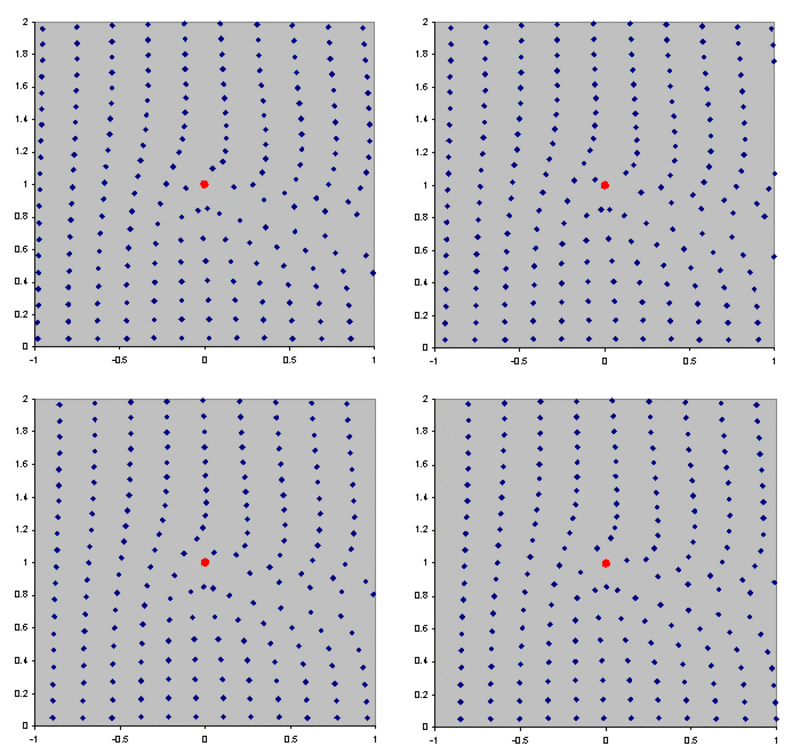
The universe expands. The galaxies, as they depart ever further from one another, are classically and even in Einstein’s special theory of relativity, described as dust particles: The universe as a cloud of dust expanding through space. However, in Einstein’s general theory of relativity, this same expansion is described as the universe itself expanding. There is no locally observable difference between these descriptions whatsoever – at least as far as we know. Classical expansion through space and Einstein’s general relativity describing expansion of space both fit together seamlessly.

How do airplanes fly? The next time you find yourself in an airplane, look around at your fellow passengers. How many of them would be able to explain to you what force keeps the hundreds of tons  of metal up in the air? How about yourself? Would you be able to explain this applied physics feat to the person sitting next to you?

Wings are simple and straightforward devices, yet misconceptions abound on how they work, and many people carry wrong perceptions on their lift-creating mechanism. The 'equal transit time' fallacy being the most prominent misconception in this area. 
In the autism community, there are plenty of heated opinions, which lead to even more heated attacks against those who believe differently. Some of the fiercest attacks come from those who believe in debunked treatments like facilitated communication. No other treatment offers such fantastic results. Autistic individuals who've been unable to talk, write, communicate are suddenly able to speak eloquently with the help of a facilitator. 
For a desperate parent, it must be a dream come true--one's child communicating finally, the words flowing. All those hopes and dreams suddenly realized, parents are not likely to be skeptical of this sudden flowering of skills.

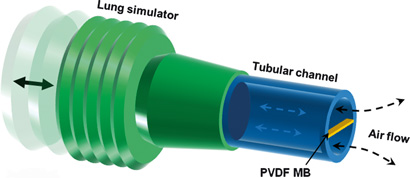
Breathe in, Breathe out, charge your implant. It sounds like a dream, but researchers at the University of Wisconsin-Madison report that the simple act of human breath can create enough energy to power a small biomedical device.
Time to ring in a new year with pressure waves.  We can see, but not, hear true sonic waves generated from stars, as the planet-hunting Kepler space telescope is finding.  We also get to learn a new word, 'astroseismology': the study of pressure waves in cosmic objects.  Sudden surface event on stars (such as our sun) can include flares, plasma ejections, and loops of plasma.  When the surface gets disturbed, just like dropping a coin into a pool, you get waves that ripple through the whole star.
Welcome to the world's slowest clock.

The 'argon-argon clock' works by measuring the ratio of the amount of radioactive potassium in a sample of rock to the amount of its decay product, argon. As scientists already know the half-life of argon's radioactive decay - 1.25 billion years - it can be used to date rocks back to the time of the formation of the Earth, some 4.5 billion years ago. The older a rock is, the more potassium has decayed and the more argon is found in the rock.

New research has been able to improve the calibration of the 'argon-argon clock' and that could mean up to a 1.2 per cent difference in a rock's age from the original calculation.
It's not correlation/causation (though less and less is, since science has learned that causation is now teaching us less and less about how to actually fix things) but some in the social fields are claiming there are biological truths to stereotypes about the left and right, like that progressives are self-indulgent and clueless on national issues while conservatives are fear-mongers with a fetish for exaggerated dangers.
One of the most effective arguments for science solutions to agriculture issues is the misuse of pesticides.  It's one area where activists and scientists agree.

Brown planthoppers are one of a rice farmer's worst fears. Considered a major scourge in rice-producing countries, planthoppers cause considerable damage by sucking sap from rice plants, causing them to wilt and die. They also transmit three viral diseases that stunt rice plants and prevent grain formation. The obvious solution of the past few decades has been to rely on pesticides but beneficial insects that prey on planthoppers are killed inadvertently when insecticides are misused or are used indiscriminately.