


It's two weeks until Christmas and if you are a Science 2.0 reader, that means it is at least time to think about shopping for a Christmas gift.  Demographically, not a lot of you were lining up to gratefully overpay for Apple's latest offering or whatever else obedient Oprah viewers are expected to buy on Black Friday.

Here are three nifty ideas that are science related for your consideration, in three age ranges.  If you just like gadgets you can check out the Top Gadgets of 2011 instead.

For The Young 
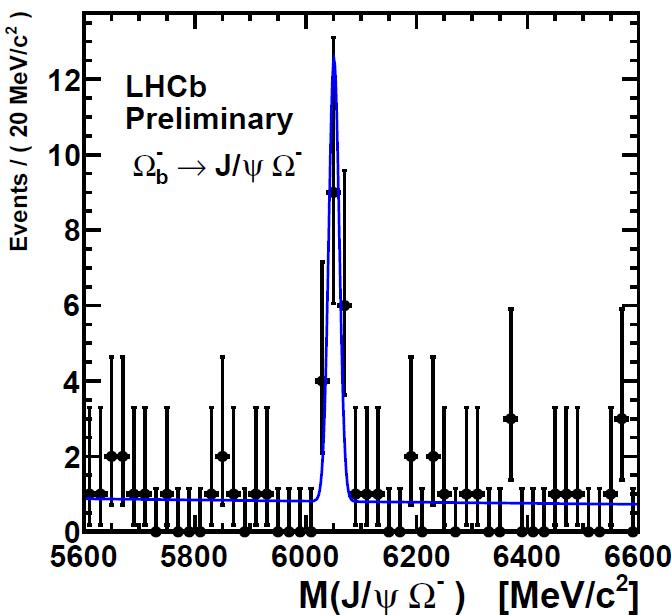
Another confirmation of correct evaluation of controversial HEP measurements awaited me just after the Higgs evidence was presented at CERN. I am sort of embarassed by this compulsory self-promotion, but this is my blog so I will excuse myself ;-)

So the story is the following... Some of you might still remember the controversy over the Omega b discovery, at the Tevatron a couple of years ago.

So much sound and fury over the Higgs Boson, signifying what? A complete understanding of the fundamental constituents of the world in which we live? Of the universe of which we are an integral part? No … and yes.

High-energy physicists at CERN, the European Center for Nuclear Research, announced this week they are closer than ever to detecting the apparently hallowed boson — or possibly it is called God Particle merely for mass consumption. Its quantification would at once provide breathtaking insights into the infinitesimal domain affecting Earthly life and to the composition of the entire universe, a broad range, indeed.

Rewards of Basic Science

Cancer cells are, well, cancer cells; cells that grow uncontrollably in the host, and ignore all patterns and signals that govern the structural integrity of tissue and organs.

Much research in the last several decades have defined molecular features attributed to cancer cells, and more importantly what specifically can kill them. Decades of work goes by with the discovery of drugs that change the lives of many individuals and families touched by this disease. Yet despite the euphoria of success, scientists come face to face with a troubling problem of cancer cell resistance to treatment.

The same goes for rabbits thriving in Australia.

Rabbits??

The human brain is very good — quite excellent, really — at finding patterns. We delight in puzzles that involve pattern recognition... consider word-search puzzles, the “Where’s Waldo” stuff, and the game Set.

Slow Food's Michele Rumiz has posted a ruminative piece about squid fishing on Unije, a Croatian island in the Adriatic Sea:
Every November, the island calls its aficionados to fish squid (called lignjada in Croatian). . . . No sounding leads, nets or electronic devices: they fish using togna - line, and totanara as bait. This is why the more than 20 fishermen involved could manage to fish only a little more than 50 kg of squid in 4 hours. It might seem like a lot, but it's nothing compared to an industrial fishery, which would get the same result in a few minutes with a much smaller crew.
Squids are mercurial, unpredictable creatures of extremes.

Call them abundant, call them quite rare
It depends on the climate--the sea and the air
One species expands, another contracts
These are the data, these are the facts
Sometimes it feels like they're growing too fast
But it helps them respond and it's why they can last
Through environmental change . . . 
Quantum physics describes a universe that is profoundly mysterious. Einstein, arguably the most revolutionary thinker of modern times, struggled greatly with quantum theory. This groundbreaking new perspective, ironically triggered by his own early work, simply didn't fit his views on physical reality. Would quantum theory not have been as successful as it was, Einstein could have brushed it aside. But from the early days, the theory was immensely successful. And no one around him seemed to have any problems with it. Einstein must have felt lonely at times, but he was convinced enough in the power of his own reasoning to persist in his skepticism towards quantum physics.
Eilam Gross is a professor of Physics at the Weizmann Institute of Science of Rehovot, Israel, and a distinguished member of the ATLAS collaboration. That makes him a competitor, since I work for the other experiment around the ring, CMS. But Eilam is also a colleague, especially since we are members of the Statistics Committees of our respective experiments and we cooperate in a joint group to try and converge on common practices for statistical procedures in data analysis at the LHC. Ah, and- I forgot to mention he is the convener of the ATLAS Higgs group| So I am very pleased to feature his own take on the LHC results on Higgs searches...

It isn't just Americans concerned about science, though Europeans seem a little dramatic about it.   Currently, America can only employ 16% of its Ph.D.s in academia, what most academics regard as 'science', so there is a glut of post-docs and not enough grants to give them all jobs, but Europeans have a different sort of problem - young people are not going into science at all.

