


A computer that can learn?  There hasn't been meaningful improvement in robotics in 40 years and no AI improvements in 25, just faster chips doing things the old way, but researchers may have gotten a little closer with a a computer chip that mimics how the brain's neurons adapt in response to new information. This plasticity underlies many brain functions, including learning and memory.

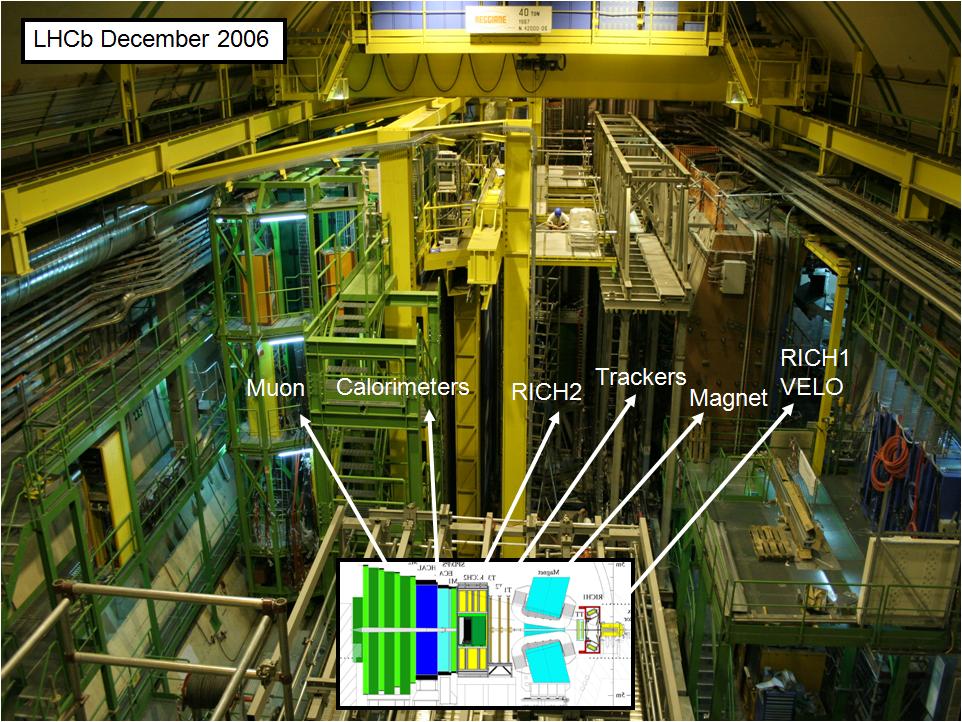
Today I wish to briefly discuss a recent important measurement produced by the LHCb collaboration, a measurement of CP violation in the decay of charmed mesons. Before I do, I think I need to explain some details of the LHCb experimental arrangement, because it is different from what most readers here are familiar with.

And, update: rather than putting it at the end, I prefer to link Resonaances' post on the same subject here this time - he wrote about the matter yesterday and did a much better job than I do below. Sorry for noticing it after posting mine!

Some pedestrian kinematics

Scientists were able to curb weight gain, improve metabolism and improve the efficacy of insulin in mice by engineering them to express a specific human enzyme, IKKbeta, in their fat tissue, but there was a significant cost; widespread inflammation.

The relationship between fat, inflammation, and insulin performance is complex. The conventional wisdom is that obesity leads to inflammation which contributes to insulin resistance. In this study, the researchers changed the sequence of events for transgenically engineered mice by inducing inflammation via the enzyme IKKbeta in their fatty tissue before they were obese. The result for metabolism was much more positive than for control mice who were left unaltered but were fed the same diets.

A prehistoric bronze artifact made from a cast has been found in Alaska, apparently a buckle.

There was no Bronze Age in Alaska, though it existed several thousand years earlier in Europe and Asia.  Perhaps some of the earliest Inupiat Eskimos in northwest Alaska, thought to have migrated into Alaska from adjacent Siberia some 1,500 years ago, might have brought the object with them from the other side of the Bering Strait. The Inupiat Eskimos are believed to have occupied Cape Espenberg from about A.D. 1000 until the mid-1800s, said Hoffecker. They are part of the indigenous Eskimo culture that lives in Earth's circumpolar regions like Alaska, Siberia and Canada.

The enemy of my enemy is my friend, an old saying goes.  Roman, Arabic or Chinese, it doesn't matter who claims to have credit for immortalizing it first, people have known it to be true since there were more than two people.

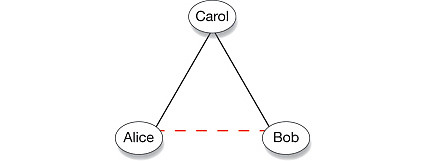
Since physicists love Alice and Bob, we can make a psychological dissonance graphic also by introducing a third character, Carol.  If the solid lines are positive and dashes are negative, there is equilibrium as long as everyone is an enemy or everyone is a friend.  It is where there is one enemy that games of "Risk" really get played.
"Fool Me Twice" is the title of a new book on science and politics by Shawn Lawrence Otto. Subtitled "Fighting the Assault on Science in America", it addresses a topic which is often presented as a kind of problem to be solved to gain scientific credibility but is rarely considered as closely as it needs to be.  Otto begins by discussing some common incidences in politics and initially appears that perhaps an element of political bias is present in these arguments.

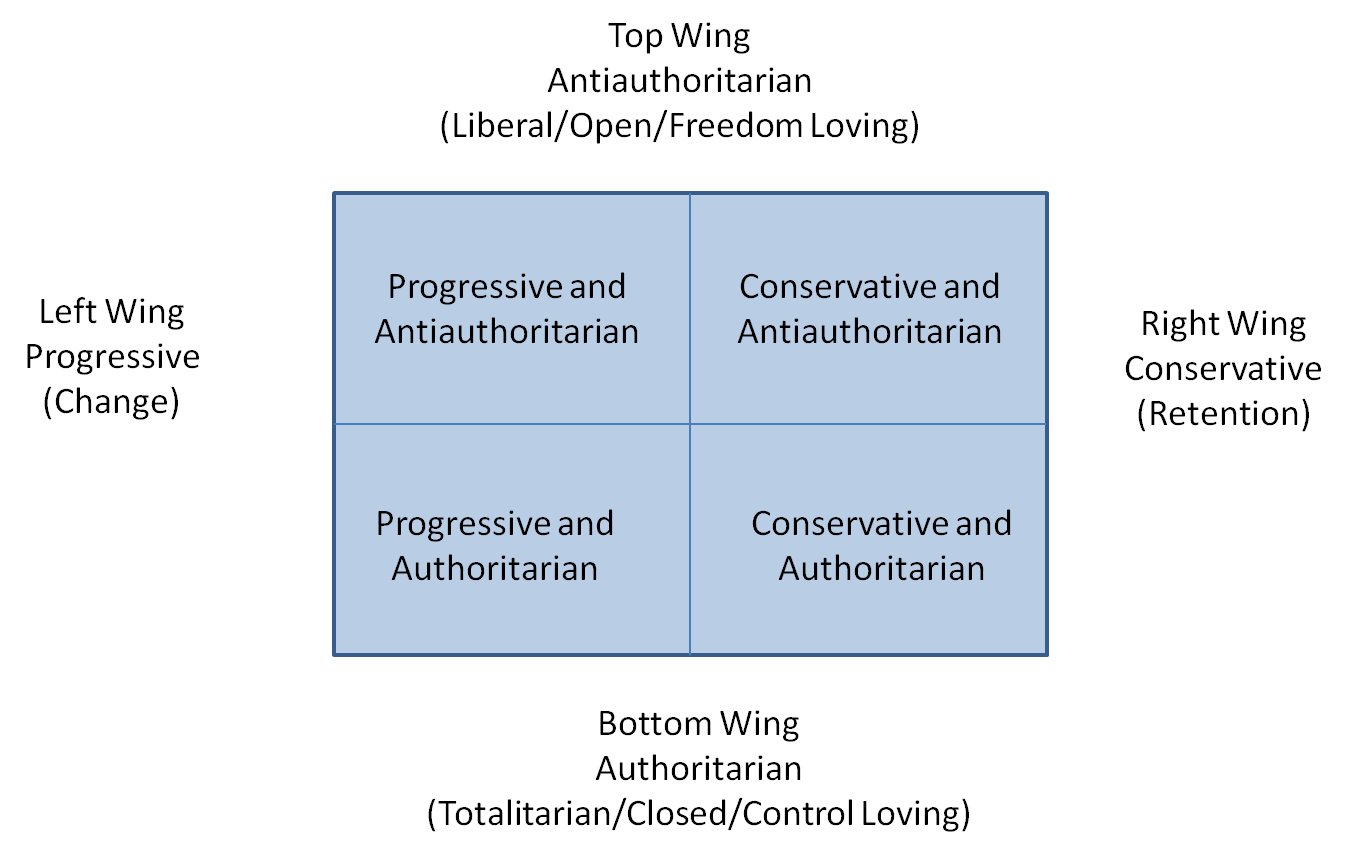
However, after a brief discussion of politics he introduces a different view of the political landscape that extends beyond simply progressive and conservative labels, by connecting them to the more fundamental philosophical views of authoritarian and antiauthoritarian perspectives.

Biodiversity is declining, and is likely to continue along the same path unless something is done about it. And to effectively do something about it, it appears that large investments are required. These substantial investments will probably result in a critical assessment of the science underlying the current and near-future efforts. After all, people and governments like to know where their money goes. This led to a survey among conservation scientists, of which the results have recently been published in the journal Conservation Biology. In the words of the author:

Is the author of 'open notebook astronomy' an idiot?  Over at 365DOA, there is a full article on open notebook astronomy.  What is open notebook?  Making your data and your work visible, rather than only presenting the subset you find personally relevant.

How does this help science?  Well, I could re-imagine the above article, but without openness.  Instead, I just present the parts that I think are relevant to my argument that the author of open notebook astronomy is, indeed, an idiot.

Red blood cells regenerate every four months but the lining of the intestine regenerates itself every few days. The cells that help humans absorb food are constantly being produced and the various cell types that do this come from stem cells that reside deep in the inner recesses of the accordion-like folds of the intestines, called villi and crypts. 

Like ancient burial crypts, these adult stem cells are something of a mystery. Two types of intestinal stem cells have been proposed to exist but the relationship between them has been unclear. One type of stem cell divides slowly and resides at the sides of intestinal crypts. The other divides much more quickly and resides at the bottom of the crypts.

The last few years have seen a real spike in end-of-the-world conspiracy theories.  Why?  More asteroids, more flares, more earthquakes?  No, just more Internet to talk about them, which gives bored news media something to talk about and bored science sites more news media to debunk.

At least one end-of-the-world scenario for 2012 has been eliminated already - like the Christmas shopping season, people are pushing debunking the apocalypse farther and farther back and science is already eliminating 2012 apocalypses before 2011 is even over.  Sheesh.  When will we learn to just enjoy the anticipation?