
In claims about math performance among females, and the sociological implication that unknown  cultural pressure in schools made the mentally malleable fairer sex believe they couldn't do math even if they could, there was always one inconvenient truth  - in America, over 70% of teachers are women, so if there was sexism women were doing it.

A study at the University of the Basque Country finds a more pervasive link between the sexist attitudes of mothers and that of children - and gender and the family's socio-economic and cultural level to sexism. Mothers teach more gender than discrimination than fathers.

Imagine if a journalist sent their story to former Republican Vice-President Dick Cheney to 'check the facts' - what would the outcry sound like from other journalists and the public?

Although I went on record that the reportedly faster than light neutrinos from CERN to OPERA will likely go away as mere systematic error, and although my very own resolution of the EPR paradox rejects superluminal phenomena even in non-local quantum entanglement, it is nevertheless quite possible that speeding particles are here to stay and perhaps expected (especially with neutrinos) for a number of reasons.

Nothing says science like a beetle humping a beer bottle - and it earned Professors Darryl Gwynne and David Rentz a coveted Ig Nobel prize.

If you have been living under the science equivalent of a rock, you may not know the Ig Nobel prizes are parodies of the Nobel kind and are presented annually by the Annals of Improbable Research.

Cornelius McGillicuddy, Sr., better known as Connie Mack, once said that pitching is 75 percent of baseball.  He was speaking from experience, not data, and looks can be deceiving, as people who think a curve ball move two feet can attest, but science is about understanding the world according to data, and that includes baseball.   The data say he is wrong, according to a new analysis by a University of Delaware professor. Pitching is just 25 percent of a team's success.

A recent study fed rats homobrassinolide, found in the mustard plant, which produced an anabolic effect, and increased appetite and muscle mass, as well as the number and size of muscle fibers.  

So maybe you can get ripped by gardening a little more. Homobrassinolide, a type of brassinosteroid found in plants, given orally to rats triggered a response similar to anabolic steroids, with minimal side effects. In addition, the research found that the stimulatory effect of homobrassinolide on protein synthesis in muscle cells led to increases in lean body mass, muscle mass and physical performance.

Efforts have long been underway to make the Système Internationale d'unités (SI Units) more accurate. If you know your science history, SI units were devised during the French Revolution as an alternative to the British System.   And so the French Academy of Sciences was tasked with the new system and promptly got the whole thing wrong.

But SI units caught on and so efforts have been ongoing to make them more accurate.  Scientists like the idea to relate all of the unit definitions to fundamental constants of nature, making them stable and universal and giving them closer links to each other and the quantities they measure. 

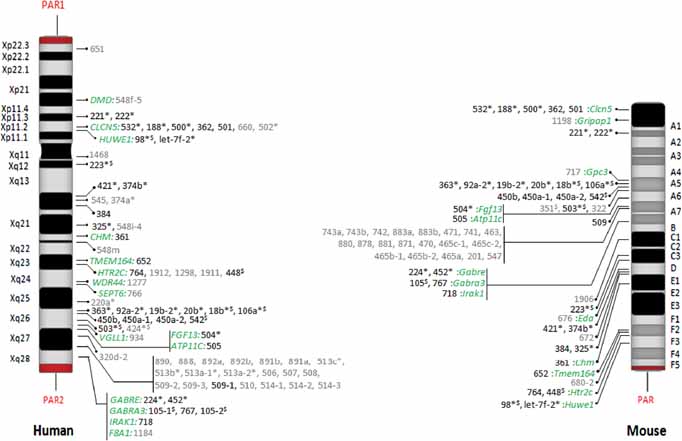
Well, according to a new study, blame the micro RNAs (miRNAs) linked to the X chromosome. The study, published in  BioEssays, investigated the observation that women live longer than males and are more able to fight off shock episodes of sepsis, infection or trauma. Thus, the researchers from Ghent University, Belgium, decided to take a look at the X chromosome and the miRNAs linked to it.

Tomorrow is the last day on duty. For twenty-six years the Tevatron collider, the four-mile-long accelerator of the Fermi laboratory in Batavia (IL), has provided the CDF and DZERO experiments with proton-antiproton collisions at 1.8 and then 1.96 Tera-electron-Volts, allowing the investigation of fundamental physics at the highest available energy.

I received today a very nice video which commemorates the Tevatron collider. The video was produced by a colleague, Rob Snihur, together with an artist friend of his, Maria Scileppi. I hope you like it! A text is also available on Maria's site.
Drawn by the newly arrived throngs of Humboldt squid in Southern California, an underwater photographer hopped in the water with them to snap some photos.


They're smallish for Humboldts, but note how he's grabbing this one--and he didn't get bitten, not even a little bit!

Of course, Schwartz was not without trepidation, especially when he snapped this shot:

