Thomas Edison did a lot right but there is one thing he got very, very wrong.
Namely, a talking doll that was sure to be an inspiration for generations of future horror movie fans. It was a bold idea, of course, Edison had a lot of those, but sometimes even a marketing juggernaut can't make something work for the public given technological limitations - we are also talking to you, 3-D movie makers.
Is This A Fishing Expedition ?
In legal circles, a 'fishing expedition' is an illegal attempt to discover unspecified information which may, perhaps, be prejudicial to one party in a legal case. It is illegal because just about everybody has things in their possession which might be evidence of breach of some law or other - however trivial, archaic or obscure.
Currently in the news1 is the fact that wildlife biologist Charles Monnett is under investigation by the office of the inspector general at the US department of the interior. News stories have reported that the investigation concerns a study2 of polar bear deaths.
The Sacramento Bee now reports as follows:
One fundamental
myth of gifted education is "you can't put all the smart kids together, because the less-smart need the smarties around to challenge the others". You can reword that as "it's okay to drag down the smarter kids for the sake of the group", but let's tackle the basic premise first. Does the presence of smarter kids help the middle of the Bell Curve do better?
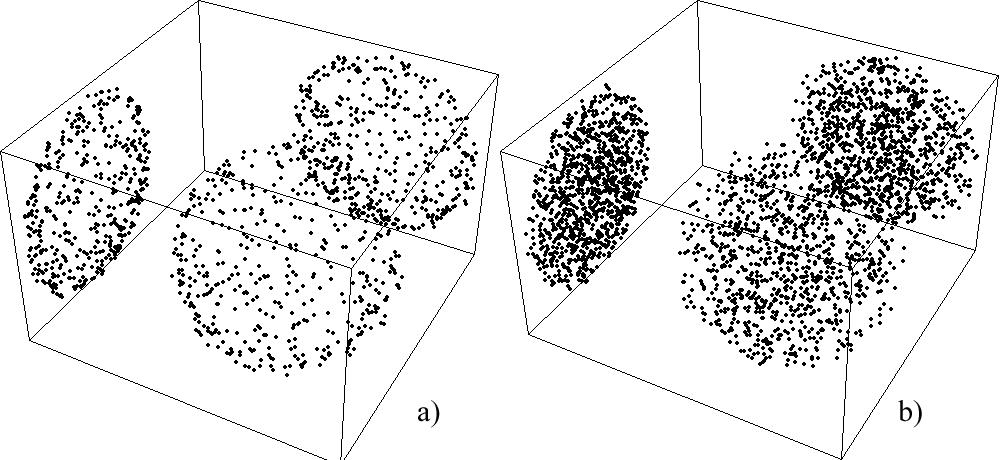
The most prestigious journal in the field of microscopy published an article by us this year and the work also already spawned a book chapter. Apart from the work not being critical of anything and having many cute pictures, the reason for it making it into a respectable journal may be partially due to it actually being interesting:
I oppose any and all forms of censorship. At least so I thought.

(www.web-censorship.org)
Now, I’m not so sure anymore. Don’t get me wrong, I still honestly think I do, but I am beginning to question whether my actions corroborate this, or, in fact, disprove my words and thoughts.
But...but...you have to love journalists, according to journalists. Only we hold government accountable and gotcha videos and bloggers rehashing what we come up with or they see in press releases can't be the same thing, they insist.
Well, it can, actually. Journalists stopped being trusted guides long ago and the public caught on. Journalists can complain about how much more vitriolic the discourse has gotten, but that's really only because the Internet has made it possible for both sides to get coverage.
"The miroir des simples âmes" Marguerite la Porete
The first of June 1310, in Paris, the heart of medieval culture, to the mill the Saint-Antoine, after the burning of 54 Templars sentenced for heresy, Margherite la Porète was burnt alive as heretic together with his book "The miroir des simples âmes" (the mirror of simple souls), of which the Church ordered the destruction.
"Le miroir des simples ames anienties et qui seulement demeurent en vouloir et desir d'amour" today represents one of the vertices of religious thought speculative, a manifesto of the nobility of the soul.
Sometimes how humans trade goods are as important as what is traded. Even when it comes to trading dead humans.
Human cadavers are a legitimate market? Sure. Commerce in human cadavers was created centuries ago and is done now by medical schools because of the need to train future doctors in anatomy, requiring the dissection of a cadaver. Finding an adequate supply of cadavers is an ongoing challenge, one which has been answered by both academically-housed programs and by independent, for- and non-profit ventures that are not affiliated with higher education or research institutions.
And we have all seen "Frankenstein" - sometimes small business owners get involved.
Sheng Ding, PhD, has shown a new method for transforming adult skin cells into neurons that are capable of transmitting brain signals - one of the first documented experiments for transforming an adult human's skin cells into functioning brain cells.
Ding, of the Gladstone Institutes, said his work builds on the cell-reprogramming work of another Gladstone scientist, Senior Investigator Shinya Yamanaka, MD, PhD. Yamanaka's 2006 discovery of a way to turn adult skin cells into cells that act like embryonic stem cells has advanced the fields of cell biology and stem-cell research.