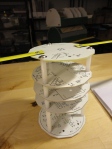





The question 'what can you do with such a tiny satellite' has many answers.  This week we're looking at Calliope's faster, cooler cousin, the ion-drive testing platform called FRETS1.

An ion engine in a satellite the size of a soda can

Frets1 TubeSat
Ignaz Venetz - Climate Change Pioneer - #3


There is no such thing as a perfect translation.

En effet, on peut être utile sans atteindre à la perfection;

Agenda, ou tableau général des Observations et des Recherches dont les résultats doivent servir de base à la théorie de la Terre, H. B. de Saussure, 1796.

This article contains my translation of Ignatz Venetz's 1821 prize-winning Essay on the variations of temperature in the Swiss Alps - Memoire sur les variations de la température dans les Alpes de la Suisse

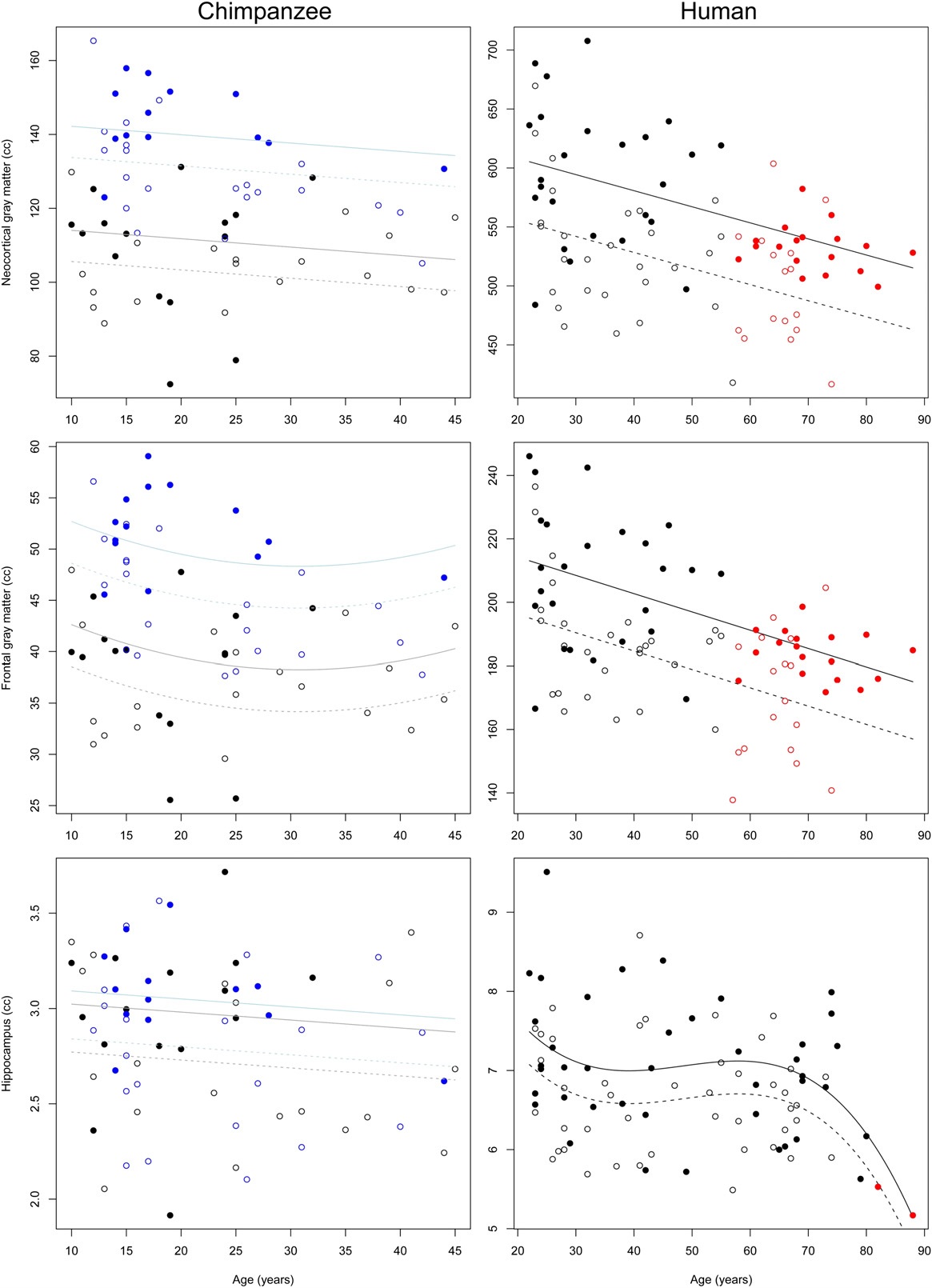
Age does  a lot of things to us. And to our brains, which shrink when we grow older. Those incredibly complex neural networks inside our skulls not only shrink, but they also become more susceptible to scourges such as dementia and Alzheimer’s disease. People who do not suffer from these cognitive dysfunctions, also show aging effects in their brains, such as the accumulation of amyloid-beta plaques.

To trace the evolutionary roots of the aging brain, researchers have previously investigated whether similar effects occur in the brains of rhesus monkeys (which diverged from the ‘human lineage’ about 30 million years ago). These primates showed only very limited effects of age in their brains. So, the mystery remained.

Occasionally, my interests in the psychology of belief and my love of sci-fi intersect. Imagine if you will my howling with disgust when one of my favorite shows perpetuates the 10% myth of brain use (and they all do it!). 

Last night, we watched "Rules of Engagement," a third season Stargate SG1 episode in which Apophis has rounded up a bunch of young men and has them training to be infiltrators; SG1 gets stunned by them when they gate to the planet and think that the men in military uniforms are a missing SG team.
With the end of the space shuttle, we may also be seeing an end to manned space travel as a science endeavor.  I am not saying we shouldn't send people into space, we certainly should, but it should be just that - a bold voyage into the unknown and not rationalized with science, where it is not a very good one.  Robots are cheaper and better and the Congressional hearings are less messy if a robot dies.

President Obama likely agrees about robots, since he canceled the manned successor to the space shuttle, the Constellation project and there is no valid replacement in sight.

Lets gamble; participating costs you only 50 cents per game. The odds are in your favor! Two out of three times, you win and get a dollar. So we start playing, and it seems as if we walk along time, every game we get to a point in the road where it splits into three paths, two of them are winning one-dollar branches, one is the zero-dollar branch, there we toss a three sided fair die, then we ‘find ourselves’ in one of the three branches. However, I cheated.

Is it possible to bring up a squid-related topic about which I have nothing to say? So far, the answer seems to be no.

I'm not sure if I should be proud--or find some more hobbies.

Anyhoo, today's blog-babble is tipped off by odori-don, the dancing squid rice bowl. (That linked article includes a video, for the morbidly curious.)
This paper introduces a new model of physics. It is based on logic. It uses the congruence between the logic of quantum physics and a mathematical construct that got its name from David Hilbert. The Hilbert book model extends this construct such that fields and dynamics also fit in the new model.

Introduction

Every time when I read an article about the phenomena, which occur far from us in the universe, I'm surprised about the attention that this Farawayistan gets compared to the phenomena in the world of the smallest. Everything that happens there is dismissed with collective names such as “quantum mechanics” and “field theory”. Rarely or never the treatise goes deeper. In this sub-nano-world spectacular images, such as appear in stories about the cosmos are not available.

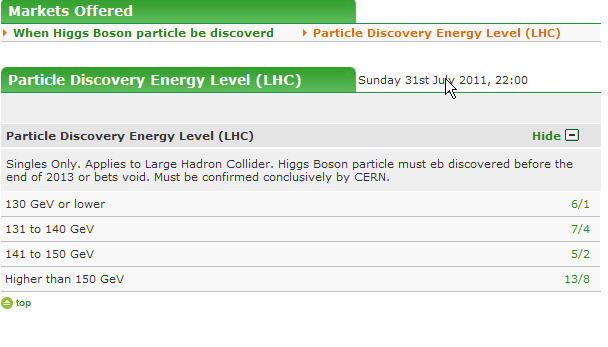
The LHC and its lower-energy counterpart in the US, Tevatron, have reported some important Higgs news this past week - details of six searches for the Standard Model Higgs boson at CERN and another in Chicago coming up.

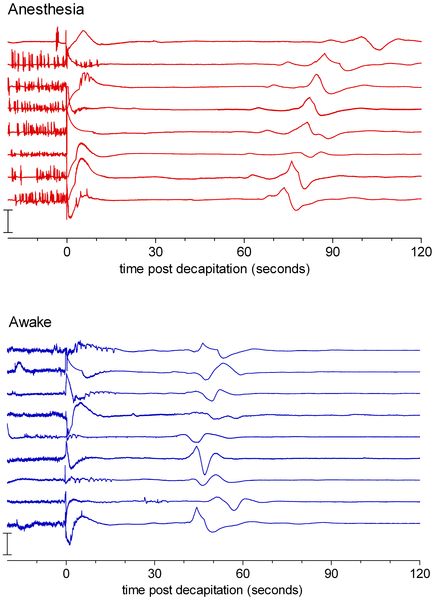
A perhaps somewhat lugubrious study, published in PLoS ONE, set out to investigate whether decapitation is a humane method of euthanasia in small animals, such as rats and birds. To do this, they used 22 rats that were decapitated while an EEG was recorded. Of these rats, 9 were awake and 8 were anesthetized (5 rats lost the electrodes during the experiment).

Not surprisingly, the EEG lost power fast and globally and decreased to about half the initial value in about 4 seconds after the decapitation. Where the EEG markedly differed between both groups before the ‘death sentence’ was carried out, it did not appear different post decapitation.  The authors present two hypotheses to explain this phenomenon:

