




Habituation is when people lose interest in something after being repeatedly exposed to it (insert your favorite joke about being married here).

When it comes to diet, it is hypothesized that habituation can decrease caloric intake.    That also means caloric intake will increase if you get a lot of variety.   Of course, habituation is a no-no in the modern world of nutritional variety.   We're not 19th century Irish peasants, we shouldn't just eat potatoes every day in order to stay thin.

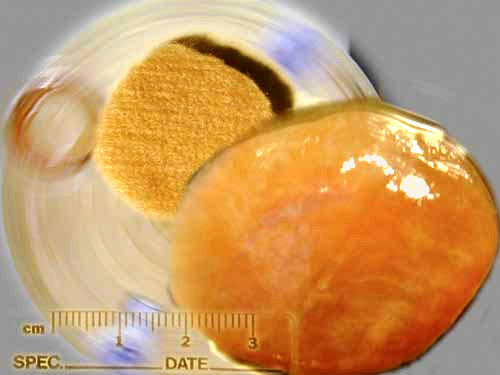
Modern tissue engineering techniques could enable the development and production of meat grown, or ‘cultured’, in the lab. This research into in vitro meat (see figure 1 for an example) has its roots in experiments conducted by NASA, and since then, the idea has slowly trickled into the focus of other research groups (at the moment, the main hubs of activity appear to universities in the Netherlands). But even as early as 1930, Churchill has said:

Fifty years hence, we shall escape the absurdity of growing a whole chicken in order to eat the breast or wing, by growing these parts separately under a suitable medium.

In Science Could Have It all Wrong, Ethan comes to the conclusion that we should all trust the experts. The most controversial bit is surely where he takes the impressive successes of modern cosmology to be a good reason to trust experts on topics like global warming. Some bad guy put the following outrageous commentary:


Experts do not fall from the sky, they are selected by a self-reinforcing, thereby emergent establishment which one cannot join without subscribing to certain highly questionably core beliefs in the first place.

Militant progressives in academia are determined to fix a problem that does not exist - how to get more females in science.    Despite there being no gender difference in math scores for the first time in history and more Ph.D.'s for females than men and more hiring for women in faculty positions than men, a subset of people lament it isn't enough.
The title is not a tease but is an exercise in abstraction. I spend most of my free mind time thinking about one or the other of these two subjects. Can I find any overlap in the research going on in these two? That was the challenge. I hope you don’t mind if I spend most of my time on sex. I will reach out to physics near the end.
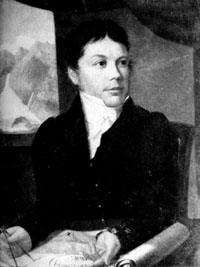
Ignaz Venetz - Climate Change Pioneer

Climate has always changed - but we have not always known it.

Events following 1816 - the year without a summer - led to a major controversy in which the scientific consensus on the one hand was countered by dogma on the other.  On reading the history of that great controversy, one gets a strong sense of Déjà vu.

Researchers have captured the bioelectrical signals necessary for normal head and facial formation in an organism and  captured the process in a time-lapse video that reveals never-before-seen patterns of visible bioelectrical signals outlining where eyes, nose, mouth, and other features will appear in an embryonic tadpole. 

The biologists from Tufts University found that before the face of a tadpole develops, bioelectrical signals (ion flux) cause groups of cells to form patterns marked by different membrane voltage and pH levels. When stained with a reporter dye, hyperpolarized (negatively charged) areas shine brightly, while other areas appear darker, creating an "electric face."

Almost a year ago I started my PhD with fieldwork on Santorini, Greece.  As I am currently planning a second round of fieldwork, I though it was time to write up my first trip.
New research has found that some of the human X chromosome originates from Neanderthals and is found exclusively in people outside Africa.

Neanderthals, whose ancestors left Africa somewhere in the range of 400,000 to 800,000 years ago, evolved in what is now France, Spain, Germany and Russia, and are believed to have lived until about 30,000 years ago.  Early modern humans left Africa about 80,000 to 50,000 years ago.

