




The FDA released its long-awaited Draft Guidance on hospital-acquired pneumonia recently. Their guidance has not changed since I wrote a blog about my last meeting with the FDA antibacterial drug development task force back in September of last year.

To reiterate what I stated back then . . .

A couple of weeks ago I reported here about the new measurement of the Higgs boson mass produced by the ATLAS experiment. That determination, which used the full dataset of Run 1 proton-proton collisions produced by the LHC in 2011-2012, became and remained for two weeks the most precise one of the Higgs mass. Alas, as I wrote the piece I already knew that CMS was going to beat that result very soon, but of course I could not say anything about it... It ached a bit!

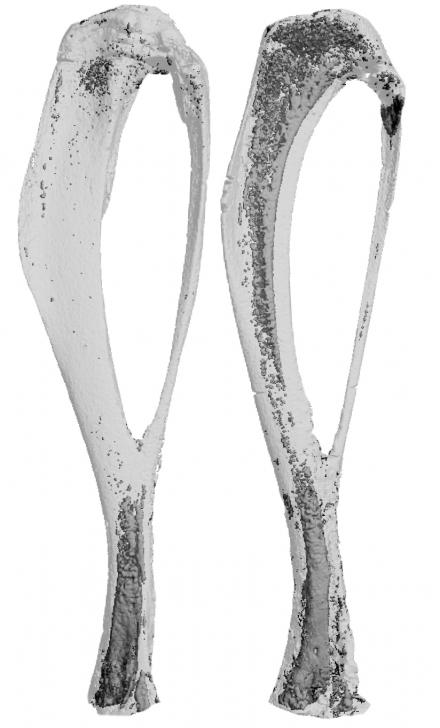
You know why soup tastes good - and your dogs love it too. It's bone marrow fat. Now it may be healthier to eat delicious.

A study has found that the fat tissue in bone marrow is a significant source of the hormone adiponectin, which helps maintain insulin sensitivity, break down fat, and has been linked to decreased risk of cardiovascular disease, diabetes, and obesity-associated cancers. 

Portuguese government shuts down half of the research units in the country

The Portuguese funding agency for science (Fundação para a Ciência e aTecnologia – FCT) has just announced lthat it will stop  funding nearly half of the research units in the country (154 units out of 322), which means to destroy the career of about a third of the total number of researchers in the country (5187 out of 15444).

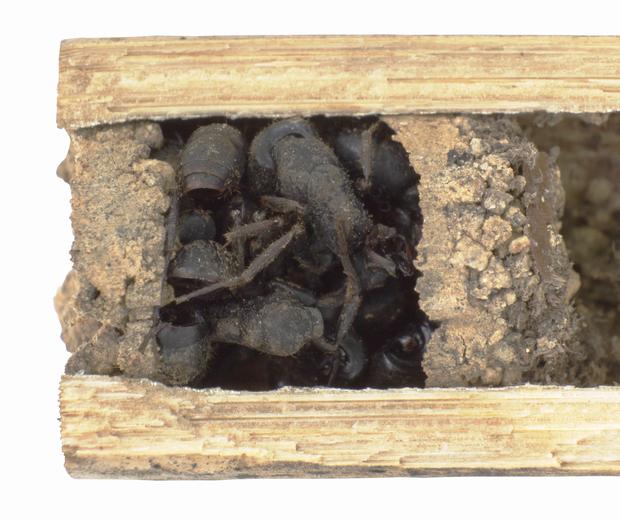
Want to send a message to possible invaders? Pile dead bodies high and deep. A new species of wasp does just that.

This wasp with a unique nest-building strategy was discovered in the forests of southeast China. The "bone-house wasp" shuts off its nest with a chamber full of dead ants in order to protect its offspring from enemies, as shown by Michael Staab and Prof. Dr. Alexandra-Maria Klein from the Institute of Earth and Environmental Sciences of the University of Freiburg as well as scientists from the Museum für Naturkunde Berlin and the Chinese Academy of Sciences in Beijing.

No other such strategy has ever been discovered before in the animal kingdom. 

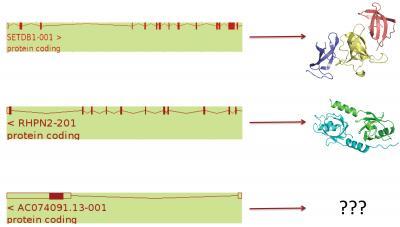
The human genome and the messages coded by 3 billion letters that determine everything from how nutrients are metabolized to how neurons communicate in the brain.

The detection and characterization of the genes present in this mass of information is a complex task that has been a source of ongoing debate since the Human Genome Project completed its first mission. It's even unclear how many genes there are.

Iron is one of the essential elements of life. Found in enzymes like myoglobin and hemoglobin and cytochrome P450, iron is an essential cog in the biomachinery of every living cell. 

Iron is present in tiny concentrations in seawater. On the order of a few billionths of a gram in a liter.  Given that there is so little iron in seawater, one might conclude that its presence there is inconsequential, but its scarcity in the ocean, the earth's wellspring of life, only magnifies its importance. 

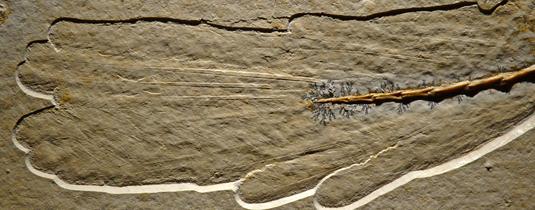
Paleontologists of Ludwig-Maximilians-Universitaet in Munich studying a new specimen of Archaeopteryx have found previously unknown features of the plumage, which shed light on the original function of feathers and their recruitment for flight. 

Dyslexic adults in a representative sample of 13,054 adults aged 18 and over in the 2005 Canadian Community Health Survey included 1,020 respondents who reported that they had been physically abused during their childhood and 77 who reported that they had been diagnosed by a health professional with dyslexia. 

That translates to 35 percent of Canadian adults with dyslexia reporting they were physically abused before they turned 18. In contrast, 7 percent of those without dyslexia reported that they had experienced childhood physical abuse. 

We know that ancient Japanese gold leaf artists were truly masters of their craft - their works are ornate and delicate.

What remains a mystery is how artifacts were gilded with gold leaf that was hand-beaten to the nanometer scale. Gold leaf refers to a very thin sheet made from a combination of gold and other metals. It has almost no weight and can only be handled by specially designed tools. Even though the ancient Egyptians were probably the first to gild artwork with it, the Japanese have long been credited as being able to produce the thinnest gold leaf in the world.

