



It bugs me a little when 'time' is randomly called a dimension in casual talk. Since just after Einstein's relativity, we've been treated to the mathematical idea that time is its own dimension - though Einstein never said that.

Transgendered androphilic males may have been accepted in ancient hunter-gatherer cultures because they were an extra set of hands to support their families, according to a new article in Human Nature.

Nocturnal animals use their noses to stay alive. Mice, among others, depend on their impressive olfactory powers to sniff out food or avoid danger in the dark, using a streamlined system that sends the sensory cue to neural centers in the brain that need only a few synapses to rapidly initiate instinctive fleeing behavior. 

A tuberculosis vaccine developed at McMaster University published phase one clinical study results today.

 Tuberculosis is a serious public health threat. One-third of world's population is infected with the organism that causes tuberculosis. The current vaccine used to prevent it is ineffective and high incidence of multi-drug resistant tuberculosis is also a problem.

Nearly one in three American children are overweight or obese, but sugary sweets are often on the menu at elementary school classroom parties.  Previous small-scale studies have found that "kids consume a lot of calories at classroom parties," but little has been known about how state and district policies impact this aspect of the school food environment. 

 The U.S. Department of Agriculture has issued nationwide standards governing competitive foods and beverages in schools as required by the Healthy, Hunger-Free Kids Act of 2010. However, USDA regulations do not address foods and beverages served during school parties. 

The great angiosperm radiation of the mid-Cretaceous, the dramatic explosion of flowering plant species that occurred about 100 million years ago, is thought to have been good news for evolving mammals, providing them with new options for food and habitat. 

Previous literature suggested the spread of angiosperms, along with the evolution of pollinating insects, may have spurred an increase in the diversity of mammals. The idea made sense: The radiation would likely have resulted in more food sources from seeds, fruits, leaves and insects.

Not always. 

Risky sexual behavior and substance abuse have always orbited HIV but it isn't just shared needles; drugs like cocaine make people engage in lots of other risky behaviors.

The epidemiology of how HIV spreads is well know but relatively little research has been done into how drugs impact the body's defenses against the virus. A new paper examines how cocaine affects a unique population of immune cells called quiescent CD4 T cells, which are resistant to the virus that causes AIDS.

They found that cocaine makes the cells susceptible to infection with HIV, causing both significant infection and new production of the virus. 

Industry has made efforts to reuse or to transport shale gas wastewater to deep injection wells, but wastewater is still discharged into the environment, after being treated, in some states. 

In western Pennsylvania, water that comes from Marcellus shale is naturally high in salinity and radioactivity but a new Duke study examined the quality of shale gas wastewater resulting from hydraulic fracturing and found that the stream water above and below the Josephine Brine Treatment Facility disposal site that is derived from the Marcellus shale gas flowback water showed elevated levels of radioactivity, salts and metals.

High concentrations of some salts and metals were also observed in the stream water.

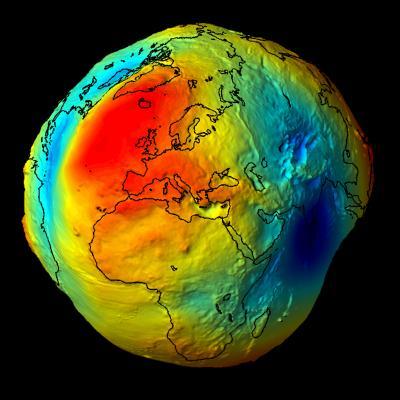
Where is 'sea level' and how far above sea level is a particular place located? 

Quite a lot of things may go wrong in bridge building and the inhabitants of the German and the Swiss parts of Laufenburg were looking forward to a new bridge over the Rhine, the High Rhine Bridge, when they were taken aback by an embarrassing error: The heights of the two bridge parts growing towards each other differed by 54 centimeters.

Researchers have managed to measure the internal pressure that enables the herpes virus to infect cells in the human body, a discovery which paves the way for the development of new medicines to combat viral infections and indicates ways to stop herpes infections in the future.

