

Would you want to know if you or your children had risk of hereditary cancer, a genetic risk for cardiovascular disease or carried the gene associated with developing Alzheimer's disease - even if they were risks that wouldn't be relevant for possibly decades or didn't have a cure?

 Researchers used data from a cross-sectional online survey of a nationally-representative sample of the U.S. population that was conducted as part of the C.S. Mott Children's Hospital National Poll on Children's Health and found that 80 percent showed the same interest in genome sequencing for themselves as they did for their kids and 59 percent wanted to know if they had disease risks.
 
Academics have written a lot of articles claiming their competitors in the private sector selectively publish trials that favor their own interests don't care as much about transparency as academia, but is that really true? 

When it comes to investigational drugs, devices and biologic therapies, the data is available and it shows that industry was actually 3X more likely to comply with legal requirements than academic studies after disclosure was mandated. 

Why do people cooperate? This isn’t a question anyone seriously asks. The answer is obvious: we cooperate because doing so is usually synergistic. It creates more benefit for less cost and makes our lives easier and better.

Maybe it’s better to ask why don’t people always cooperate. But the answer here seems obvious too. We don’t do so if we think we can get away with it. If we can save ourselves the effort of working with someone else but still gain the benefits of others’ cooperation. And, perhaps, we withhold cooperation as punishment for others’ past refusal to collaborate with us.

Researchers at the Okinawa Institute of Science and Technology Graduate University's Brain Mechanisms for Behaviour Unit have found a surprise upon mapping the precise connectivity inside a brain structure called the neostriatum. The cell groups here do not seem to be talking to each other, and are less interdependent in their functioning than previously suspected. Their findings were published in Brain Structure and Function.

Once upon a time it was believed that greedy insurance companies were bad for patients - now they are a sign of the have's and have nots. A new analysis in Neurosurgery finds that brain tumor patients with private insurance have fewer medical complications and thus are in the hospital less than those who are on Medicaid or were uninsured between 2002 and 2011.

People have highly variable views on how much overdetection is acceptable in cancer screening, finds a UK survey in The BMJ this week. The authors say invitations for screening "should include clear information on the likelihood and consequences of overdetection to allow people to make an informed choice."

This article is part of a series on overdetection (overdiagnosis) looking at the risks and harms to patients of expanding definitions of disease and increasing use of new diagnostic technologies.

Findings published today in Scientific Reports looked at the pattern of variation of the South Asian monsoon over time and compared it with the evolution of African mole rats and bamboo rats as revealed by a full analysis of their relationships coupled with studies of their distribution in space and through time and of their evolutionary rates.

They found the first proof that weakening and strengthening monsoon rains played a key role in the evolution of these species. Over a period of 24 million years, the changes observed in the teeth and head shape of the rodents examined, matched the varying strength of the monsoon. Of the 38 species studied only six still exist today and the changing rains seem to have driven several species into extinction.

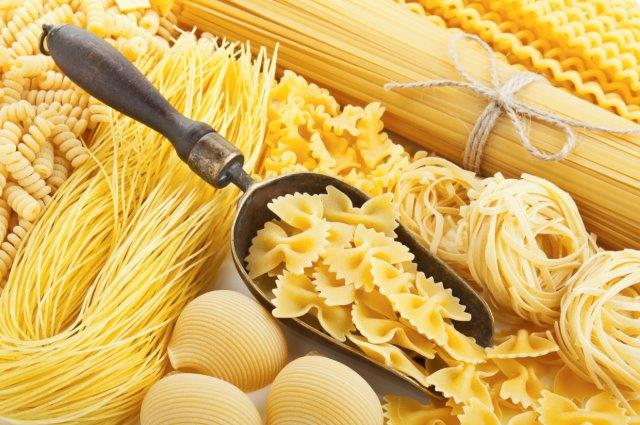
Researchers trying to understand why some people have more severe wheat-related health problems than others, and with different products, have found new clues in how the grain's proteins, including gluten, change when cooked and digested. 

Gianfranco Mamone and colleagues say that boiling pasta releases some of its potential allergens, while other proteins persist throughout cooking and digestion. Their findings lend new insights that could ultimately help celiac patients and people allergic to wheat.
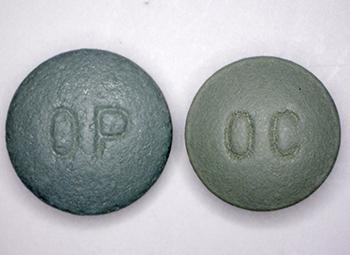
A reformulation of OxyContin made it harder to abuse and that has curtailed the drug's illicit use but some 25 percent of drug abusers entering rehab still find a way - or at least said they still abused the prescription painkiller on surveys despite package labeling that emphasizes its abuse-deterrent properties.

Scholars surveying almost 11,000 drug users at 150 drug-treatment facilities in 48 states found that an abuse-deterrent formulation of the prescription drug OxyContin was successful in getting abusers and addicts to stop using the drug, but only to a point - and then others switched to something else anyway.

