







More and more animal shelters and zoos have begun playing human music, the kind of fad that people who anthropomorphize animal behavior say works even though there is no evidence.

Now a new study by animal behaviorists has gone beyond that and says while they don't think human music works, music created especially for animals does.

Finally, programming for cats is not just in movies.


From the immortal classic, "Scrooged".
Rosacea is estimated to affect up to 16 million people in the United States alone, with symptoms typically including redness, visible blood vessels, and pimple-like sores on the skin of the central face.

Because rosacea affects facial appearance, it can also have a psychological impact on those who suffer from it, according to surveys by the National Rosacea Society.
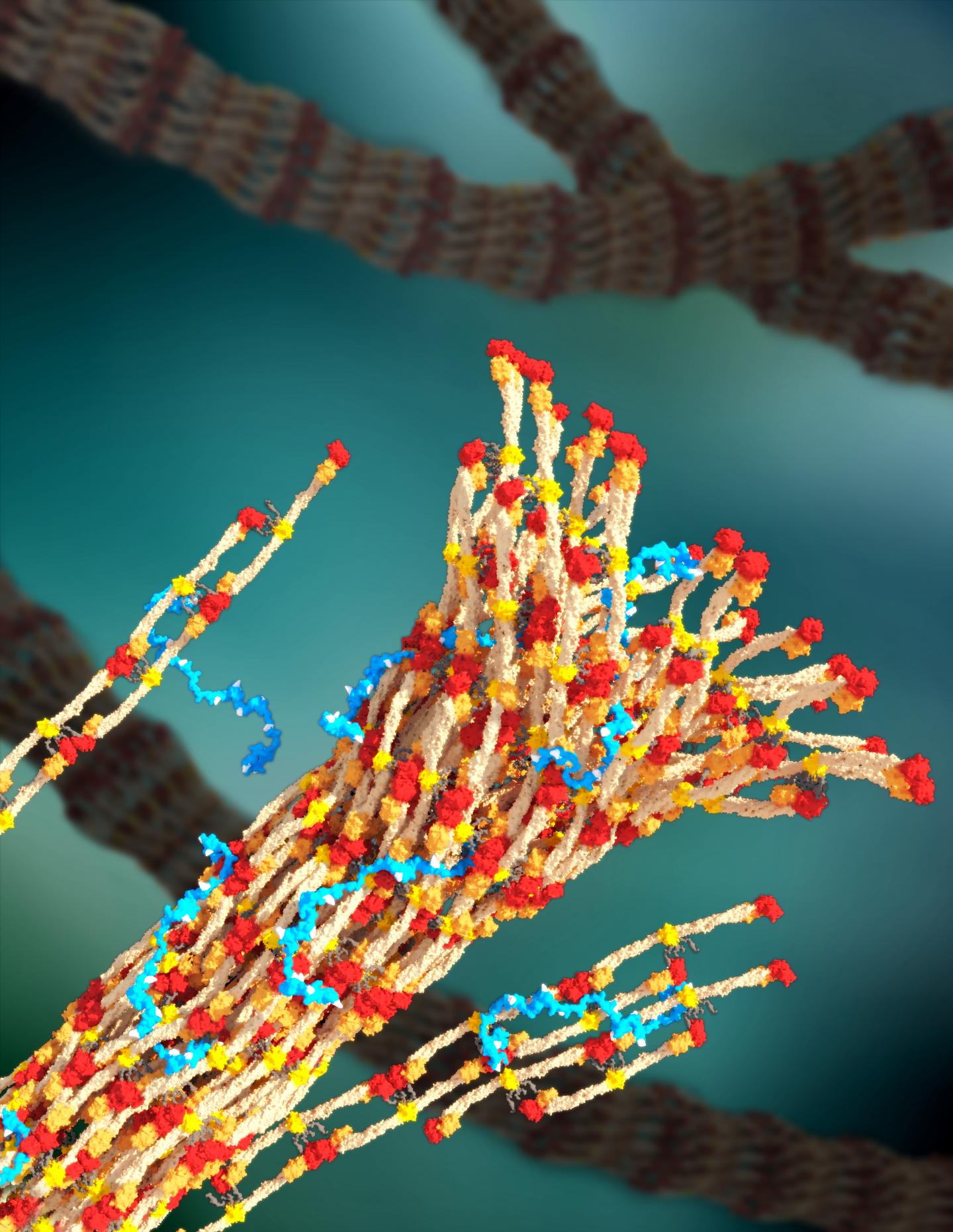
A new injectable polymer  called PolySTAT strengthens blood clots and that means that  soldiers who might otherwise die from uncontrolled bleeding before reaching a surgical hospital could be saved. Likewise for civilian traumas.

A tourniquet won't stop bleeding from a chest wound, and clotting treatments that require refrigerated or frozen blood products aren't always available in the field. 
Red lead is familiar to us due to rustproof paint but artists have treasured the brilliant color for its durability since ancient times.

Yet it has limits and now scientists are learning more about why.  A combination of X-ray diffraction mapping and tomography experiments at the DESY synchrotron light source PETRA III has shown an additional step in the light-induced degradation of lead red. Key was identification of the very rare lead carbonate mineral plumbonacrite in a painting by Van Gogh.
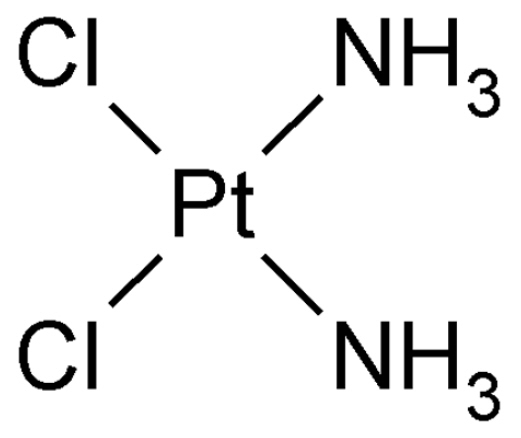
cisplatin

This year marks the 50th anniversary of cisplatin’s accidental discovery as an anti-cancer drug. Despite its horrible side effects, and the ability of cancers to become resistant to it, the drug remains as relevant now as it was when it first reached the market.

And the good news is that the drug can, and is, being made better. New formulations are being designed to make it more effective and less toxic.

A new system called BASIC could give synthetic biology a boost by creating artificial DNA that is faster, more accurate and more flexible than existing methods. 

To engineer new organisms, scientists build artificial genes from individual molecules and then put these together to create larger genetic constructs which, when inserted into a cell, will create the required product. Various attempts have been made to standardisz the design and assembly process but, until now, none have been completely successful. 
A study has found new evidence linking genetic factors associated with autism to better cognitive ability in people who do not have the condition - which means like many things in genetics it could be a small variation that separates a benefit from a detriment.

Autism is a disability often marked by significant language and speech difficulties but there is no firm relationship between autism and intelligence. Up to 70 percent of individuals with autism do have an intellectual disability but some people with the disorder have well-preserved, or even higher than average, non-verbal intelligence. Non-verbal intelligence is how people solve complex problems using visual and hands-on reasoning skills with little or no use of language.   
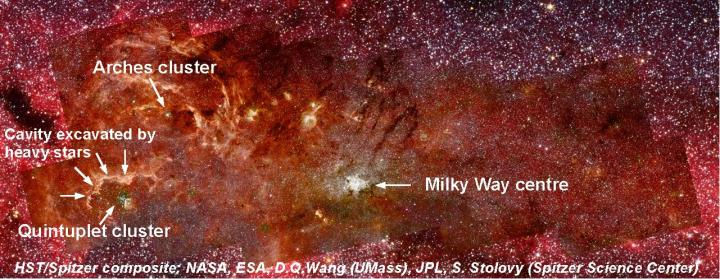
Researchers have detected about 20 rotating dust and gas discs in two clusters hosting exceptionally large and hot stars. The science mystery is how the rotating discs are able to withstand evaporation under such extreme conditions - if there is a Hell, this must certainly be it.

The center of the Milky Way is a nursery for young stars: In its heart, more young stars are born in dark clouds than in any other place in the Galaxy. These stars form in rich groups such as the 'Quintuplet' and 'Arches' clusters. Both star clusters are only a few million years old and contain stars as massive as 100 times the mass of the Sun. 

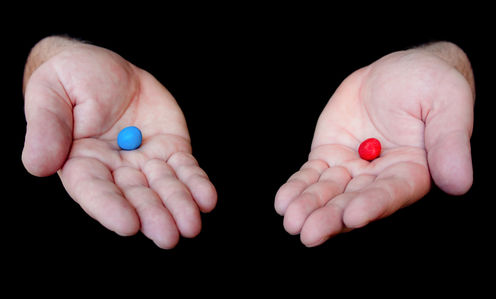
Clinical trials rely on statistics to show whether drugs are more effective than placebo pills. But how can we be certain?

How should scientists interpret their data?

Emerging from their labs after days, weeks, months, even years spent measuring and recording, how do researchers draw conclusions about the results of their experiments?

By Karin Heineman, (Inside Science TV)

Every day around the world, lightning strikes the ground about 10 times per second. That's nearly one million strikes a day!

In the U.S. there are 20 million strikes on average every year, and now David Romps, an atmospheric scientist at the University of California Berkeley, says we can expect to see that number grow in the coming years.

“What we find by looking in the climate models is that on average they’re predicting a 50 percent increase in the amount of lightning that you get in the United States, during this century, the 21st century," said Romps.

And the cause?

