









California's water supply depends on a clean snow pack and healthy mountain lakes.  Because of geography, California cities are conducive to air pollution and a similar effect can be found in lakes. The lakes in the Sierra Nevada are the most sensitive lakes in the U.S. to acid rain, according to the Environmental Protection Agency.

The lakes receive a large amount of runoff in the spring from the melting snowpack. If the snowpack is polluted, the lakes will be polluted.

By Jon Tennant, Imperial College London

Access to research is limited worldwide by the high cost of subscription journals, which force readers to pay for their content.

The use of scientific research in new studies, educational material and news is often restricted by these publishers, who require authors to sign over their rights and then control what is done with the published work. In response, a movement that would allow free access to information and no restrictions on reuse – termed open access – is growing.

The most compelling argument for genetic modification is not accepting science or progressive ideals, it is that it has caused food production to dematerialize in dramatic fashion. Scientific optimization of plants, superior to all genetic modification schemes of the last 12,000 years, have allowed American farmers to raise more food on less land than was dreamed possible. 

There is a cultural tug of war happening in the developing world. Experts and policy makers want to embrace science but environmental groups promoting fear and doubt manage to scare the public. Yet there is a practical metric every farmer in India can see - ozone pollution in India damages enough food to feed 94 million people. 

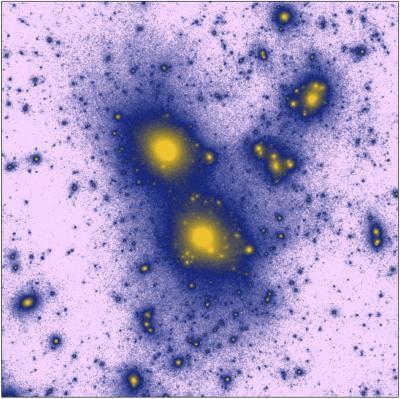
Because detectable mass only makes up about 5 percent of the universe - and the universe is expanding faster now than in the past - a rethink of mass and gravity has been required. The umbrella term for this mass that must exist, but can't be detected, is "dark matter." Don't worry if that definition is vague, no one knows any more than that.

Dark matter can be inferred by gravitational effects - and things like antimatter and baryonic clouds can be excluded - and so hundreds of explanations have been created for it. A new one by Mikhail Medvedev, professor of physics and astronomy at the University of Kansas is called "flavor-mixed multicomponent dark matter." 

By Helen King, The Open University

It wasn’t that long ago that it was believed that regular periods were essential for women's health and in their absence, a loss of blood through another orifice was a fair substitute.

In a classical Greek text linked to Hippocrates, the Aphorisms, it was written that “a nosebleed is a good thing if the menstrual period is suppressed”. So too was vomiting blood. And these beliefs lasted in western Europe until the middle of the 19th century.

But what was the theory behind what now seems a pretty alarming set of beliefs?

1. A build up of blood caused illness

Should scientists handle retractions differently?

Peer review cannot catch everything. In many papers, there is no peer review at all, it is editorial review that checks off a few boxes and relies on post-publication peer review to find flaws. That makes retractions more common.

Greenhouse gases, originating from natural sources, industrial processes and the burning of fossil fuels, are the culprits behind current global warming fears. The most abundant among them is carbon dioxide, which made up 84% of the United State's greenhouse gases in 2012, and can linger in Earth's atmosphere for up to a thousand ears.

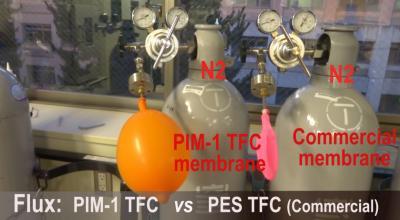
Countries all over the world are looking to reduce their carbon dioxide footprint but carbon dioxide is essentially a waste product with little immediate commercial value and large treatment costs. New low-cost technologies will be needed to incentivize greenhouse gas capture by industry.

Researchers from Japan have engineered a membrane with advanced features capable of removing harmful greenhouse gases from the atmosphere.  


By Neil Morris, University of Leeds

Over the past couple of years, massive open online courses (MOOCs) have taken the academic world by storm. Despite much debate about whether the idea of running free online courses for everyone is both a good and cost-effective idea in the long-run, MOOCs are teaching universities valuable lessons about how students want to learn.

Mathematical techniques that not only identify whether two data sets correlate, but also whether one drives the other, have allowed researchers to look at a lot of old data in new ways. Methods have been developed to try to identify and correct for bias in the fossil record but the new research suggests many of these correction methods may actually be misleading. 

The new results show that out of all the geological factors, only the area of preserved rock drives biodiversity. Therefore, the other geological factors – counts of fossil collections and geological formations – are not independent measures of bias in the fossil record.

Data from FIRST (MM-020/IFM 07-01), an open-label phase III randomized study of continuous REVLIMID (lenalidomide) in combination with dexamethasone in patients newly diagnosed with multiple myeloma (NDMM) who are not candidates for stem cell transplant, have been published.

The initial findings, including that the trial had met its primary endpoint of progression free survival, were reported during the plenary session at the 55th American Society of Hematology annual meeting in December 2013.


