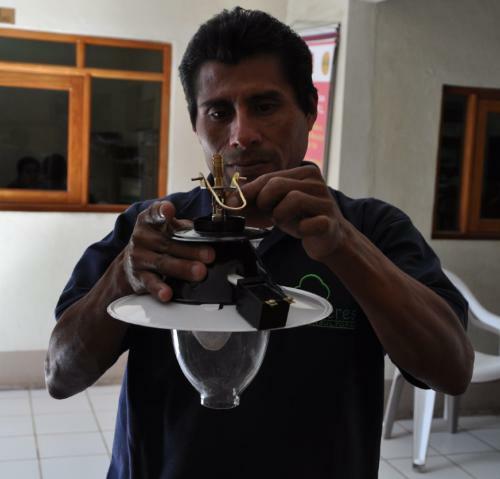







A four-year project on coffee wastewater treatment, The Energy from Coffee Wastewater project by UTZ Certified, has found that is possible to generate energy and protect water resources by treating discharges from coffee mills - maybe it will even tackle climate change.

The project started in 2010 with the goal of addressing what to do with the wastewater produced in the coffee industry. Tailor-made coffee wastewater treatment systems and solid-waste treatment mechanisms were installed in eight coffee farms in Nicaragua, ten in Honduras and one in Guatemala. The positive impact of the project on over 5,000 people in the region has inspired UTZ Certified to replicate the initiative in other countries.

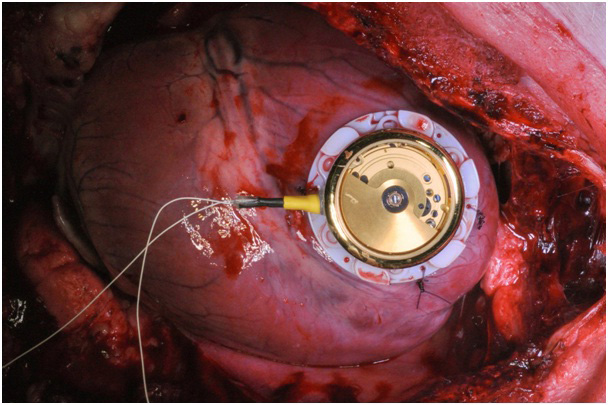
A new battery-less cardiac pacemaker is based on the automatic wristwatch concept - it is powered by heart motion.

The prototype device  presented at ESC Congress 2014 by Adrian Zurbuchen from Switzerland does not require battery replacement.

Zurbuchen is a PhD candidate in the Cardiovascular Engineering Group at ARTORG, University of Bern and said, "Batteries are a limiting factor in today's medical implants. Once they reach a critically low energy level, physicians see themselves forced to replace a correctly functioning medical device in a surgical intervention. This is an unpleasant scenario which increases costs and the risk of complications for patients.

Wockhardt Limited announced that two of its drugs, WCK 771 and WCK 2349, received the coveted Qualified Infectious Disease Product (QIDP) status from U.S. Food&Drug Administration (FDA).

QIDP status is granted to drugs which act against pathogens which have a high degree of unmet need in their treatment and are identified by the Centers for Disease Control. QIDP status allows for fast track review of the drug application by U.S. FDA, paving way for an early launch. This is the first instance of an Indian Pharmaceutical company receiving a QIDP status.


In patients who experienced an acute coronary syndrome (ACS) event (such as heart attack or unstable angina), use of the drug darapladib to inhibit the enzyme lipoprotein-associated phospholipase A2 (believed to play a role in the development of atherosclerosis) did not reduce the risk of recurrent major coronary events, according to a study published by JAMA. The study is being released early online to coincide with its presentation at the European Society of Cardiology Congress.


Nano-robots have cancer in their sights. Credit: StephenMitchell/Flickr, CC BY-NC-ND

By Dr. Jason Liu, Monash University

It sounds like a scene from a science fiction novel – an army of tiny weaponized robots traveling around a human body, hunting down malignant tumours and destroying them from within.

Spend any time in American science media and you may find some of them are pretty far out of the political mainstream; so far out, they may not even be friends with anyone who has not always voted the same way as them.

So it's unsurprising that much of science media once perpetuated the claim that 'science votes Democrat.'  Humans are fallible and confirmation bias is sneaky. As was apocryphally attributed to New Yorker film critic Pauline Kael after the 1972 Presidential election and a Richard M. Nixon landslide victory, "I don't know how Nixon won. No one I know voted for him." (1)

A new analysis of satellite data from the last 19 years reveals that fresh water from melting glaciers has caused the sea level around the coast of Antarctica to rise by 2 centimeters more than the global average of 6 centimeters.

Researchers at the University of Southampton detected the rapid rise in sea-level by studying satellite scans of a region that spans more than a million square kilometers. 

Visible blood in urine is the best known indicator of bladder cancer but new research  finds that invisible blood in urine may be an early warning sign of bladder cancer. 

Scientists at the University of Exeter Medical School found that 1 in 60 people over the age of 60 who had invisible blood in their urine transpired to have bladder cancer. Thay's about half those who had visible blood in their urine but higher than figures for other potential symptoms of bladder cancer that warrant further investigation. 


Kell Brook and two of the Sheffield Hallam University team. Credit: Sheffield Hallam University.

By Alan Ruddock, Sheffield Hallam University

Amid all the flashing lights, it was a moment of sheer exhilaration when the winner was finally announced: “By a majority decision, the new IBF welterweight champion on the world – Kell Brook.”

