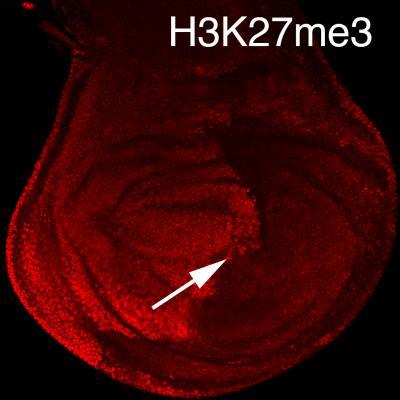







In a cell's nucleus, chromosomal DNA is tightly bound to structural proteins known as histones, an amalgam biologists call chromatin.

Until a few decades ago, histones were regarded as a nuclear "sidekick," the packing material around which the glamorous DNA strands were wrapped. 

Many of us care deeply about the possibility of tigers, lemurs and such like becoming extinct in the wild. I'd like to suggest that we care as much about the possibility of microbes on Mars and elsewhere in our solar system becoming extinct through human activities.


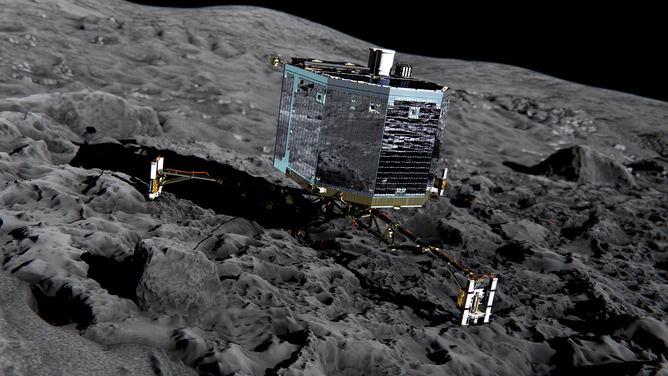
Artistic rendering of Philae on the comet 67P/Churyumov-Gerasimenko. Credit: ESA/ATG, CC BY

By Ian Wright, The Open University

The MERS coronavirus has caused disease outbreaks across the Arabian Peninsula and spread to Europe several times, claiming the lives of several hundred people since its discovery in 2012.

How easily the pathogen spreads from human to human has remained a mystery but recent work shows human transmission is low. Still, a third of infected persons with symptoms die. 

By Marsha Lewis, Inside Science

(Inside Science TV) – Ever wonder why that cold can of beer you opened heats up so fast? Well, there's a scientific answer behind it…literally.

Atmospheric scientists at the University of Washington have new insights on what makes your beverage lose its cool.

“Condensation really has an impact on your drink," said Dargan Frierson, a mathematician at the University of Washington in Seattle.


The pressure's on JJ Abrams and the new Star Wars films.Credit: wiredphotostream, CC BY-NC

By Sorcha Ní Fhlainn, Manchester Metropolitan University

Coastal regions under threat from sea-level rise need to tackle the immediate threats of human-led and other non-climatic changes, according to a new analysis. It's an even more pressing concern than possible climate change sea rises because those changes are already happening.

A team of 27 scientists led by Dr Sally Brown at the University of Southampton reviewed 24 years of Intergovernmental Panel on Climate Change (IPCC) assessments, focusing on climate change and sea-level rise impacts in the coastal zone, and examined ways of how to better manage and cope with climate change. 

In 1929 Linus Pauling came up with Pauling's Rules to describe the principles governing the structure of complex ionic crystals.

These rules essentially describe how the arrangement of atoms in a crystal is critically dependent on the size of the atoms, their charge and type of bonding.

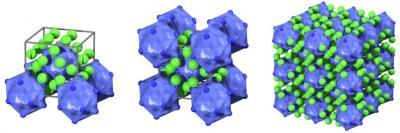
According to scientists from the Biohybrid Materials Group of Aalto University Finland led by Mauri Kostiainen, similar rules can be applied to prepare ionic colloidal crystals consisting of oppositely charged proteins and virus particles. The results can be applied for example in packing and protecting virus particles into crystals that mimic 

Researchers have developed a potential antibody therapy for Sudan ebolavirus (SUDV), one of the two most lethal strains of Ebola.

 Sudan ebolavirus
was first identified in 1976 and has caused numerous Ebola outbreaks (most recently in 2012) that have killed more than 400 people in total.  
A different strain, the Zaire ebolavirus (EBOV), is now devastating West Africa.

Raloxifene is a U.S. Food and Drug Administration (FDA)-approved treatment for decreasing fracture risk in osteoporosis and it is effective at reducing fracture risk, but only partially by suppressing bone loss.

With the use of wide- and small-angle x-ray scattering (WAXS and SAXS, respectively), researchers carried out experiments at the U.S. Department of Energy's (DOE's) Advanced Photon Source (APS) at Argonne National Laboratory that revealed an additional mechanism underlying raloxifene action, providing an explanation for how this drug can achieve equivalent clinical benefit.

These data, together with complementary techniques, help define a novel mechanism by which raloxifene increases inherent bone toughness.

