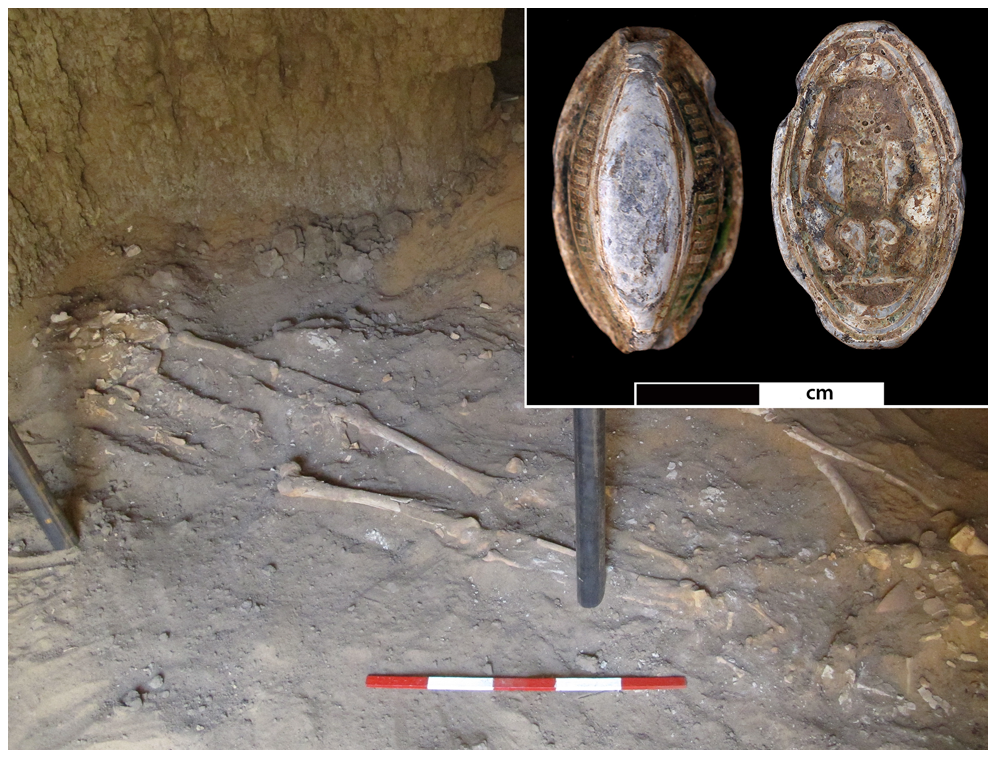





Archaeologists have found the oldest complete example in the world of a human with metastatic cancer in a 3,000 year-old skeleton. 

Just 20 percent of UK people with hearing problems actually wear a hearing aid, according to a new analysis in the journal Ear and Hearing which looked at the habits of 160,000 aged 40 to 69 years.

The results showed that 10.7 per cent of adults had significant hearing problems when listening to speech in the presence of background noise but only 2.1 per cent used a hearing aid.  One in 10 middle aged adults had substantial hearing problems and were more likely to be from a working class or ethnic minority background.

When are members of opposing political parties not simply stupid, uninformed, inhuman hordes lacking in ethics and compassion, or incompetent?

When they are in charge. Then they can be creators of a vast conspiracy whose manipulative efforts are everywhere.

How can someone be both mindless and a threat? In the world of social psychology, where weak observational studies rule the land. 

If you'd stop believing the myth that women are too slow out of the gate when they are supposed to add numbers, and if you start believing the fact that men are too fast, we might be able to make a little progress on gender balance in technical careers.

Fuel produced from various animal fats is similar to biodiesel manufactured using ethanol from corn. But if the price of animal fat rose sharply, no one would really notice, since no one really eats animal fat.

And it isn't just limited to chicken, pork or beef fat , they can use alligator too. Why would they do that? Science! The report at the latest meeting of the American Chemical Society follows up on an earlier study on the potential use of gator fat as a source of biodiesel fuel. It's cool research, but there is obviously a limited amount of alligator fat lying around.

Shale is the source of the United States' current natural gas boom and the lower greenhouse gas emissions it has brought. As if that is not wonderful enough, it could help solve another energy problem: what to do with radioactive waste from nuclear power plants. 

The unique properties of the sedimentary rock and related clay-rich rocks make it ideal for storing the potentially dangerous spent fuel for millennia, according to a geologist studying possible storage sites who made a presentation at the latest National Meeting of the American Chemical Society (ACS).

Volatile organic compounds (VOCs) evaporate easily in the air but they help suppress a deer hunter's worst enemy - smells. 

And that science of deer hunting may soon help researchers develop a life-saving device for diabetes patients, according to a paper at the latest National Meeting of the American Chemical Society (ACS).

By figuring out the best way to collect and analyze VOCs from body and breath odor, the researchers are going to develop VOC detection that can diagnose and monitor disease. That's where deer hunting comes in. It isn't just pest control that pays for state biologists and wildlife conservation, it's science.

Exposure to media that promotes conspiracy theories may increase belief in them, but exposure to debunking information can decrease that belief, a new study has found.

The report, published in the January-March edition of the journal Communication Quarterly and conducted by researchers at the University of Missouri and Indiana University-Purdue University Columbus, suggests that messages can influence peoples' beliefs, even in a fragmented media world.

An international collaboration recently analyzed existing cohort studies and randomized trials on coronary risk and fatty acid intake and drew a conclusion that will surprise you if you only get your science and health news from mainstream newspapers or television -  the evidence to support restricting the consumption of saturated fats in order to prevent heart disease isn't there.

And consumption of polyunsaturated fats is probably not a bad idea but there is insufficient evidence for guidelines which advocate the high consumption of polyunsaturated fats (such as omega 3 and omega 6) to reduce the risk of coronary disease. 

In mainstream media, everywhere from Fox News to Time (and here on Science 2.0, though with a little more skepticism) a


