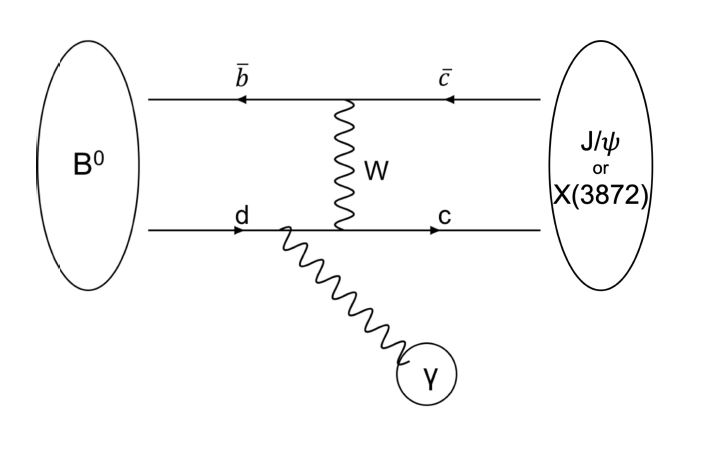
I know, the title of this article will not have you jump on your chair. Most probably, if you are reading these lines you are either terribly bored and in search of anything that can shake you from that state - but let me assure you that will not happen - or you are a freaking enthusiast of heavy flavour physics. In the latter case, you also probably do not need to read further. So why am I writing on anyway? Because I think physics is phun, and rare decays of heavy flavoured hadrons are interesting in their own right.
A prototypical extrovert is someone talkative, outgoing, who prefers taking the initiative in groups, expresses positive emotion and enjoys seeking out new experiences. By contrast, a prototypical introvert is quiet, emotionally reserved, less effusive, and harder to get to know.
You can imagine which of those is going to have an easier time in most jobs.
Ancestors of modern humans "recycled" broken flint tools 400,000 years ago in order to create small, sharp utensils with specific functions in the processing of animal products and plant materials. The results were found in digs at Qesem Cave, located just outside Tel Aviv, which was discovered in 2000 during a road construction project and has since provided insights into life in the region hundreds of thousands of years ago.
Sulfurihydrogenibium yellowstonense (Sulfuri), the bacterium that controls the formation of rocks that look like pasta on Earth is ancient and thrives in harsh environments that are similar to conditions on Mars.
That's why cute robots on the surface might want to look for fusilli or some other noodle.
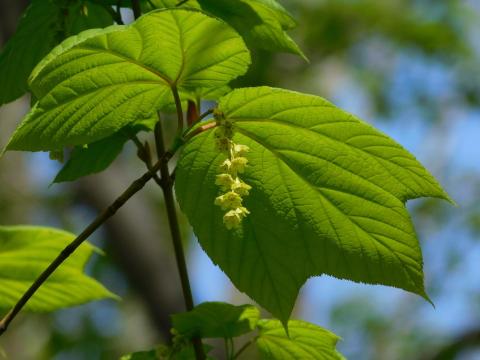
In only 10 percent of flowering plant species do female and male flowers exist on separate plants, where they typically remain female or male throughout their lifetime. The other 90 percent combine both sexes in one plant.
The "loser effect"- avoiding violence after losing a fight - evolves independently of any change in fighting ability,
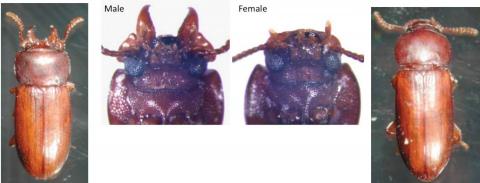
according to results after scientists studied male broad-horned flour beetles, which regularly fight over females, to see how long they avoided fights after a defeat.
Most would not start a fight for about four days after a loss, but researchers selectively bred the beetles for a shorter duration of this loser effect and found that it evolved to be shorter - despite no improvement in fighting prowess.
A Neptunian planet named NGTS-4b has been found in what should be a 'Neptunian Desert' using the Next-Generation Transit Survey (NGTS) observing facility, designed to search for transiting planets on bright stars. NGTS-4b is so small other ground surveys wouldn't have spotted it.
But small is relative. Though NGTS-4b is 20% smaller than Neptune, that is about 3 times the size of Earth, and 20 times our Earth in mass. It has been nicknamed the 'Forbidden' planet by researchers and is hotter than Mercury at 1,000 degrees Celsius. It orbits around the star in only 1.3 days - the equivalent of Earth's orbit around the sun of one year.
Palm oil is being blamed for a lot but two academic conservationists note that those who ask to boycott all palm oil due to its contribution to deforestation should also consider boycotting coffee, chocolate and coconut if they wish to be consistent.
Are you against or really against palm oil?
Ask anyone who has followed any environmental news related to palm oil if they are for or against it and they will most likely say 'Against.' They'll mention destroyed orangutan habitats and rainforests disappearing.
Evolution will happen, in medicines like antibiotics, and in crop protection like herbicides. Though some groups may continue to use older, less effective products such as organic copper sulfate, evidence-based agriculture works to create new products that do less environmental damage, such as neonicotinoids.
I work in the field of bioprinting, where the aim is to build biological tissues by printing living cells into 3D structures.
Last month I found my Facebook news feed plastered with an amazing story about “the first 3D printed heart using a patient’s own cells”. A video showed a beautiful, healthy-looking heart apparently materializing inside a vat of pinkish liquid.