An entire generation of parents was brought up believing that if hospitals used antimicrobial soap, then homes deserved it too. An entire generation of doctors were brought up in a defensive medicine culture and taught that if a patient really wanted something, like antibiotics for a flu, they had to get it, or lawyers and politicians would be using them for media soundbites. An entire generation of the public were taught that every drug should have the lower cost of generic versions, which has stymied creativity. An entire generation of regulators told us that the solution to a drug like Vioxx harming anyone was to double the cost and time of studies needed for approval.
Homeopathy, now two centuries old, proceeds from a fascinatingly bizarre premise; that there is a u-shaped curve for dose. Reasonable people know the dose makes the poison; a medicine that can help you at normal levels can be harmful at high levels.
Homepaths (and the Endocrine Disrupting Chemical community) instead also believe in an upward curve at other end, that chemicals at extremely low levels can also affect people. This u-shaped curve allows all manner of homeopathic "remedies" to be foisted off on people, not to mention allowing anti-science activists to attribute magical statistical harms to chemicals that science can't detect.
You have probably seen the headlines “One million species threatened with extinction and humans to blame” and such like. But did you know, the UN study that lead to those headlines analysed the reasons we continue to lose species to extinction, and found a solution? Not only that, they found a solution that is practical, feasible, makes economic sense, and has preliminary government interest too, to the extent that over 100 governments were happy to sign off on their conclusions as a “summary for policy makers”.
Glyphosate, a common weedkiller, doesn't have a mechanism that acts on the biology of humans, at least without falling into a tub full of it and drowning, but trial lawyers know science does not matter to a jury, emotion does. And emotionally an agriculture company can come off stiff compared to a couple who used the product for 35 years and then both got non-Hodgkin lymphoma.
In a world where "antibiotic resistance" has been a concern, not just among those opposed to medical science but by mainstream consensus, it may seem odd to discuss the benefits of preventative antibiotics, but a large randomized trial indicates that the World Health Organisation and other national organizations should change antibiotic guidelines, at least for assisted childbirth.
In 2016, an estimated 19,500 women died because of pregnancy-related infections globally. Even in high-income settings, infections account for 1 in 20 maternal deaths, and as many as 1 in 8 in the USA. For every woman who dies from pregnancy-related infection, another 70 women develop a severe infection and survive often with long-term health consequences.
1. On Wednesday, May 15th, the House Committee on Natural Resources: Subcommittee on Water, Oceans, and Wildlife will hold a Legislative Hearing on H.R. 2532: To protect grizzly bear populations, and for other purposes, in the Longworth House Office Building 1324. We'd like to solicit an article examining how serious the issue is. Fee: $100
With summer just around the corner in Europe and America, it's time to think about the risk of too much sun exposure. One greater hazard has less risk - melanoma - but though it is less common than some other types of skin cancer, it is more likely to grow and spread.
In 2019, an estimated 96,000 new melanomas will be diagnosed and men are far greater impacted than women. About 7,000 people will die, nearly twice as many men as women. It is 20X more common in people of Caucasian descent than people of African descent. Though the average age of diagnosis is 63, it defies the cancer stereotype in young people, being one of the most common cancers in young adults.
And there it starts. At a very important juncture for fundamental science,
physicists are gathering in Granada this week as part of a multi-pronged program that will lead to agreeing on what are the
priorities for particle physics in Europe. Given that particle physics is a global, collaborative endeavour nowadays, with experiments typically composed by thousands of physicists from all around the world, we can be sure that what will be agreed is going to shape the future years of this experimental discipline, as not only European projects are discussed, but more in general all projects to which European scientists contribute.
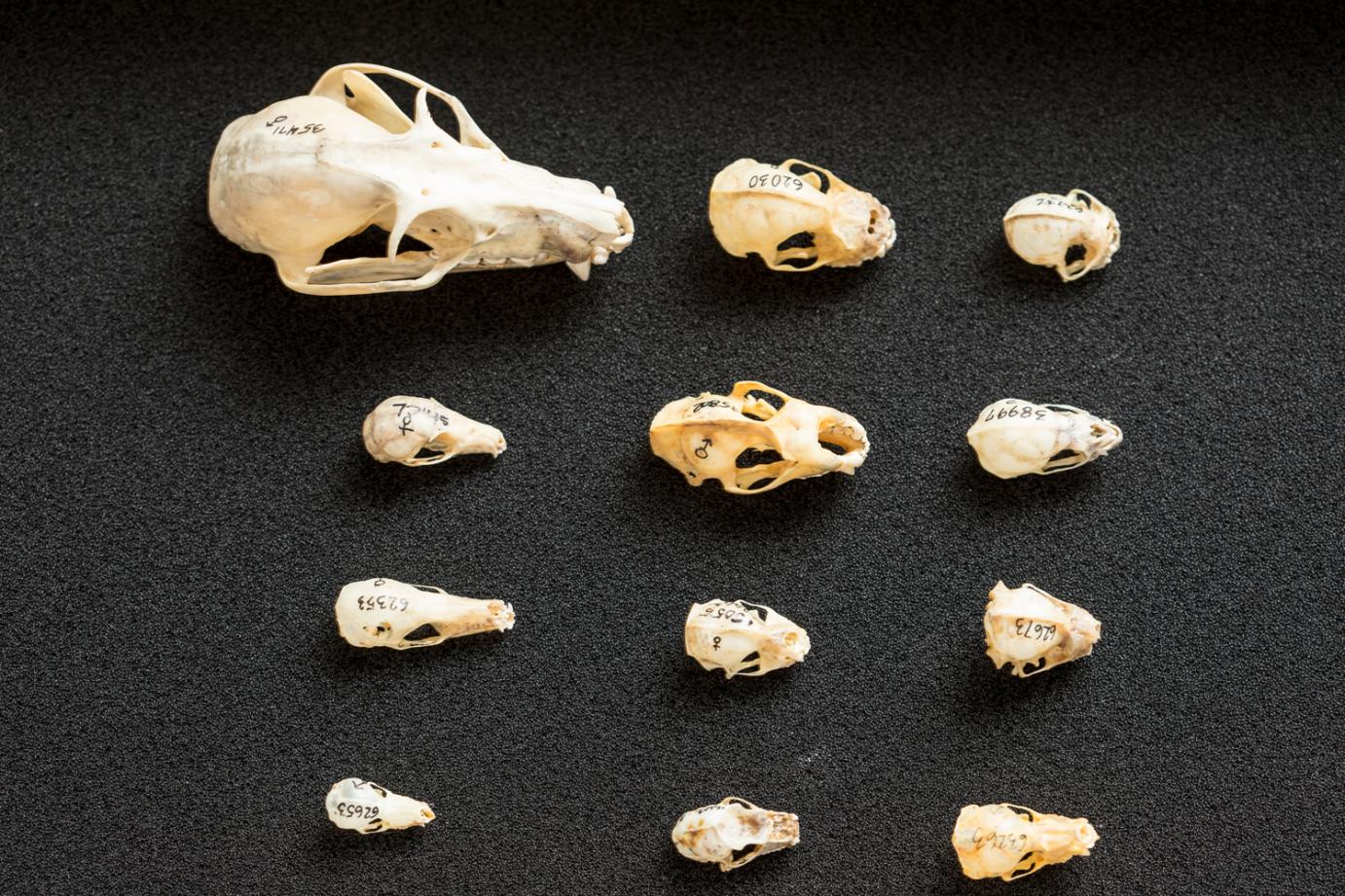
When most people think of bats they think of vampires or the World's Greatest Detective, but biologically they are much more diverse than pop culture reveals. With more than 1,300 species worldwide they are one of the largest groups of mammals. Some have large ears, others sport elaborate noses or long jaws. There's a lot of morphological variety, and that's a great lesson for what types of evolutionary forces shape the shapes of animals. Like their skulls.
Do you vape? A new paper suggests you may have been abused as a child - at least in statistical parsing of a small survey.
A sample of 208 people aged 18-21 was used to create a correlation between childhood maltreatment and e-cigarette use, and explored the potential role of impulsivity in linking childhood maltreatment to e-cigarette use via a series of models controlling for demographic characteristics. Other papers have claimed that smoking is caused by childhood maltreatment but this is the first to claim a link between nicotine vapor and child abuse.