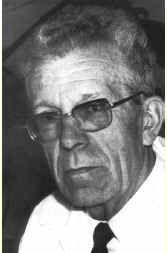
Playing chess games flawlessly is a super-human endeavour, which even machines are still having a hard time achieving. However, the occasional flawless game does arise in human practice, albeit rarely. Usually it is a grandmaster who pulls it off. The absence of sub-optimal moves can be ascertained by extensive computer analysis these days, so the quality of the moves is not in question.
A small study
published in Hypertension resurrects the notion that oral antioxidants, broadly dismissed as ineffective, could reap measurable health benefits if they are bioavailable. And it was in older people.
The study consisted of 20 healthy men and women age 60 to 79 from the Boulder area. Half took a placebo and half took 20 milligrams per day of a commercially available supplement called MitoQ, which is Coenzyme Q10 which uses chemistry to allow the antioxidant to penetrate the membrane of mitochondria, the energy factories of our cells.
While criminals will get guns illegally, and people who use guns to commit suicide may not be deterred by anything, people who are already prone to violence would be deterred from homicide by gun law changes,
according to a new article which argues that federal and state laws should include people who abuse their partners regardless of whether they are married to them or not. And findings of abuse should be grounds for not being allowed access to guns.
Today at the American Physiological Society (APS) annual meeting at Experimental Biology 2018 in San Diego a group of scholars posited that low "mental energy" may affect walking patterns in older adults more than physical fatigue.
These channels specialize in uploading evidence of 'Nibiru', a modern myth, a planet that supposedly is about to hit Earth or fly past, always in the near future. This will seem absurd to you if you have a decent scientific background, but these people do not. They missed out on astronomy or science at school and some are very young. Some teenagers as young as 13, the minimum age for Facebook are in a perpetual panic over these videos, and we hear from their parents of even younger children who got terrified by these videos, sometimes as young as 8 years old.
Academics direly need objective, meaningful metrics to judge the impact their publications have on their field of expertise. Nowadays any regular Joe will be able to show many authored papers in their CV, and it will be impossible to objectively assess the relative merits of each and every one of them, if you are trying to rank Joe in a list of candidates for tenure, or just a research job at a University.
A week after the Science March, environmental groups have turned up the heat on politicians, hoping to use the famous DDT strategy (ignore scientists, get a politician to do the work) to get a ban on a class of pesticides called neonicotinoids (neonics), which are sprayed on seeds so that there is less environmental strain and food waste.
Despite being in use for decades, during which bee levels have not gone down, anti-science groups like Sierra Club, Greenpeace and Union of Concerned Scientists have continued to raise money promising donors they will get them banned. They have been using a variety of techniques to reach their target goals.
Imagine one person walks into a room and they are smiling and saying hello to everyone. Then imagine another person who walks in quietly, looks grim, and heads to a corner.
Rapper Kanye West once told the press he doesn't smile for photos because "it just wouldn't look as cool," and humanities scholars who have to write about something have written that the reason Dean became cool was because he didn't smile. But is it true?
A new study finds that
Americans waste nearly a pound of food per person per day. And at the top of it is fruits and vegetables. Way below those is dairy, and meat waste is almost a third of what fruits and vegetables are.
People who believe they "eat more healthy" than others - the organic elite and vegetarians - have a food fetish for fresh vegetables. And Americans are told by government committees and pyramids they should want to eat vegetables, so they buy them and then throw them out when they start to spoil. When is the last time you threw out moldy pizza?
All of the people who joke they have Asperger's or are "on the spectrum" as an excuse for behavior they know is simply annoying or weird are probably going to want to stop. It's going to be a lot cooler to just admit they are annoying or weird.
The reason is because
a new analysis in
Moleular Autism finds that Hans Asperger, the Austrian pediatrician for whom a mild segment of the autism spectrum is named, collaborated with Nazis and helped kill disabled children.