



SYDNEY, April 6 /PRNewswire/ --

The largest distribution of any artwork in history is currently under way - ten million unique versions of artistic spam are being emailed to millions of people for free!

It's been named the Great Recession and, after Denny's free breakfasts for Americans, contemporary artist Colin Colorful is now helping feed the public's aesthetic hunger, by delivering them billions of images of cans of spam. Colorful, not content simply producing more artworks than there are atoms in the universe squared at www.spamcans.com/03/uk, felt he should share it with the world by email.

PERTH, Australia, April 6 /PRNewswire/ -- AVEVA (LSE: AVV) announced that Melbourne-based zektingroup has selected AVEVA's flagship plant design product, AVEVA PDMS, for the engineering design of new Coal Seam Gas plants for major Gas Operators in Australia.

The zektingroup provides engineering design and project management services to many of the process plant industries including the oil gas, chemical, pharmaceutical, biotech and food beverage industries. Zektin is especially well known for its engineering expertise in the Coal Seam Gas Industry (CSG), where the company has become the prime supplier of engineering services to many of the leading industry energy developers.

Peter Fitzgerald, Director, zektingroup, said:

Unless you are a true baseball fan, you have probably never heard of Bob Feller.   Maybe you have heard of Nolan Ryan.   They were classic power pitchers.   They threw hard and they threw for strikes.

Even if you are a baseball fan, unless you live and breathe the Detroit Tigers, you have probably never heard of Joel Zumaya.

Right.  Who?    While playing in the American League Championship in 2006, he threw a fastball clocked at 104.8 MPH, the fastest in history.      How can a guy who threw that fast not be on the cover of every Wheaties box in the civilized world?    Because the following year he was 1-4 with a 4.28 ERA; hardly the stuff of legends.
The genetic toolkit that animals use to build fins and limbs is the same genetic toolkit that controls the development of part of the gill skeleton in sharks, according to research published in PNAS by Andrew Gillis and Neil Shubin of the University of Chicago, and Randall Dahn of Mount Desert Island Biological Laboratory.

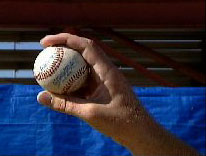
Contrary to common belief, softball pitching subjects the biceps to high forces and torques when the player's arm swings around to release the ball, according to an analysis of muscle firing patterns conducted at Rush University Medical Center.

Published in the current issue of the American Journal of Sports Medicine, the study of the "windmill" pitching motion appears to explain the high incidence of anterior shoulder pain seen in female softball players.

"The conventional belief has been that the underhand throwing motion of softball places little stress on the arm," said Dr. Nikhil Verma, lead author and a specialist in sports medicine at Rush. "But that is not the case."

Docosahexanoic acid (DHA), an omega-3 fatty acid found in fish oils, has been shown to reduce the size of tumours and enhance the positive effects of the chemotherapy drug cisplatin, while limiting its harmful side effects. The rat experiments described in Cell Division provide some additional support for the health benefits often ascribed to omega-3 acids.

Professor A. M. El-Mowafy led a team of researchers from Mansoura University, Egypt, who studied DHA’s effects on solid tumours growing in mice, as well as investigating how this fatty acid interacts with cisplatin, a chemotherapy drug that is known to cause kidney damage.
A new University of Pennsylvania School of Medicine study will examine whether women at higher risk of breast cancer can use exercise to meaningfully reduce their risk of getting the disease.  Starting from a premise that reducing estrogen in the body reduces cancer risk, and that elite female athletes experience a drop in estrogen levels that often cause them to stop ovulating and menstruating, the Women in Steady Exercise Research (WISER) Sister trial will investigate two different levels of regular treadmill exercise as a possible intervention for breast cancer risk reduction.
Can people's differing reactions to situations of stress be attributed at least in part to genetic differences and do those differences affect men and women in different ways - with the edge seemingly favoring the women?   Research conducted at the Hebrew University of Jerusalem would seem to indicate that the answer to both questions is yes.

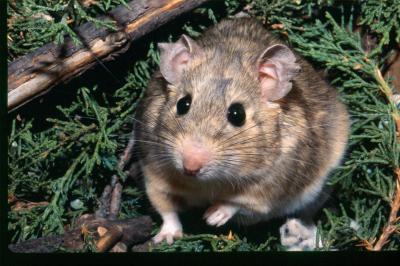
As the U.S. Southwest grew warmer from 18,700 to 10,000 years ago, juniper trees vanished from what is now the Mojave Desert, robbing packrats of their favorite food. Now, University of Utah biologists have narrowed the hunt for detoxification genes that let the rodents eat toxic creosote bushes that replaced juniper.

"It was either eat it or move out," says biology Professor Denise Dearing, senior author of the study, published online Tuesday, April 7 in the journal Molecular Ecology.

If you're a Muslim and you're worried that debating your NCAA March Madness championship tie-breaker scenarios at work will cause you to miss a prayer time ... well, okay, you're not doing that because designing technological devices for religious use is very different from designing devices for other uses, like the office, where everyone talks about sports.

