
Everyone knows the value of trees in the cycle of atmospheric life. They consumer carbon dioxide (CO2), the target of regulations for the last few decades.

But that's not the only way they keep us cool. Trees also impact climate by regulating the exchange of water and energy between the Earth's surface and the atmosphere, which should be important considerations as policymakers contemplate efforts to conserve forested land.
The prospect of a peaceful right wing revolution from the heart is no more but an April fools’ day joke to those high on hate such as Andrew Anglin. I would not be surprised if, as the hole at the other end of Ezra Levant’s dildo also suspected, such is supported by (((groups))) interested in focusing the alt-right into an obviously anti-Semitic stance in order to condemn as well as ensure that the associated aggressive negativity traps the enemy in internal conflicts and frustration.
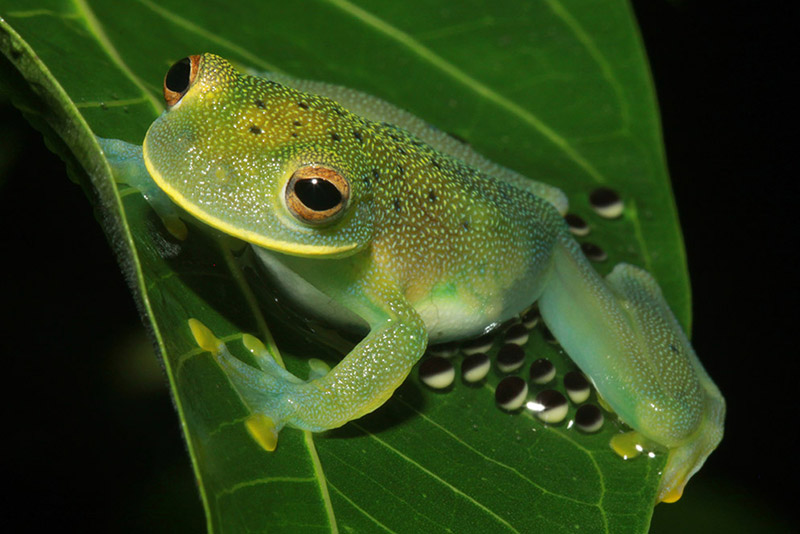
Let's be honest, most human dads do less work raising the kids than human moms. That's not true in all species, though. In a few, fathers care for their developing embryos more than mothers, and biologists speculated that this paternal devotion had evolved from ancestors entirely lacking parental care.

A new paper provides a new wrinkle. When fathers are more involved, parental care gets a lot more elaborate.
Where by "It" I really mean the Future of mankind. The human race is facing huge new challenges in the XXI century, and we are only starting to get equipped to face them. 

The biggest drama of the past century was arguably caused by the two world conflicts and the subsequent transition to nuclear warfare: humanity had to learn to coexist with the impending threat of global annihilation by thermonuclear war. But today, in addition to that dreadful scenario there are now others we have to cope with.

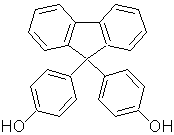
The headline almost jumps out at you – “BPA Substitute Could Cause Adverse Pregnancy Outcomes.”  That alarming headline appears in an industry publication, but the same story was widely reported in the popular media, which tends to cover science only when they can create scare stories.<

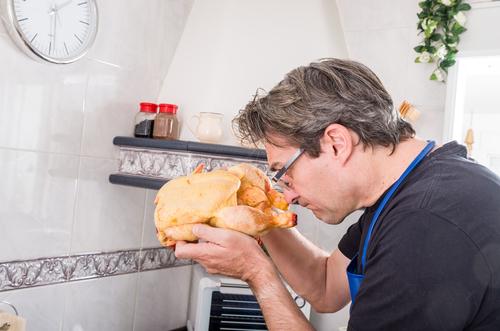
Cookbooks are popular. Cookbooks are instructional.

But they are woefully lacking information about a vital thing - food safety. An analysis of 1,497 recipes from 29 cookbooks that appeared on the New York Times best sellers list for food and diet books, all of which included handling raw animal ingredients, such as meat, poultry, seafood or eggs, didn't note food safety much at all.

Specifically, the researchers looked for three things:

* Did the recipe tell readers to cook the dish to a specific internal temperature?

A group called US Right To Know is embracing the rich history of the anti-science movement; a history filled with lots of revenue for smear campaigns against scientists, companies in the science business, and more overtly, political allies opposed to the same science they are.

If you read the claims of environmental groups, trace levels of chemicals are the source of most cancers, even if they are well below harmful levels, due to vague claims of "bioaccumulation." If you read the recent claims of the EPA, air pollution is causing acute deaths, even though the United States has some of the cleanest air in the world and no one can find any deaths it has caused during the entire existence of the EPA.

Dr. Norm Borlaug, Nobel Laureate and "Father of the Green Revolution" was obviously a big believer in advancing an evidence-based, pro-science approach to food, He saw the need for debunking the myths that a generation of environmental groups began creating in the 1960s: Those groups believed that science was doing more harm than good, and we simply had to resign ourselves to famine and starvation and Draconian measures might need to be taken to control the population.

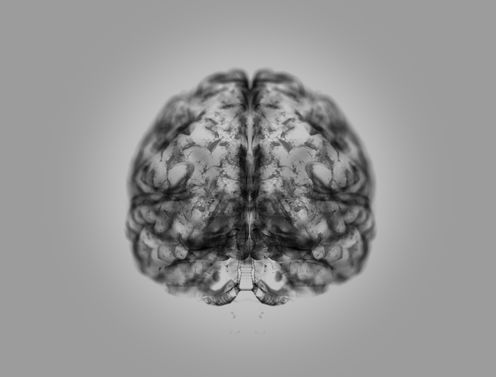
Neurological and psychiatric conditions both involve the brain, but are treated very differently. Put simply, neurologists are trained to deal with the “brain” and psychiatrists to deal with the “mind”. Neurologists and psychiatrists formally parted company in the late 19th century.

Ever since the days of Sigmund Freud – who was originally a neurologist but is also the father of psychoanalysis – the way we think about brain disorders has been coloured by this artificial divide.