



An interesting Economist article about sex differences in a visual task calls an evolutionary explanation a “just-so story.” I don’t know if the late Stephen Jay Gould, evolutionary theorist, Harvard professor, and “one of the most influential and widely-read writers of popular science of his generation” (Wikipedia), invented this form of dismissal, but certainly he was fond of it. Here, for example:

Using atom-level imaging techniques, University of Michigan researchers have revealed important structural details of an enzyme system known as "Mother Nature's blowtorch" for its role in helping the body efficiently break down many drugs and toxins.

The research has been detailed in a series of papers, the most recent published online this month in the journal BBA Biomembranes.

The system involves two proteins that work cooperatively. The first, cytochrome P450, does the actual work, but only when it gets a boost from the second protein, cytochrome b5. To complicate matters, the two proteins can interact only when both are bound to a cell membrane.

Many neuronal disorders, including epilepsy, schizophrenia and lissencephaly – a form of mental retardation -, result from abnormal migration of nerve cells during the development of the brain. Researchers from the Mouse Biology Unit of the European Molecular Biology Laboratory (EMBL) in Italy, have now discovered that a protein that helps organising the cells’ skeleton is crucial for preventing such defects.

The voltage sensor of voltage-gated ion channels is a conserved protein domain that senses millivolt changes in transmembrane potential, to regulate ion permeation through the channel. A recently discovered protein, Ci-VSP, has a voltage sensor that is coupled not to an ion channel but to a phosphatidylinositide phosphosphatase, the activity of which depends on membrane potential.

In a new paper published in The Journal of Physiology, Murata and Okamura, from the Okazaki Institute for Integrative Bioscience, examine a voltage-sensitive phosphatase that converts an electrical to a chemical signal; they directly demonstrate that the enzyme activity of Ci-VSP changes in a voltage-dependent manner through the operation of the voltage sensor.

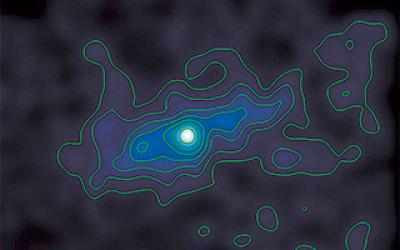
The brand-new Large Binocular Telescope (LBT) in Arizona has a gotten off to an astronomical start, helping an international team of astronomers learn that a recently discovered tiny companion galaxy to our Milky Way, named the Hercules Dwarf Galaxy, has truly exceptional properties: unlike the round tiny dwarf galaxies found so far, this neighbor 430,000 light years away is shaped more like a cigar.

The stars in many large galaxies are arranged in a disk-like configuration, like our Milky Way, but among the millions of well-studied tiny dwarf galaxies none has ever been observed to have a cigar-like shape before now.

An explanation for the galaxy's unusual shape is that it is being disrupted by the gravitational forces of the Milky Way.

Cholesterol level testing at about 15 months of age could prevent heart disease later in life, say doctors in a study published by British Medical Journal today.

Their rationale? Hereditary high cholesterol, known as familial hypercholesterolaemia, affects about two in every 1000 people and causes very high levels of low density lipoprotein (LDL) or ‘bad cholesterol’ in the blood. It carries a high risk of death from coronary heart disease.

Treatment to lower cholesterol reduces the risk substantially, but is it worth the expense to test all children for something that will impact .2% of the population?

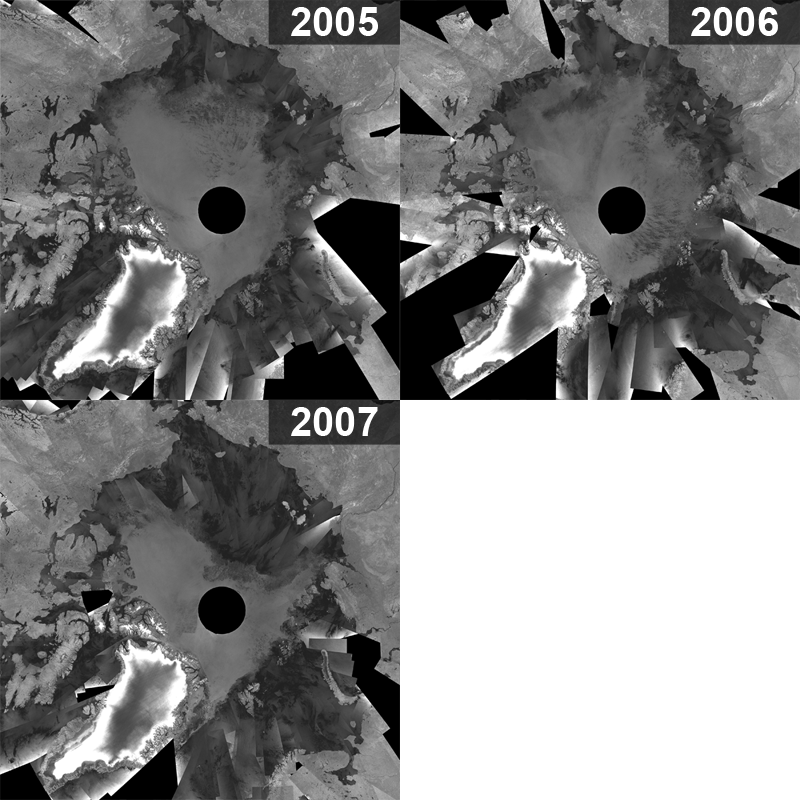
The area covered by sea ice in the Arctic has shrunk to its lowest level this week since satellite measurements began nearly 30 years ago, opening up the Northwest Passage – a long-sought short cut between Europe and Asia that has been historically impassable.

In the mosaic image above, created from nearly 200 images acquired in early September 2007 by the Advanced Synthetic Aperture Radar (ASAR) instrument aboard ESA’s Envisat satellite, the dark gray colour represents the ice-free areas while green represents areas with sea ice.

Leif Toudal Pedersen from the Danish National Space Centre said: "We have seen the ice-covered area drop to just around 3 million sq km which is about 1 million sq km less than the previous minima of 2005 and 2006.

A new study led by Kristin Kramer of the University of Memphis shows that manipulating oxytocin at birth can make changes in the central nervous system that only show up later in life. There's growing concern that the jolt of pitocin routinely used in U.S. hospital births could have unforeseen consequences. This study provides more ammunition. At the same time, it did not show that high doses of oxytocin interfere with social behavior later.

The international car industry is currently presenting many environmentally friendly models at the IAA, the biggest car exhibition in the world. Can the idea sell in the home of Aston-Martin and Jaguar?

Estimates say 64% of British drivers could use hybrids and 21% are thinking hybrid for their next new car. They would even be willing to pay $1900 more than for a conventional car, according to market research institute Maritz Research.

"There is huge enthusiasm for hybrids amongst British consumers," explains Christian Vorwerck, director of marketing at Maritz Research. "The potential for the car industry is massive."

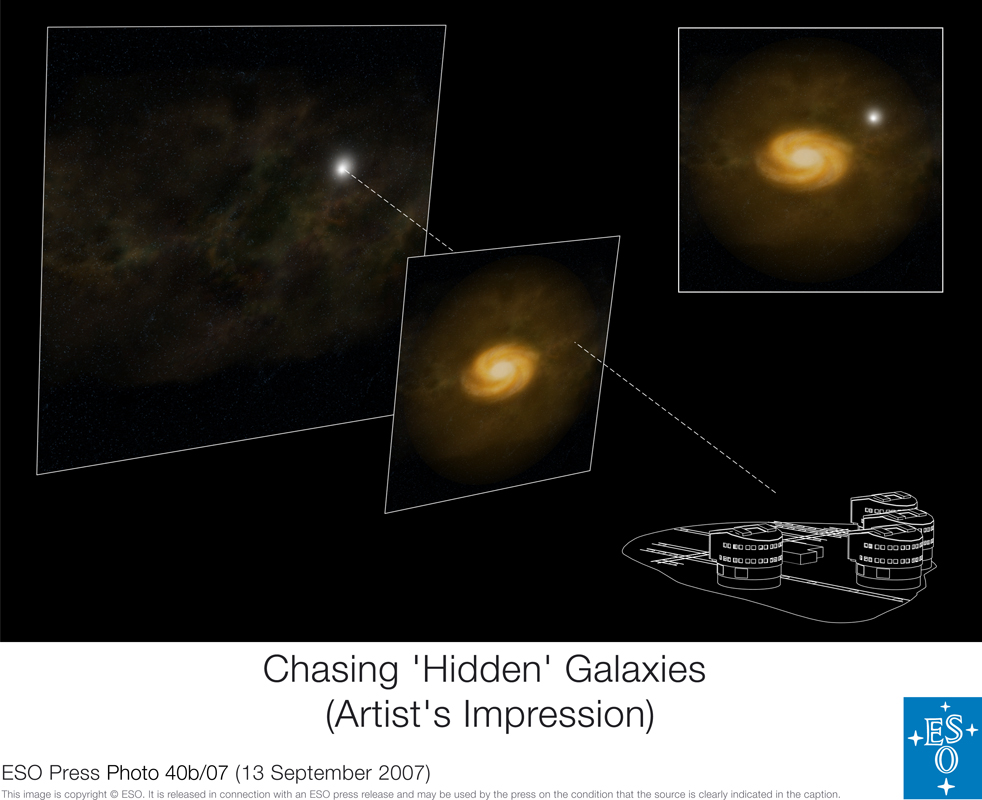
Astronomers using ESO's Very Large Telescope have discovered in a single pass about a dozen otherwise invisible galaxies halfway across the Universe. The discovery, based on a technique that exploits a first-class instrument, represents a major breakthrough in the field of galaxy 'hunting'.

The team of astronomers led by Nicolas Bouché have used quasars to find these galaxies. Quasars are very distant objects of extreme brilliance, which are used as cosmic beacons that reveal galaxies lying between the quasar and us. The galaxy's presence is revealed by a 'dip' in the spectrum of the quasar - caused by the absorption of light at a specific wavelength.

The team used huge catalogues of quasars, the so-called SDSS and 2QZ catalogues, to select quasars with dips.

