







People who experience chronically high levels of loneliness show gene-expression patterns that differ markedly from those of people who don’t feel lonely, according to a new molecular analysis.

The findings suggest that feelings of social isolation are linked to alterations in immune system activity, which result in increased inflammatory signalling within the body. This is the first study to show an alteration in genome-wide transcriptional activity linked to a social epidemiological risk factor. It provides a molecular framework for understanding why social factors are linked to an increased risk of diseases where inflammation is thought to be a factor, such as heart disease, infection and cancer.

Drug dealers found with bank notes contaminated with unusually high levels of drugs are now less likely to get away with their crimes, thanks to new evidence from a team led by the University of Bristol. The research finds that geographical location has absolutely no influence on the distribution of contamination.

Paper money is almost always tainted with some drug residue. Evidence presented at court shows how banknotes seized from a suspect may differ from banknotes in general circulation, in the form of higher contamination with drugs.

A question arising from such evidence is whether seized banknotes could have become contaminated through being in circulation in drug ‘hot spots’.

Astronomers have discovered one of the most bizarre planet-mass objects ever found.

The object’s minimum mass is only about 7 times the mass of Jupiter. But instead of orbiting a normal star, this low-mass body orbits a rapidly spinning pulsar. It orbits the pulsar every 54.7 minutes at an average distance of only about 230,000 miles (slightly less than the Earth-Moon distance).

"This object is merely the skeleton of a star," says co-discoverer Craig Markwardt of NASA’s Goddard Space Flight Center in Greenbelt, Md.

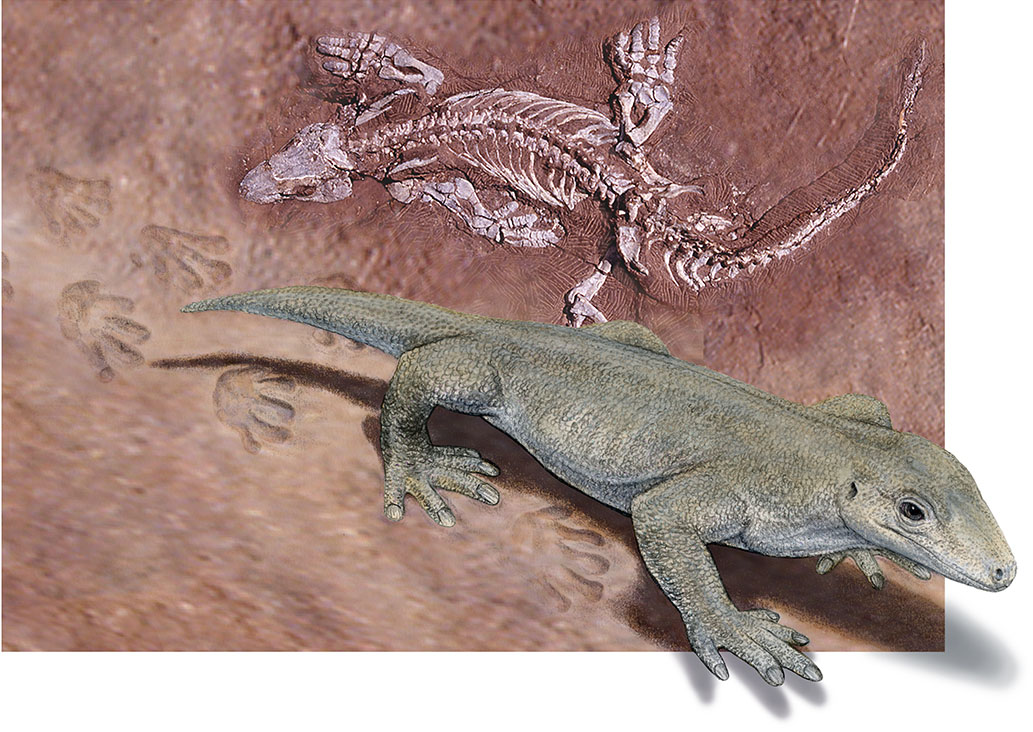
Fossilized footprints are relatively common, but figuring out exactly which ancient creature made particular tracks has been a mystery that has long stumped paleontologists. In the latest issue of the Journal of Vertebrate Paleontology, a team of researchers overcome this dilemma for the first time, and link a fossil trackway to a well-known fossil animal.

Sebastian Voigt, a trackway expert from the Institute of Geology, Freiberg University of Mining and Technology, Germany, and David Berman and Amy Henrici of the Carnegie Museum of Natural History, Pittsburgh, who study fossil skeletons, took a close look at an exceptional fossil collection from 290-million-year-old sediments of central Germany known as the Tambach Formation.

Scientists in Australia have found a way of identifying probable stem cells in the lining of women’s wombs. The finding opens up the possibility of using the stem cells for tissue engineering applications such as building up natural tissue to repair prolapsed pelvic floors. Pelvic floor prolapse is a common condition, affecting over 50% of women after childbirth; around one in ten women have surgery and a third of these women require repeated operations to correct the problem.

An international team of astronomers has announced the first discovery of a planet orbiting a star near the end of its life.

The announcement, culminating seven years of research, will be published in the Sept. 13 issue of the journal Nature.

The news provides a preliminary picture of what could be the Earth's destiny in four to five billion years. That's when the sun will exhaust its hydrogen fuel, expand enormously as a red giant and expel its outer layers in an explosive helium flash.

The planet discovered by the researchers, "V 391 Pegasi b," has survived all those changes to its sun.


This image represents planet "V 391 Pegasi b" as it survives the red giant expansion of its dying sun.

In yacht racing, a one percent difference in boat resistance leads to a gain or loss of more than 30 seconds in a match race.

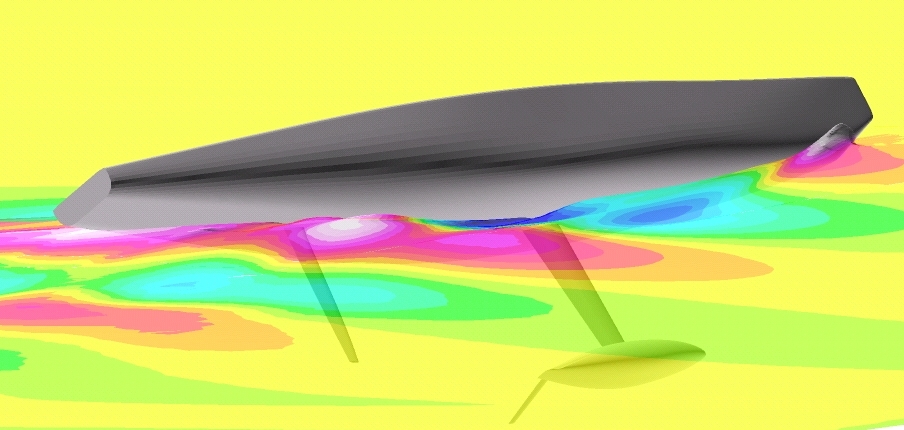
Computational fluid dynamics research done by the winning Swiss Alinghi America's Cup syndicate led to gains of 2-5 percent in drag reduction on appendages like the keel, bulb and winglets, absolutely essential gains when you take into consideration that opponent Emirates Team New Zealand won two of the first three races but lost when the wind was more difficult.

Advanced numerical methods have come a long way, it seems.

The 2007 America's Cup was the first time every major contender used applied mathematics and computer simulation. As competition gets more fierce, the optimization of every part becomes more important.

A sweeping review of research studies of aspartame says there is no evidence that the non-nutritive sweetener causes cancer, neurological damage or other health problems in humans

Looking at more than 500 reports, including toxicological, clinical and epidemiological studies dating from 1970’s preclinical work to the latest studies on the high-intensity sweetener, along with use levels and regulations data, an international expert panel from 10 universities and medical schools evaluated the safety of aspartame for people of all ages and with a variety of health conditions. Their study is published in the September issue of Critical Reviews in Toxicology.

What killed the Neanderthals? No one can say for sure but an international study led by the University of Leeds has ruled out one of the popular recent theories, catastrophic climate change, as the most likely cause.

The bones of more than 400 Neanderthals have been found since the first discoveries were made in the early 19th century. The finds suggest the Neanderthals, named after the Neander Valley near Düsseldorf, where they were first recognized as an extinct kind of archaic humans, inhabited Europe and parts of western Asia for more than 100,000 years.

The causes of their extinction have puzzled scientists for years – with some believing it was due to competition with modern humans, while others blamed deteriorating climatic conditions.

A new study by researchers at Johns Hopkins and Princeton Universities says US healthcare workers are paid too much yet there aren't enough of them. Fewer days in hospitals are offset by more outpatient services and not enough attention is paid to chronic health issues.

Compared to the average Organization for Economic Cooperation and Development (OECD) country in 2004, the United States has fewer health resources—physicians, nurses and hospital beds—and lower utilization of these resources. Health spending for chronic health issues, such as obesity, alcohol consumption and smoking, also contributes to high health spending in the United States.

