A new article published in the August issue of Current Directions in Psychological Science, a journal of the Association for Psychological Science, suggests that infants fine-tune their visual and auditory systems to stimuli during the first year of life, essentially “weeding out” unnecessary discriminatory abilities.

Lisa Scott, a psychologist at the University of Massachusetts at Amherst, and her colleagues examined several studies suggesting that infants begin to hone their perceptual discrimination to environmentally relevant distinctions by 9-12 months of age. At the same time, the discrimination of environmentally irrelevant, or less frequently encountered, distinctions declines.

Did male deer evolve less durable teeth because they expect to die young or do they die sooner because their teeth wear out?

Natural selection favors reproduction rather than survival; the cost of reproduction compromises survival. Males of species subjected to intense male-male competition for access to females are known to have shorter life expectancies than females. Earlier aging in males might be related to higher reproductive costs, especially when lifetime reproductive success in males takes place within the few years when they can win contests and maintain their dominance.

Mr. Hank Campbell, founder of Scientific Blogging, requested that I respond to a recent posting by Seth Roberts, a professor of psychology at UC Berkeley. Roberts attacks me as part of his continuing defense of another psychology professor, Michael Bailey of Northwestern University. In my judgment, Bailey’s work is bigoted and fraudulent.

Roberts quotes from an op-ed I wrote in 2003 for the Stanford student newspaper describing a talk Bailey presented to the Stanford psychology department. The talk included film clips, animated cartoons, pictures and voice recordings to train people’s “gaydar”, and it elicited back-slapping laughs from the audience. I stand by my description of that incident, including the quotation Roberts cites.

Also in 2003, Bailey’s book, The Man Who Would be Queen, appeared under an imprint of the National Academies of Science, Engineering and Medicine. On National Academies’ letterhead, the publicity advertised, “Gay, Straight or Lying? Science Has The Answer”, and promised conclusions that “may not always be politically correct, but… are scientifically accurate, thoroughly researched and occasionally startling.” The book’s thesis is that all male-to-female transsexuals are either gay men or straight fetishists. In 2004 I wrote a review of the book and its surrounding context that has now been translated into German, Spanish, Portuguese, and Russian, courtesy of Lynn Conway, a computer scientist in Michigan. The situation has not changed materially since then.

Research by the University at Albany shows that information conveyed by a kiss can have profound consequences for romantic relationships, and can even be a major factor in ending one.

In a recently published article, Susan M. Hughes, Marissa A. Harrison, and Gordon G. Gallup, Jr. reveal that many college students have found themselves attracted to someone, only to discover after they kissed them for the first time that they were no longer interested.

"In other words," said Gallup, an evolutionary psychologist, "While many forces lead two people to connect romantically, the kiss, particularly the first kiss, can be a deal breaker."

How does the Great Barrier Reef work, and coral worldwide? Why do they bleach and die and how will they respond to climate change?

Scientists at the ARC Centre of Excellence for Coral Reef Studies, James Cook University and the University of Queensland have compiled the world’s first detailed gene expression library for Symbiodinium, the microscopic algae that feed the corals – and so provide the primary energy source for the entire Reef.

“Symbiodinium uses sunlight to convert CO2 into carbohydrates for the corals to feed on. At the same time there’s evidence the corals control its output, suggesting that they are farming their captive plants” Professor David Yellowlees explains.

The Spallation Neutron Source, the Department of Energy's $1.4 billion research facility at Oak Ridge National Laboratory, has established a new record as the world's most powerful accelerator based source of neutrons for scientific research.

The SNS surpassed the previous record for beam power 160 kilowatts, held by the United Kingdom's ISIS facility, while operating at 183 kilowatts. As the SNS ramps up toward an eventual 1.4 megawatts of power, the beams will produce up to 10 times more neutrons than any existing pulsed neutron source.

A trio of Tennessee lawmakers -- Sen. Lamar Alexander (R-Maryville), Rep. Bart Gordon (D-Murfreesboro) and Rep.

How much more would you pay to be near people like you? What about education?

Using restricted-access Census data, a new study examines a quarter-million households on a block-by-block basis to yield new results about the correlation between household attributes and school quality. The researchers find that, conditional on income, households prefer to self-segregate on the basis of both race and education.

“Economists have long been interested in estimating household preferences for school and neighborhood attributes, given their relevance to many central issues in applied economics,” write Patrick Bayer (Duke University and NBER), Fernando Ferreira (University of Pennsylvania), and Robert McMillan (University of Toronto and NBER) in the Journal of Political Economy.

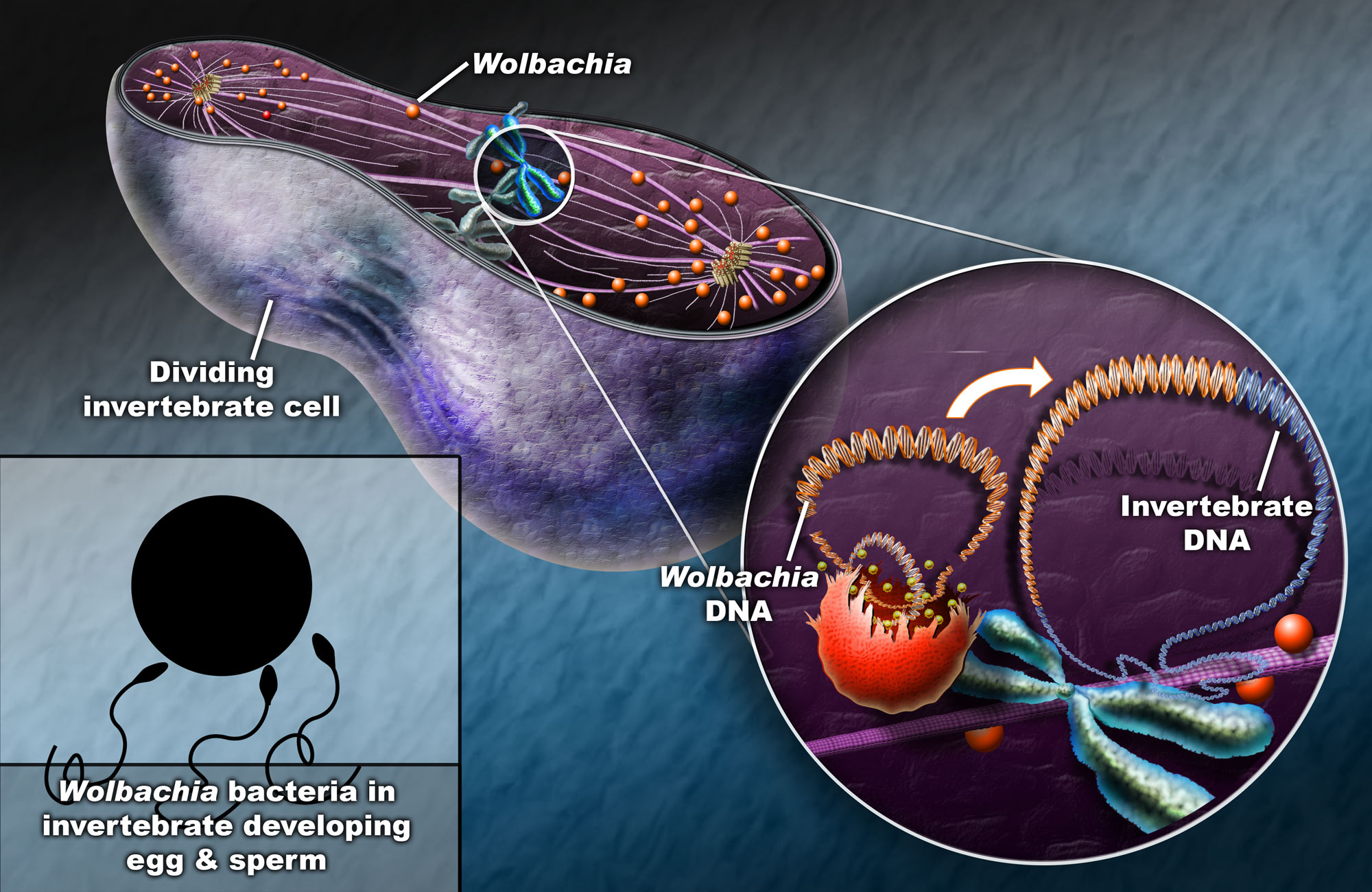
Bacterial parasites are a lot more creative than we thought. It turns out one species, Wolbachia, can insert almost its entire genome into the genomes of members of one host species (a fly called Drosophila ananassae), and can insert parts of its genome into the genomes of members of several other host species.

"We've found at least one species where the parasite's entire or nearly entire genome has been absorbed and integrated into the host's," says Jack Werren of the University of Rochester, principle investigator of the study and a world-leading authority on the Wolbachia parasite.

Scientists for the first time have observed elusive oscillations in the sun's corona, known as Alfvén waves, that transport energy outward from the surface of the sun. The discovery may give researchers more insight into solar magnetic fields, eventually leading to a better understanding of how the sun affects Earth's atmosphere and the entire solar system.

By tracking the speed and direction of the waves, researchers will be able to infer basic properties of the solar atmosphere, such as the density and direction of magnetic fields.

There have been a few additions to the SciFoo Lives On area on Nature Island in Second Life. The area has been divided into 36 numbered plots and most posters from the first two sessions have been moved to fill the first 10 spots. Posters for future sessions will be added sequentially as they are created. (Thanks to Eloise and Beth for help with this!) This makes the area much more appealing and permits regular poster sessions where people can meet at any time to present and discuss. I have been a huge fan of the effectiveness of poster sessions in Second Life after my first experience.