





Recent probes inside comets show it is overwhelmingly likely that life began in space, according to a new paper by Cardiff University scientists.

Professor Chandra Wickramasinghe and colleagues at the University’s Centre for Astrobiology have long argued the case for panspermia - the theory that life began inside comets and then spread to habitable planets across the galaxy. A recent BBC Horizon documentary traced the development of the theory.

Now the team claims that findings from space probes sent to investigate passing comets reveal how the first organisms could have formed.

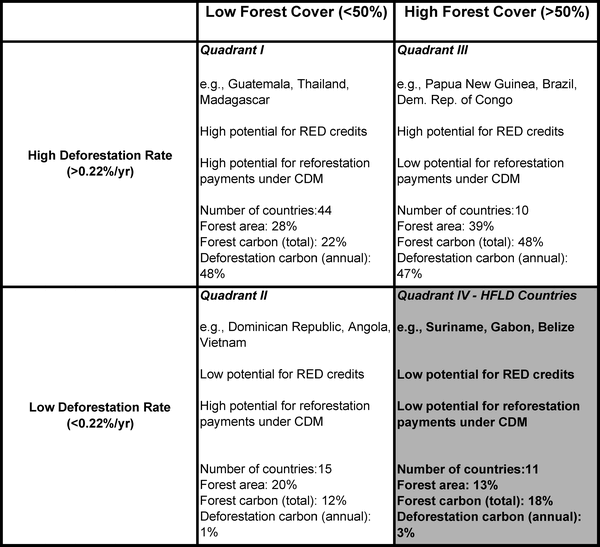
Cutting and burning tropical forests releases the atmospheric carbon they store, contributing significantly to global climate change.

Researchers at Rensselaer Polytechnic Institute have developed a new energy storage device that easily could be mistaken for a simple sheet of black paper.

The nanoengineered battery is lightweight, ultra thin, completely flexible, and geared toward meeting the trickiest design and energy requirements of tomorrow’s gadgets, implantable medical equipment, and transportation vehicles.

Along with its ability to function in temperatures up to 300 degrees Fahrenheit and down to 100 below zero, the device is completely integrated and can be printed like paper. The device is also unique in that it can function as both a high-energy battery and a high-power supercapacitor, which are generally separate components in most electrical systems.

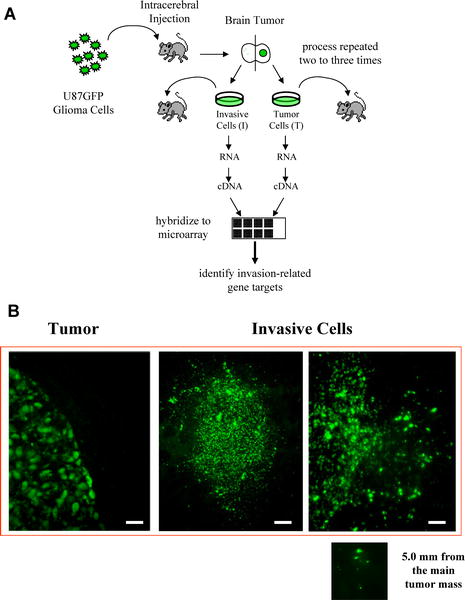
The invasive nature of cancers in general, and malignant gliomas in particular, is a major clinical problem rendering tumors incurable by conventional therapies.

Using a novel invasive glioma mouse model established by serial in vivo selection, new research has identified the p75 neurotrophin receptor (p75NTR) as a critical regulator of glioma invasion.

About 40 percent of deaths worldwide are caused by water, air and soil pollution, concludes David Pimentel, Cornell professor of ecology and agricultural sciences.

Such environmental degradation, coupled with the growth in world population, are major causes behind the rapid increase in human diseases, which the World Health Organization has recently reported. Both factors contribute to the malnourishment and disease susceptibility of 3.7 billion people, he says.

Pimentel and a team of Cornell graduate students examined data from more than 120 published papers on the effects of population growth, malnutrition and various kinds of environmental degradation on human diseases.

Do the overall efficiencies of renewable energy sources, such as wind, solar, and geothermal add up in terms of their complete life cycle from materials sourcing, manufacture, running, and decommissioning? Researchers in Greece have carried out a life cycle assessment to find the answer.

Increasing energy consumption and a growing world population implies shrinking reserves of fossil fuels. While the use of fossil fuels brings with it the problem of carbon dioxide emissions and climate change. Continued dependence on fossil fuels coupled with the pressing global issue of climate change has pushed the concept of renewable energy sources to the top of the agenda.

A recent Newsweek magazine cover story on global warming contained significant errors and used outdated scientific material in its representation of global climate data collected by satellites, according to the scientists who maintain that dataset at The University of Alabama in Huntsville.

Dr. John Christy and Dr. Roy Spencer, who created and maintain the global temperature dataset, recently addressed how instruments aboard NOAA satellites collect temperature data and about the accuracy of that data.

If you’re among the creatures that produce scads of genetically identical offspring – like microbes, plants or water fleas - you have a good evolutionary strategy, a new study says.

These creatures provide a chance to wonder about the clones raised in near-identical environments that turn out differently than their kin. In this week’s Proceedings of the National Academy of Sciences, a Michigan State University zoologist and others report how the greater good of a genetic pool of identical organisms is affected when a few individuals break from the developmental pack.

Men really only think about women, it seems, even to the point of evolving to be more attractive to them.

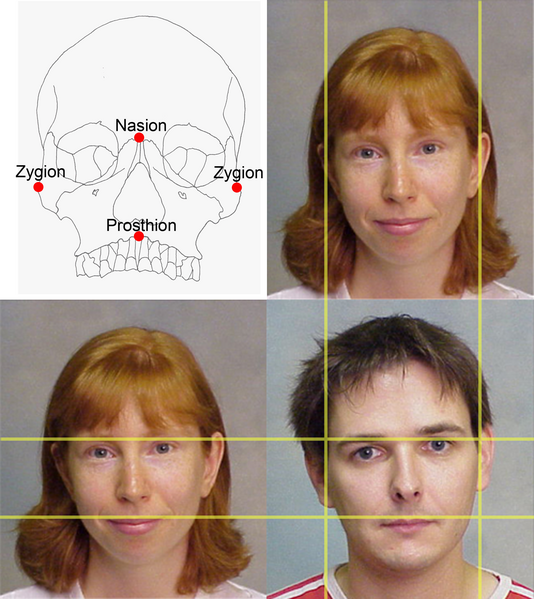
Men with large jaws, flaring cheeks and large eyebrows are sexy, at least in the eyes of our ancestors, researchers at the Natural History Museum have discovered. Facial attractiveness played a major role in shaping human evolution, as studies on our fossil ancestors have shown our choice of sexual partner has shaped the human face.

Dr Eleanor Weston, palaeontologist at the Natural History Museum said, ‘The evolution of facial appearance is central to understanding what makes men and women attractive to each other.

Did a group of Indian scholars out-math Newton hundreds of years before he was born?

Dr George Gheverghese Joseph from The University of Manchester says the ‘Kerala School’ in India identified the ‘infinite series’- one of the founding principles of modern mathematics and a basic component of calculus - in about 1350.

Circumstantial evidence listed by Gheverghese also says that the Indians passed on their discoveries to mathematically knowledgeable Jesuit missionaries who visited India during the fifteenth century and that knowledge may have been passed on to Sir Isaac later.

The discovery is attributed ( wrongly, says Gheverghese ) to Newton and Gottfried Leibnitz at the end of the seventeenth centuries.

The team from the Universities of Manchester and Exeter reveal the Kerala

