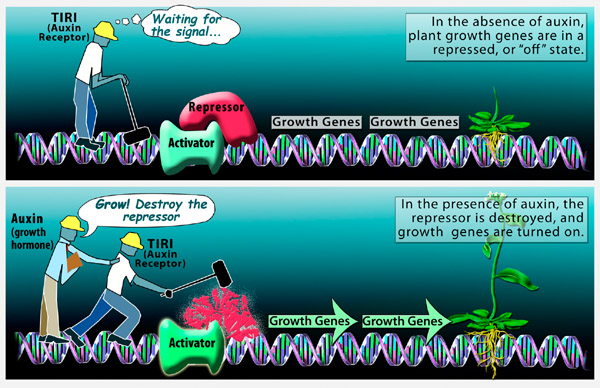







The plant growth hormone auxin is controlled by circadian rhythms within the plant, UC Davis researchers have found. The discovery explains how plants can time their growth to take advantage of resources such as light and water, and suggests that many other processes may be influenced by circadian rhythms.

Auxin tells shoots to grow away from the ground and toward light and water. Charles Darwin conducted early experiments that showed how auxin affects plant growth. Most plants and animals have an internal clock that allows them to match their activities to the time of day or season of the year.


Credit: dlarborist.com

Italians, Irish and European Jews were all once considered 'non-white' by the standards of their day but that's hardly the case now - and certainly not the case with the descendants of those immigrants.

But a new study on Latino immigrants finds that, in contrast to past generations of European immigrants, a significant share of second-and-third-generation Latino-Americans still identify with a Latino racial category.

Joseph Michael, a UC doctoral student in the Department of Sociology and a researcher at the National Opinion Research Center at the University of Chicago, and Jeffrey Timberlake, University of Cincinnati assistant professor of sociology, are examining how the immigration of Latinos to the United States compares to the earlier European immigration waves of white ethnic

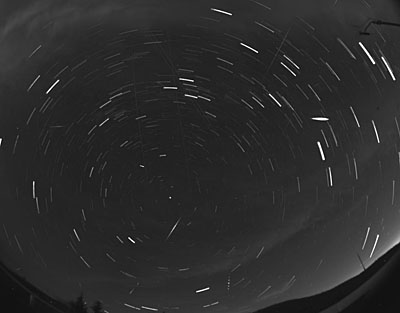
Enthusiastic observers were rewarded by a nice display of the Perseid meteor shower that was visible at its best in the night between 12 and 13 August 2007. We present glimpses of the spectacle and the scientific rewards of staying up all night.

The comet Swift-Tuttle orbits the Sun with a period of about 130 years. Whenever the comet comes close to the Sun in its orbit, it ejects a stream of dust particles, which are then distributed along its orbit. When the Earth passes through their path - a regular occurrence every August - we see a meteor shower, a fabulous spectacle for viewers on Earth.

Quinn Norton, a San Francisco journalist, had a tiny magnet implanted in her finger, which enabled her to detect electrical fields.

Bits of my laptop became familiar as tingles and buzzes. Every so often I would pass near something and get an unexpected vibration. Live phone pairs on the sides of houses sometimes startled me.

You might think of self-experimentation as a modern version of “know thyself” but this is “know the rest of the world”.

Cocaine abuse in the U.S. is widespread, with nearly 35 million Americans reporting having ever tried cocaine and an estimated 7.3 million users, including 15 percent of young adults ages 18 to 25, according to the National Institute on Drug Abuse.

Life-threatening emergencies related to cocaine use include sudden cardiac death, high blood pressure, stroke and acute myocardial infarctions.

UT Southwestern Medical Center researchers have discovered a treatment that counteracts the effects of cocaine on the human cardiovascular system, including lowering the elevated heart rate and blood pressure often found in cocaine users.

Robert Weinberg, MIT professor of biology and Whitehead Institute for Biomedical Research member, has created cancer stem cells in a Petri dish by isolating and transforming a particular population of cells from human breast tissue. After being injected with just 100 of these transformed cells, mice developed tumors that metastasized (spread to distant tissues).

“The operational definition of a cancer stem cell is the ability to initiate a tumor, so these are cancer stem cells,” declares Weinberg, who is also an MIT professor of biology.

Engineering these potent cells was not the original intent, says pathologist Tan Ince.

Two new studies may lead to the development of more effective therapies for individuals with multiple myeloma (MM), a common and incurable blood cell cancer. The research provides new insight into the molecular mechanisms that underlie aberrant NF-κB activity in MM tumor cells and underscores the relevance of the NF-κB signaling pathway as a target for MM therapy.

MM is a cancer of the plasma cell, a blood cell that produces antibodies to help the body fight off infections. Previous research implicates abnormal activation of the NF-κB signaling pathway as a key event in MM pathology. NF-κB target genes are known to be involved in cell proliferation and cell survival.

James Spivey, professor of chemical engineering at LSU, and Challa Kumar, group leader of nanofabrication at LSU’s Center for Advanced Microstructures and Devices, are working with Clemson University and Oak Ridge National Laboratories to boost the efficiency of ethanol.

Both the Department of Energy and Conoco-Phillips are behind the project and have invested $2.9 million.

“We’re working with our project partners to produce ethanol from a coal-derived syngas, a mixture of primarily carbon monoxide and hydrogen. The United States has tremendous reserves of coal, but converting it to affordable, clean fuels is a challenge – one that we are addressing in this DOE-funded project,” said Spivey.

In a study scheduled for publication in the August issue of the American Journal of Chinese Medicine, a team of kinesiologists at the University of Illinois suggest that older adults who adopt an exercise regimen combining Taiji ( western: T'ai Chi) and Qigong may get an extra boost from their annual flu shot.

“We have found that 20 weeks of Taiji can increase the antibody response to influenza vaccine in older adults,” said the study’s lead author Yang Yang, an adjunct professor of kinesiology and community health, and a Taiji master with 30-plus years of experience as a practitioner and instructor.

Researchers who use the TeraGrid, the nation’s most comprehensive and advanced infrastructure for open scientific research, can now leverage the computing resources of a powerful, 2048-processor BlueGene/L system at the National Center for Atmospheric Research (NCAR).

NCAR plans to provide up to 4.5 million processor-hours of BlueGene/L computing annually to researchers who have received computing grants from the National Science Foundation (NSF).

The operational integration of TeraGrid with the BlueGene/L system, nicknamed “frost,” involved extensive preparation by NCAR’s Computational and Information Systems Laboratory (CISL).

