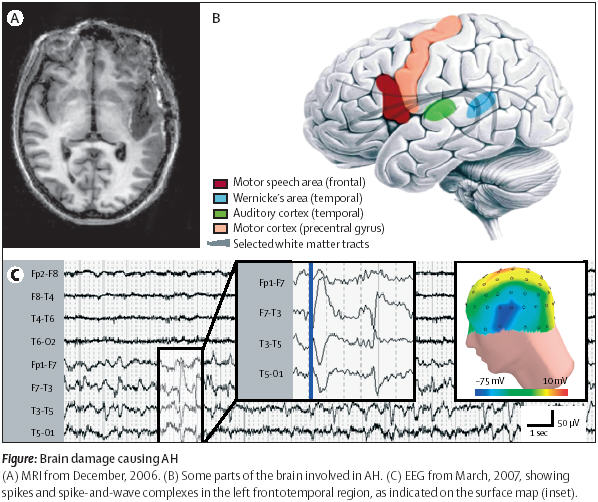





The unusual case of a woman who heard voices with her own speech impairments in her head after a bicycle accident is examined in a Case Report in this week’s edition of The Lancet. The woman was treated by Dr Daniela Hubl, University Hospital of Psychiatry, Bern, Switzerland, and colleagues, who authored the Case Report.

It was in August 2006 that the 63-year-old woman, with no previous medical history, was brought to the hospital after falling from her bicycle and hitting her head and having a brain bleed, causing her to lose consciousness. Tests showed she had brain damage covering several lobes and an aneurysm, which was clipped, and she underwent a decompressive craniotomy.

Using selective plant breeding and genetic engineering could be used to reduce the incidence of iron deficiency worldwide by improving the quality of dietary iron, conclude authors of a Seminar in this week’s edition of The Lancet.

Dr Michael Zimmerman, Laboratory for Human Nutrition, Swiss Federal Institute of Technology, Zurich, and colleagues have reviewed published literature worldwide, mainly from the last five years, to prepare the Seminar, which looks at the issue of nutritional iron deficiency in both industrialised and developing countries.

The authors say: “Iron deficiency is one of the leading risk factors for disability and death worldwide, affecting an estimated 2 billion people…the high prevalence of iron deficiency in the developing world has substantial health and eco

Lesson 1. Doing something is better than doing nothing.

"You should go to the studio everyday," a University of Michigan art professor named Richard Sears told his students. "There's no guarantee that you'll make something good -- but if you don't go, you're guaranteed to make nothing." The same is true of science. Every research plan has flaws, often big, obvious ones -- but if you don't do anything, you won't learn anything.

It is not just what’s in your genes, it’s how you turn them on that accounts for the difference between species — at least in yeast — according to a report by Yale researchers in this week’s issue of Science.

“We’ve known for a while that the protein coding genes of humans and chimpanzees are about 99 percent the same,” said senior author Michael Snyder, the Cullman Professor of Molecular Cellular and Developmental Biology at Yale. “The challenge for biologists is accounting for what causes the substantial difference between the person and the chimp.”

Conventional wisdom has been that if the difference is not the gene content, the difference must be in the way regulation of genes produces their protein products.

Computer scientists at the University of Washington have developed software that is incorporated in new technology allowing television audiences to instantaneously see how air flows around speeding cars.

The algorithm, first presented at a computer graphics conference last August, was since used by sports network ESPN and sporting-technology company Sportvision Inc. to create a new effect for racing coverage.

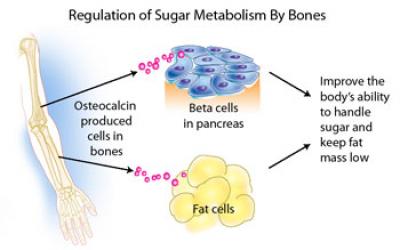
Bones are typically thought of as calcified, inert structures, but researchers at Columbia University Medical Center have now identified a surprising and critically important novel function of the skeleton: they’ve shown for the first time that the skeleton is an endocrine organ that helps control our sugar metabolism and weight and, as such, is a major determinant of the development of type 2 diabetes.

The research demonstrates that bone cells release a hormone called osteocalcin, which controls the regulation of blood sugar (glucose) and fat deposition through synergistic mechanisms previously not recognized. Usually, an increase in insulin secretion is accompanied by a decrease in insulin sensitivity.

It may not be inhaled into the lungs, but smokeless tobacco exposes users to some of the same potent carcinogens as cigarettes. In the August issue of Cancer Epidemiology, Biomarkers & Prevention, a journal of the American Association for Cancer Research, researchers at the University of Minnesota Cancer Center report that users of smokeless tobacco are exposed to higher amounts of tobacco-specific nitrosamines -- molecules that are known to be carcinogenic -- than smokers.

Smokeless tobacco, also known as oral snuff, is a variant on chewing tobacco that users suck on by slipping it between their cheeks and gums.

When most people look at a window they see solid panes of glass but to physicists it isn't so simple. Window glass has always been a puzzle but an Emory University research team led by physicist Eric Weeks has found another clue.

Weeks has devoted his career to probing the mysteries of "squishy" substances that cannot be pinned down as a solid or liquid. Referred to as "soft condensed materials," they include everyday substances such as toothpaste, peanut butter, shaving cream, plastic and glass.

Scientists fully understand the process of water turning to ice.

A nuclear physicist from Florida State University collaborated with other scientists from the United States, Japan and England in an experiment that illustrated how the “normal” rules of physics don’t apply for some unstable elements.

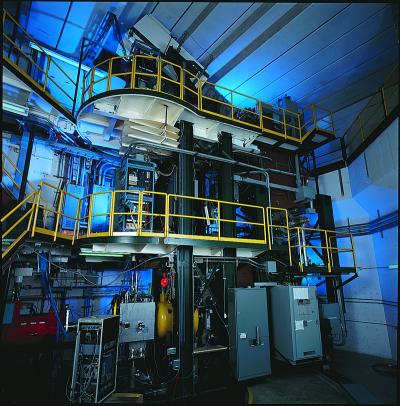
Kirby W. Kemper, the Robert O. Lawton Distinguished Professor of Physics and vice president for Research at FSU, took part in an experiment at the National Superconducting Cyclotron Laboratory, a national user facility located at Michigan State University in East Lansing, Mich. In the experiment, Kemper and his colleagues found that the structure of atomic nuclei of one radioactive isotope in particular -- magnesium-36, or Mg-36 -- is odd and unexpected.

“Ten years ago, complicated experiments like this one were a dream,” Kemper said.

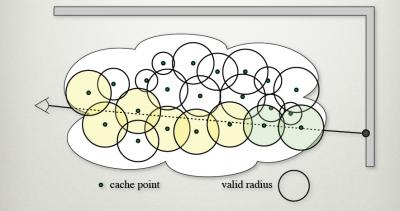
Computer scientists from UC San Diego have developed a way to generate images like smoke-filled bars, foggy alleys and smog-choked cityscapes without the computational drag and slow speed of previous computer graphics methods.

“This is a huge computational savings. It lets you render explosions, smoke, and the architectural lighting design in the presence these kinds of visual effects much faster,” said Wojciech Jarosz, the UC San Diego computer science Ph.D. candidate who led the study.


