We all know how irritating it is to have an inbox flooded with junk mail.
Fortunately email providers these days contain filters to keep the junk mail at bay.

As a result the junk mail folder tends to pile up with never-to-be-read emails.

But, occasionally, an important email is snagged by the filter and is unduly ignored.

We can think of the human genome as a server sending out a constant bombardment of emails. These messages are on average 2,000 letters long, and these “letters” are made up of different types of bases, some of which are packaged in the form of RNA.

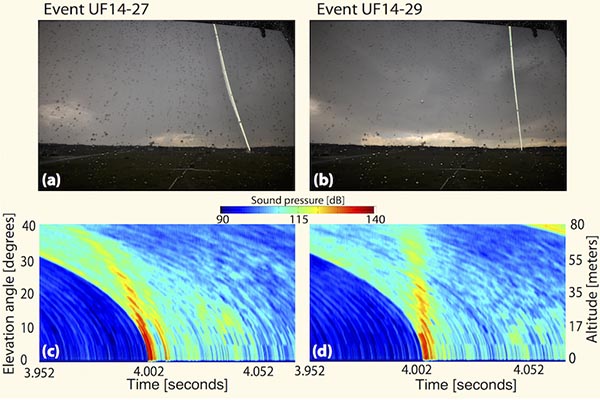
Scientists have successfully imaged thunder for the first time.

A team from Southwest Research Institute has visually captured the sound waves created by artificially triggered lightning, they reported at a joint meeting of American and Canadian geophysical societies in Montreal.

Although people see it as a flashing bolt, lightning begins as a complex process of electrostatic charges churning around in storm clouds. These charges initiate step leaders, branching veins of electricity propagating down, which subsequently lead to a main discharge channel. That channel opens a path to nearly instantaneous return strokes, which form the lightning flash as we see it.

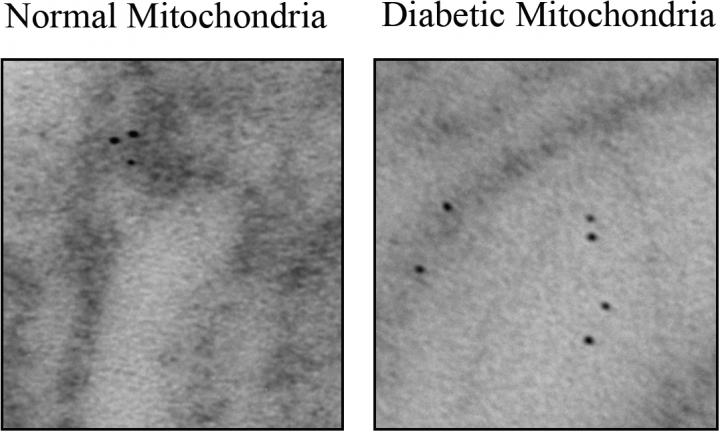
A new study has created a cause-and-effect link between chronic high blood sugar and disruption of mitochondria, the energy factories that create the metabolic energy that power most of our cells. 

Previous experiments by other research groups had shown that the high blood sugar of untreated diabetes alters the activity of mitochondria, compartments that process nutrients into useable energy for cells. To find out why, postdoctoral fellow Dr. Partha Banerjee compared the enzymes in mitochondria from the hearts of rats with diabetes to those from healthy rat hearts. He looked for differences in levels of two enzymes that add and remove a molecule called O-GlcNAc to proteins.  

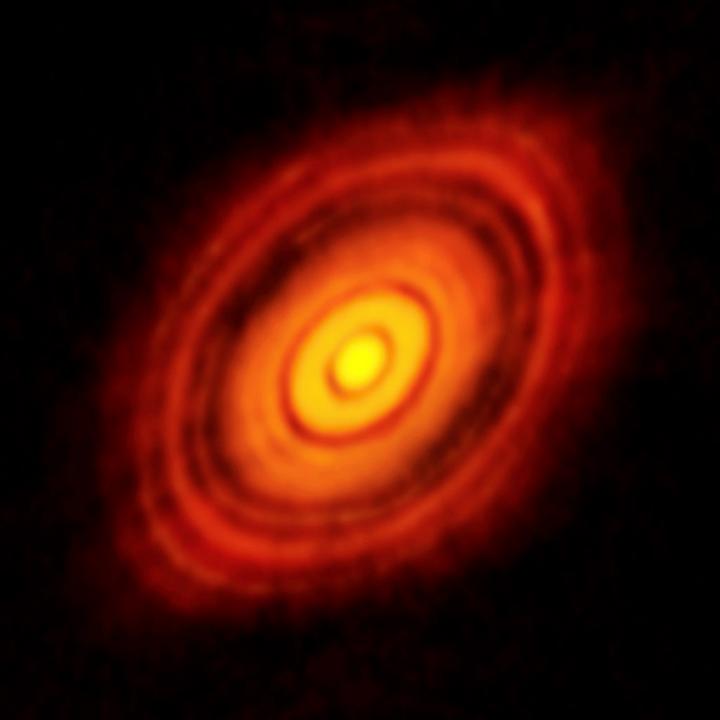
A recent and famous image of HL Tau in deep space marks the first time we've seen a forming planetary system, according to a team of astrophysicists who found that circular gaps in a disk of dust and gas swirling around the young star HL Tau are in fact made by forming planets.

The image of HL Tau, taken in October 2014 by the state-of-the-art Atacama Large Millimeter/submillimeter Array (ALMA) located in Chile's Atacama Desert, sparked a flurry of scientific debate.

The HL Tau system is less than a million years old, about 17.9 billion kilometres in radius and resides 450 light years from Earth in the constellation Taurus.

Our view of what makes us happy has changed  since 1938. In the United States of 1938, for example, it was a good thing not to have heat waves and droughts and a Dust Bowl across 75 percent of the country. It would have made people happy to be out of the Great Depression instead of politicians telling them it had long been over.

Heat waves, droughts, and politicians claiming things are great because Wall Street executives are making money? 1938 does sound a lot like 2015.

Transcranial direct current stimulation, using a weak electric current in an attempt to boost brainpower or treat conditions, has become popular among cognitive do-it-yourselfers and the neuroscience equivalent of people selling dietary supplements, but a new University of North Carolina School of Medicine study urges caution that should be common sense.

New work found that electric brain stimulation had a statistically significant detrimental effect on IQ scores. Using less common alternating current stimulation - so-called tACS - could be a better approach. Tesla beats Edison once again.

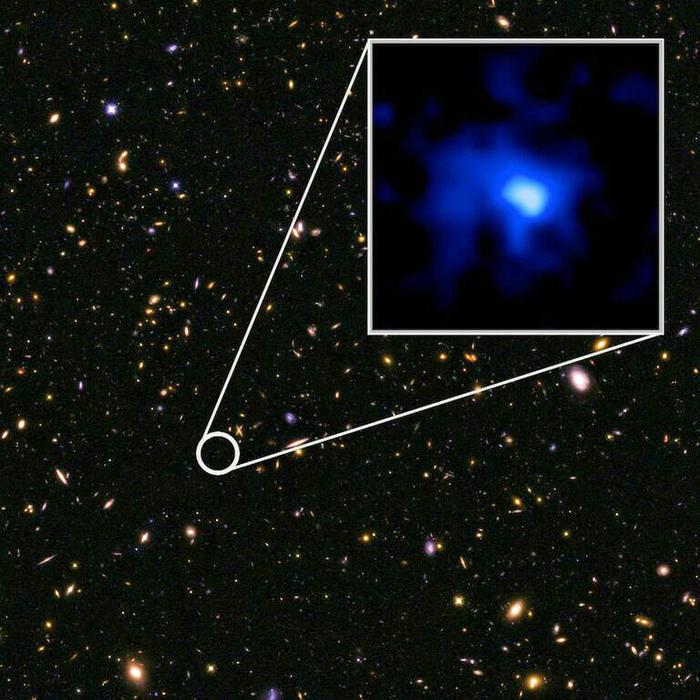
Astronomers have reported an exceptionally luminous galaxy from when the universe was only 5% of its present age - more than 13 billion years in the past.

The galaxy, EGS-zs8-1, was originally identified based on its particular colors in images from NASA's Hubble and Spitzer telescopes and the team determined its exact distance from Earth using the powerful MOSFIRE instrument on the W.M. Keck Observatory's 10-meter telescope in Hawaii. It is the most distant galaxy currently measured and one of the brightest and most massive objects in the early universe. 

If you have ever wondered why you need to snack more at night and many people don't, there may be a neuroscience answer:  areas of the brain that get a satiety "food high" may not get it in the evening. 

In a new study, exercise professors and a neuroscientist used MRI to measure how the  brains of college students respond to high- and low-calorie food images at different times of the day. Functional MRI took pictures of the brain activity of study subjects while they viewed images of food. The participants viewed 360 images during two separate sessions held one week apart--one during morning hours and one during evening hours.

The U.S. educational system clearly produces some of the best minds in the world.

America leads in science output and in adult science literacy, yet when it comes to standardized tests, the United States has always been in the middle of the pack and that has long been a concern.

Genome editing using CRISPR/Cas system has enabled direct modification of the mouse genome in fertilized mouse eggs, leading to rapid, convenient, and efficient one-step production of knockout mice without embryonic stem cells.

In contrast to the ease of targeted gene deletion, the complementary application, called targeted gene cassette insertion or knock-in, in fertilized mouse eggs by CRISPR/Cas mediated genome editing still remains a tough challenge.