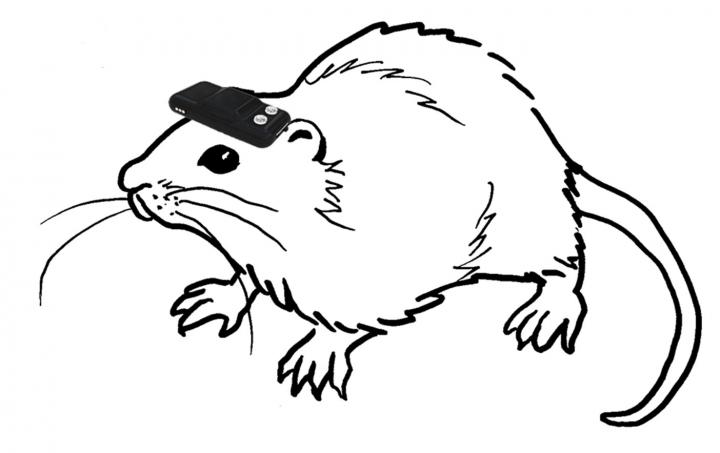





A microstimulator and geomagnetic compass attached to the brains of blind rats allows them to spontaneously learn to use new information about their location and navigate through a maze nearly as well as normally sighted rats.

The findings show the incredible flexibility of the mammalian brain but also suggest that a similar kind of neuroprosthesis could help blind people walk freely through the world.
In a study of more than 6,500 pairs of twins, researchers found that more than half of the differences between pupils performance on the General Certificate of Secondary Education (GCSE) can be explained by differences in genetics.

The research found that although IQ showed the strongest relationship with exam scores other genetically influenced traits such as personality and behavior also explained individual differences in achievement. Intelligence accounted for more of the heritability of GCSE results than any other single domain but the joint contribution of pupils' self-belief, health, behavior problems, personality, well-being, and perceptions of home and school, collectively accounted for the same amount again.

Human beings are information seekers. We are constantly taking in details – big and small – from our environment. But the majority of the stuff we encounter in a given day we rarely need to remember. For instance, what are the chances that you need to remember where you ate lunch with a friend last Wednesday?

But what if later on you learned that there was something important to remember about that lunch? The brain has a remarkable ability to store information that seems inconsequential at the time.

The diversity within grapevine varieties is incredibly rich. This is good news for viticulturists – grape cultivators – and wine makers because it allows them to adapt their wine production according to the conditions in their vineyards and to the wines they want to make.

Pinot is one of the most ancient grapevine varieties and the Pinot family is an invaluable source for the production of a wide range of wines from around the world. There’s the Pinot noir from Burgundy, California or New Zealand, Pinot Meunier in Champagne, Pinot gris in Alsace or Pinot blanc in Italy.


It's not always easy getting people mobilized about the climate. I can't think of a single environmental or pollution issue in the last 40 years where someone did not say a new policy would kill their business.

The scientific community is facing a 'pollution problem' in academic publishing, one that poses a serious threat to the "trustworthiness, utility, and value of science and medicine," according to Arthur L. Caplan, PhD, director of the Division of Medical Ethics in the Department of Population Health at NYU Langone Medical Center.

A prostate cancer test using gold nanoparticles costs less than a $1 and yields results in minutes - results show it to be more sensitive and more exact than the current standard test for early-stage prostate cancer, the less precise PSA test that's now used. 
Rice is well-equipped with an effective immune system that enables it to detect and fend off disease-causing microbes but sometimes nature needs a hand.

A new study shows that rice immunity gets boosted when the plant receives a receptor protein from a completely different plant species, a result which may help increase health and productivity of rice, the staple food for half of the world's population, at least in countries that don't ban food science.
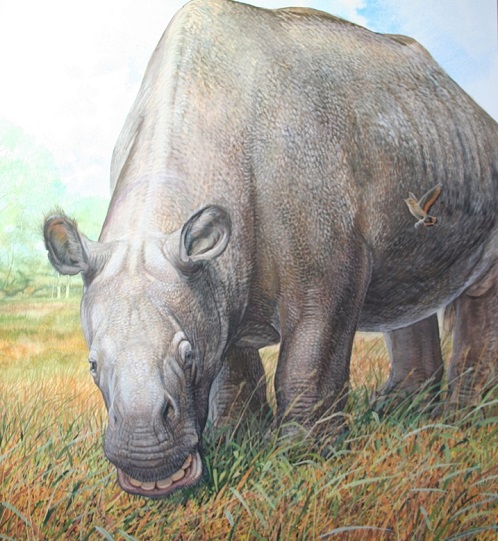
An evolutionary puzzle has baffled palaeontologists for more than 180 years - the origins of Toxodon platensis and Macrauchenia patachonica, South American ungulates (hooved animals) described by Charles Darwin as the ‘strangest animals ever discovered’.

Previous attempts by scientists to pinpoint the origin of the animals using morphology-based and DNA analysis of fossils had failed but a new study presents evidence that the animals were related to mammals like horses, rather than elephants and other African species as some taxonomists have maintained.

When it comes to ethical dilemmas, men are typically more willing to accept harmful actions for the sake of the greater good than women. Why is that?

The classic example is traveling back in time to kill Adolf Hitler as a child - the child had not yet done anything wrong but he is going to be responsible for nearly as many deaths as Stalin and Mao, over 10 million people, so wouldn't it be better to eliminated him, or all three of them? A more topical example is the terrorist attacks in France and across the mid-east. Would it be better to torture a terrorist to find hidden explosives that could kill many people at a local café?


