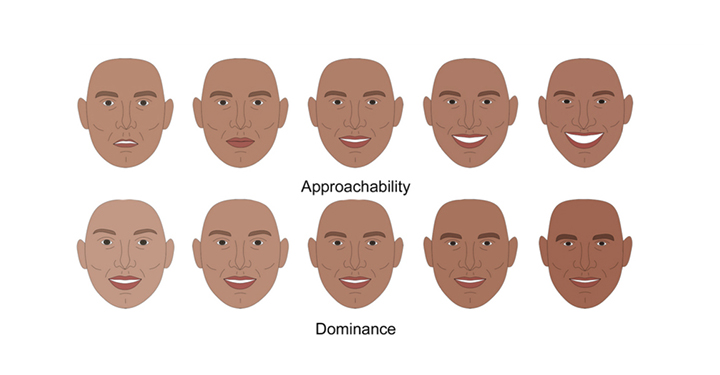
A recent paper discusses shows how rapidly formed first impressions that influence our subsequent behavior towards that person can be accurately predicted based on the physical features found in everyday images of faces, such as those found on social media.
The impressions we create through such images are important in a world where we increasingly get to know one another online rather than in the flesh.
Middle East Respiratory Syndrome (MERS), which emerged in humans last year in the Saudi Arabian peninsula, causes severe respiratory disease, with a mortality rate of 35 percent. No specific therapy is currently available.
Passive immunization, a procedure where you inject a former patient's antibodies into a new patient to fight the disease, has been used in the past, including last year in a small number of cases of Ebola, but in the case of MERS, few former patients are available to donate antibodies. Additionally, their antibody titers are often too low, and many former patients are not healthy enough to donate.
It's supposed to help keep our bodies healthy in stressful situations. But the constant stress of our everyday lives means we're getting overexposed to cortisol. Raychelle Burks, Ph.D., explains why too much cortisol is bad for you in the latest episode of the Reactions series Get To Know A Molecule.
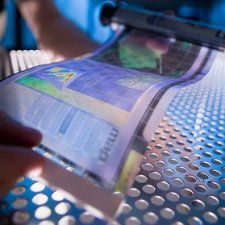
Display screens are everywhere but convenience needs are going up, not down, and people are wanting to break free of rigid monitors. The race is on to develop computer displays that can be easily rolled up and put away rather than requiring a flat surface for storage and transportation.
A new study suggests that a novel DNA-peptide structure can be used to produce thin, transparent, and flexible screens. The research, conducted researchers at Tel Aviv University, harnesses bionanotechnology to emit a full range of colors in one pliable pixel layer, as opposed to the several rigid layers that constitute today's screens.
Warming winters may be linked to mountain pine beetle outbreaks in the coldest areas of the western United States but the causes are multi-faceted, according to a new U.S. Forest Service study.
A new epidemiology paper on the effects of sedentary or 'sitting' time on diabetes risk matched the curves of television watching and obesity and correlated each hour spent watching TV daily with a 3.4 percent greater risk of developing diabetes.
If you are a star gazer, you just got to see a Blood Moon eclipse and if you were thinking that also happened a short while ago, you are not wrong. The latest Blood Moon eclipse is part of a series of four that started on April 14th-15th, 2014 and then again October 7th-8th.
There may be unconscious race and social class biases in trauma and acute-care clinicians, according to a survey, but they did not affects clinical decisions finds an analysis in JAMA Surgery.
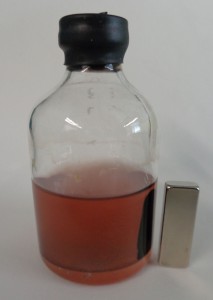
New research shows bacteria can use tiny magnetic particles to effectively create a 'natural battery.' The bacteria can load electrons onto and discharge electrons from microscopic particles of magnetite. This discovery holds out the potential of using this mechanism to help clean up environmental pollution, and other bioengineering applications.
Researchers from the University of Tübingen, the University of Manchester, and Pacific Northwest National Laboratory, USA, incubated the soil and water dwelling purple bacteria Rhodopseudomonas palustris with magnetite and controlled the amount of light the cultures were exposed to.
Deforestation could impact global food production by triggering changes in local climate, according to research on albedo (the amount of the sun's radiation reflected from Earth's surface) and evapotranspiration (the transport of water into the atmosphere from soil, vegetation, and other surfaces) as the primary drivers of changes in local temperature.