






A new study finds that many women diagnosed with breast cancer are concerned about a genetic predisposition for developing other cancers and the chances of a loved one developing cancer.

It is raining in California as I write this but most of it will do little good. The rain is going to go to a gutter and the gutter will go to a stream and that will go to an ocean.

Yes, much of the fresh water that California has runs into the Pacific Ocean. You might wonder why the Pacific Ocean needs so much, since 96 percent of Earth's water is already in oceans, but the oceans are not asking for it. Instead, it is due to anti-science policies lobbied for by well-heeled California environmentalists.
Magnetic fields such as those generated by overhead power lines are considered a potential health risk because epidemiological papers correlate them to neurodegenerative disorders such as Alzheimer's disease and amyotrophic lateral sclerosis (ALS).

Like other concepts that catch the attention of a certain segment of the public, such as GMOs causing cancer, vaccines causing autism, or cell phones causing cancer, it relies on a kernel of scientific truth that is extrapolated out to be a broad effect: Our bodies run on our internal electricity and magnetic fields shape how electricity behaves.
Many people have heard of the Golden Ratio, a ratio that is the midpoint between asymmetry and symmetry - when "the whole is to the larger as the larger is to the smaller". In numerical terms, it is 1.618

Methicillin-resistant Staphylococcus aureus (MRSA), an antibiotic-resistant superbug, can cause life-threatening skin, bloodstream and surgical site infections or pneumonia - a new reports finds that cigarette smoke may make things even worse.

"We already know that smoking cigarettes harms human respiratory and immune cells, and now we've shown that, on the flipside, smoke can also stress out invasive bacteria and make them more aggressive," said senior author Laura E. Crotty Alexander, MD, assistant clinical professor of medicine at UC San Diego and staff physician at the Veterans Affairs San Diego Healthcare System.

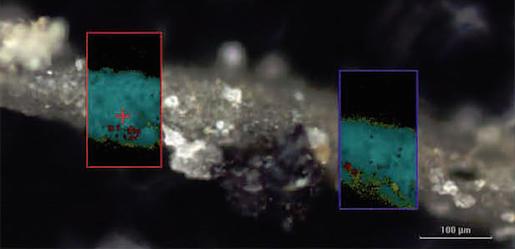
A new study demonstrates for the first time how elemental carbon became an important construction material of some forms of ocean life after one of the greatest mass extinctions in the history of Earth more than 252 million years ago. 

As the Permian Period of the Paleozoic Era ended and the Triassic Period of the Mesozoic Era began, more than 90 percent of terrestrial and marine species became extinct.

Various proposals have been suggested for this extinction event, including extensive volcanic activity, global heating, or even one or more extraterrestrial impacts.

How we get along as siblings is a deeply personal issue and profoundly effects our lives as individuals. It’s an issue that crosses cultures and economies, levels of class and fame.

This point was reinforced to me when I did an interview on the Today Show about the importance of sibling conflict. Co-host Karl Stefanovic torpedoed in at the end and dismissed everything I was saying as nonsense. He made it clear that his lifelong domination of his younger brother, Peter, is perfectly normal and acceptable. If anything he seemed to be very proud of it.

A new study has found that nearly all pancreatic cancers enslave and deform mitochondria, the powerhouses of cells, and force them to divide unnaturally, to lose their normal shape and collapse around the cell's nucleus. 

This creates an environment even more conducive to tumor growth. 

John Baez writes in "The Crackpot Index - A simple method for rating potentially revolutionary contributions to physics":

Sulfolobus islandicus microbes can go dormant, ceasing to grow and reproduce, in order to protect themselves from infection by Sulfolobus spindle-shaped virus 9 (SSV9).

The dormant microbes are able to recover if the virus goes away within 24 to 48 hours, otherwise they die.  

Sulfolobus is a species of archaea (a domain of single-celled organisms distinct from bacteria) found in acidic hot springs all over the world, where free viruses are not as common as in other environments. These microbes will go dormant in the presence of just a few viruses, whether active or inactive. While inactivated virus particles cannot infect a host, researchers found they could still cause dormancy, and ultimately, death in Sulfolobus.

