



Low back pain is the leading cause of disability worldwide, and osteoarthritis of the hip or knee is the 11th highest contributor to global disability.  A new study found paracetamol is ineffective in reducing pain, disability or improving quality of life for patients who suffer from low back pain or osteoarthritis of the hip or knee, and its use may affect the liver.

Paracetamol is currently recommended by most international clinical guidelines as a first line treatment for low back pain and osteoarthritis but it is no better at treating low back pain than a placebo and its effect on osteoarthritis of the hip or knee is too small to be clinically worthwhile, the study concludes.

Are ancient remedies any good?  In scholarly circles the middle of the 20th Century, they didn’t seem to think so.  For example:

‘Survey the mass of folly and credulity that makes up Anglo-Saxon leechdoms, it may be asked: “Is there any rational element here? Is the material based on anything that we may reasonably describe as experience?” The answer to both questions must be “Very little”.’ [1]

But in the last few days we have been reading


You'll be a lot less frustrated if you have unconscious acceptance when regulating frustrating emotion, and have little cognitive deficit but better mood stability.

That is the psychology version of 'go with the flow' because 'stuff happens'. It's adaptive coping and the development of a healthy personality. 

Life is full of problems, be they in relationships, work or goals. It's certainly not wise to be passive and wait for things to happen to you but any time goals are pursued, there will be setback and frustration. Coping with frustration effectively is where some people have issues.


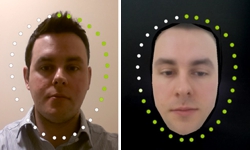
Phones like the Samsung Galaxy can use facial recognition rather than typing in a security code. The problem is you will end up taking twice as long quite often, because the facial recognition will fail and you type in a PIN anyway. The system is good at rejecting impostors - and also the owner.

What might help is 'morphing' together several photos for the software to analyze, so that users store an 'averaged' picture of themselves.

A new study suggests a possible role for caffeine treatment Alzheimer's disease (AD) treatment, by showing a link between caffeine and reductions in the beta amyloid plaque accumulation characteristic of Alzheimer's disease. The latest evidence linking beta amyloid protein to Alzheimer's disease and exploring the relationship between caffeine and beta amyloid are featured in a review article in Journal of Caffeine Research.

In the article "Caffeine as Treatment for Alzheimer's: A Review," Abhishek Mohan, MD, PhD, Old Dominion University (Norfolk, VA), and coauthors identify the potential opportunities for using caffeine to reduce beta amyloid levels as a means of preventing, treating, and slowing the progression of Alzheimer's disease.

Men who ate fruits and vegetables with higher levels of pesticide residues--such as strawberries, spinach, and peppers--had lower sperm count and a lower percentage of normal sperm than those who ate produce with lower residue levels, according to a new study by researchers at Harvard T.H. Chan School of Public Health. It is the first study to look at the connection between exposure to pesticide residues from fruits and vegetables and semen quality.

The study will appear online March 30, 2015 in the journal Human Reproduction.

Humans have been inspired by the designs of nature since the beginning of our existence so it only makes sense that to develop an extremely sensitive temperature sensor, engineers took a close look at temperature-sensitive plants. Then they developed a hybrid material that contains, in addition to synthetic components, the plant cells themselves.

The result is an electronic module that changes its conductivity as a function of temperature. "No other sensor can respond to such small temperature fluctuations with such large changes in conductivity. Our sensor reacts with a responsivity at least 100 times higher compared to the best existing sensors," says Raffaele Di Giacomo, a post-doctoral researcher at ETH Zurich.

Body odor is a reality of daily life. The smell is caused by bacteria on the skin breaking down naturally secreted molecules contained within sweat. Researchers from Unilever and the University of York have studied the underarm microbiome and identified a unique set of enzymes in the bacterium Staphylococcus hominis that is effective at breaking down sweat molecules into compounds known as thioalcohols, an important component of the characteristic body odor smell.

People who have lost some of their peripheral vision, such as those with retinitis pigmentosa, glaucoma, or brain injury that causes half visual field loss, often face mobility challenges and increased likelihood of falls and collisions. As therapeutic vision restoration treatments are still in their infancy, rehabilitation approaches using assistive technologies are often times viable alternatives for addressing mobility challenges related to vision loss.

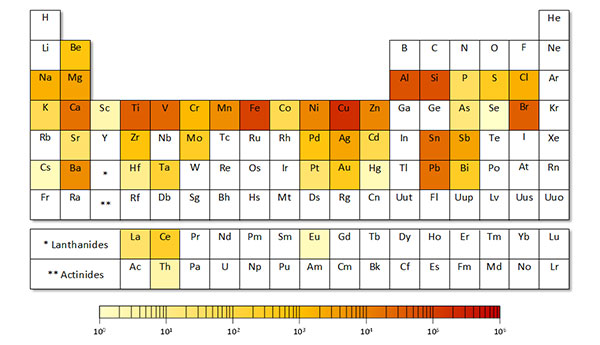
In a new paper, a team of Yale researchers assesses the "criticality" of all 62 metals on the Periodic Table of Elements, providing key insights into which materials might become more difficult to find in the coming decades, which ones will exact the highest environmental costs -- and which ones simply cannot be replaced as components of vital technologies.

During the past decade, sporadic shortages of metals needed to create a wide range of high-tech products have inspired attempts to quantify the criticality of these materials, defined by the relative importance of the elements' uses and their global availability.


