
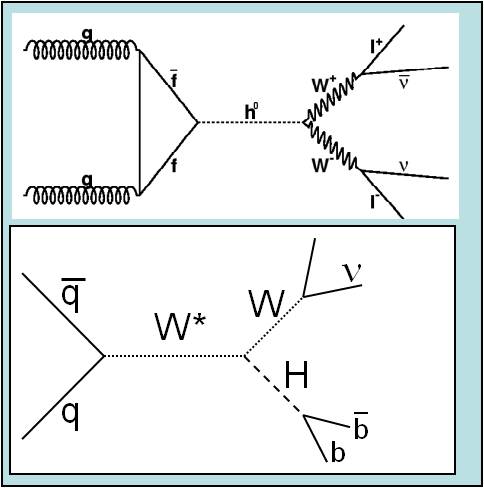
By now it's been written on so many newspapers and magazines -including Nature (the magazine, not the bitch)- that if a colleague of mine tries to reproach me for writing about the impending seminar at CERN, where ATLAS and CMS are vented to be showing observation-level signals of a new particle which smells like the Higgs and quacks like the Higgs, I will publically send him or her to hell.
Besides, I have been cited as a "tease" in a nice summary which appeared in the Atlantic Wire site today. The line describing me (next to a picture that is N years old but which is dear to me for some reason) is the following:
If you use off-the-shelf electronics parts instead of expensive, hard-to-find space-rated gear, will your satellite work? The process of 'derating' will let you do this. Engineer Amanda Shields contributes today's guest column.
I'm becoming very familiar with derating and the joys of it. Electrical components for spacecraft have to be derated. Basically, that means that you take the electrical component and you look at the data sheet for that piece and you have to say "Well, according to the datasheet it can have a maximum input power of XX, but NASA says that it has to be derated to 80% of that, so we can actually only have an input power of YY".
Older honey bees halt and even reverse the effects of brain aging when they are given roles typically handled by younger bees. This has led researchers to suggest that that social interventions may be as valuable as drugs for dealing with age-related dementia in humans.
"But in this case, Edgar, that's not a concern. You see, those are juvenile market squid (Doryteuthis opalescens). Much too young to have functional spermatophores." "All right, Chauncey, but there's another major risk to consider." "What's that, Edgar?"
Mundipharma today announced the positive European Commission (EC) decision for flutiform(R) (fluticasone propionate/formoterol fumarate), a new combination therapy for the maintenance treatment of asthma, in Europe. This decision is binding on all 21 Concerned Member States involved in the decentralized procedure (DCP) and the first national approvals of flutiform are expected across a number of countries by the end of 2012.
The New Zealand navy, amongst the other 22 nations participating, has been refused entry to Pearl Harbour, instead being made to moor its two participating vessels in the 'tourist' quarter of the harbour. How quaint!
The government has mandated labeling standards to warn consumers of potential hazards, like smoking's link to cancer and lung disease.
But science illiterates (AKA progressive social authoritarians) are taking that example and insisting GM foods should also carry a warning label - despite no instance of them being harmful or unhealthy.
The influence of aerosols and clouds represent one of the largest known uncertainties in the scientific understanding of trends in our past global climate - and also hinder predictions of future climate change.
Researchers have now shown that the rate of condensation of water on organic aerosol particles in the atmosphere can be very slow, taking many hours for a particle to change in size. This could have significant consequences for understanding how clouds are formed, affecting climate.
Aerosols are small particles less than 1 micrometer in diameter and clouds are liquid droplets of 1–1,000 micrometers in diameter.
Under the UN Framework Convention on Climate Change negotiated at the 1992 Earth Summit in Rio de Janeiro, nations committed to developing and implementing climate protection measures "appropriate for the specific conditions of each Party." In addition, industrialized ("Annex I") countries agreed to voluntarily reduce their Green House Gas(GHG) emissions to 1990 levels by 2000. The Convention entered into force in May 1994 and has been ratified by 186 countries including the United States. Very few industrialized countries, however, have met the voluntary target. For instance, U.S. GHG emissions have climbed nearly 15 percent since 1990.
If you want to understand the larger spatial patterns and timing of drought in the arid and semiarid areas of the American West, you will need to look at tree ring and oxygen isotope data.
Estimates of past precipitation are made from proxies like tree rings, which can record amounts of precipitation and temperature. But tree rings are better at recording what happens during the spring and summer, when the tree is growing, than in the winter when the tree is not. To people outside science, the fact that they do not provide the same information on past precipitation is a concern, but the differing results are a good thing to geologists.
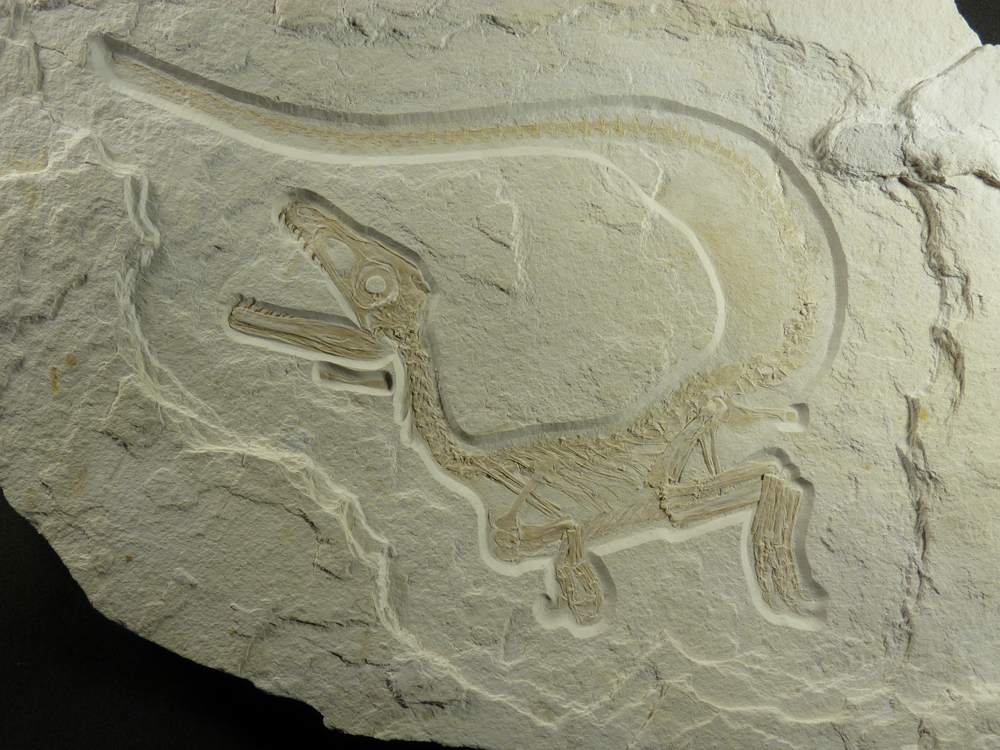
Dinosaurs are starting to look less and less like they were portrayed decades ago. The fossil of Sciurumimus albersdoerferi, which lived around 150 million years ago, is the first evidence of feathered theropod dinosaurs that are not closely related to birds.
Theropods are bipedal, mostly carnivorous dinosaurs. In recent years, scientists have discovered that many extinct theropods had feathers but feathering had only been found in theropods that are classified as coelurosaurs, a diverse group including animals like T. rex and birds.
Purdue Pharma, makers of the painkiller OxyContin, are going to seek U.S. Food and Drug Administration approval to label it for use by children as young as 6.
Oxycontin earned them $2.8 billion last year but drug companies have a tiny window in which they can make any money so they are always looking for creative ways to extend that. Even a 6-month extension is a billion bucks so Purdue is putting together a pediatric trial which will involve 154 children ages 6 to 16 that would finish in August, 2013.
A recent air leak from a laboratory at the Centers for Disease Control and Prevention (CDC) in Atlanta, a lab that studies dangerous pathogens like influenza, tuberculosis and rabies, is a very serious issue because it has the potential to harm both employees and the public.
Leave it to Congress to put on some political theater and declare they will investigate - using lawyers.
It's not that there are no people in Congress with expertise, Rep. Louise Slaughter, D-N.Y., is a microbiologist. She just isn't on the committee of 54 law school graduates figuring out what went wrong.
Thanks, Congress. I feel safer knowing you will be posturing and grandstanding about this.
Robbing the LHC experiments of media attention for 41 hours, the CDF and DZERO experiments are presenting today the results of their searches of the Higgs boson in the full datasets of proton-antiproton collisions acquired in the course of the last 10 years. You can follow the live streaming of the Tevatron seminar at this link.
Want to lower your risk of developing the most common form of skin cancer, basal cell carcinoma? Drink more coffee, says a new study.
Basal cell carcinoma is the form of skin cancer most commonly diagnosed in the United States. Even though it is slow-growing, it causes considerable morbidity and places a burden on health care systems.
The researchers generated their results by conducting a prospective analysis of data from the Nurses' Health Study, a large and long-running study to aid in the investigation of factors influencing women's health, and the Health Professionals Follow-up Study, an analogous study for men.
LEDs are the future of lighting but they aren't new. British experimenter H. J. Round reported a light-emitting solid-state diode in 1907 while Oleg Vladimirovich Losev published the paper "Luminous carborundum [[silicon carbide]] detector and detection with crystals" in Telegrafiya i Telefoniya bez Provodov (Wireless Telegraphy and Telephony) but they were truly basic research and no real work was done with them for decades.
In 1962, Nick Holonyak, Jr. of the General Electric company patented the first practical LED and by the late 1960s they were in common use.
Even if you are not aware of everything you take in, your eyes are sending visual information to your brain. This unconscious seeing is evidenced in a phenomenon called "blindsight", where people have no awareness, but their brains can see - even in subjects with visual impairment, caused by damage to a part of the brain called the visual cortex.

