I'll tell you flat out, I love Public Information Officers - PIOs in journalism parlance. Without them, I would never get anywhere near the good stuff I get to write about. I would much, much rather deal with PIOs directly than through paid clearinghouses like AAAS Eurekalert, which seems to be run by sub-literate pygmies bent on keeping science from being written about. PIOs, on the other hand, love to get more coverage for their researchers without having to bribe AAAS.
A short while ago, SciFest 2010, the International Science Festival, was held in St. Louis. Making the trip was a group from Jersey Shore, PA and they were invited because a teacher, Slater Harrison, is really good at 'air surfing'.
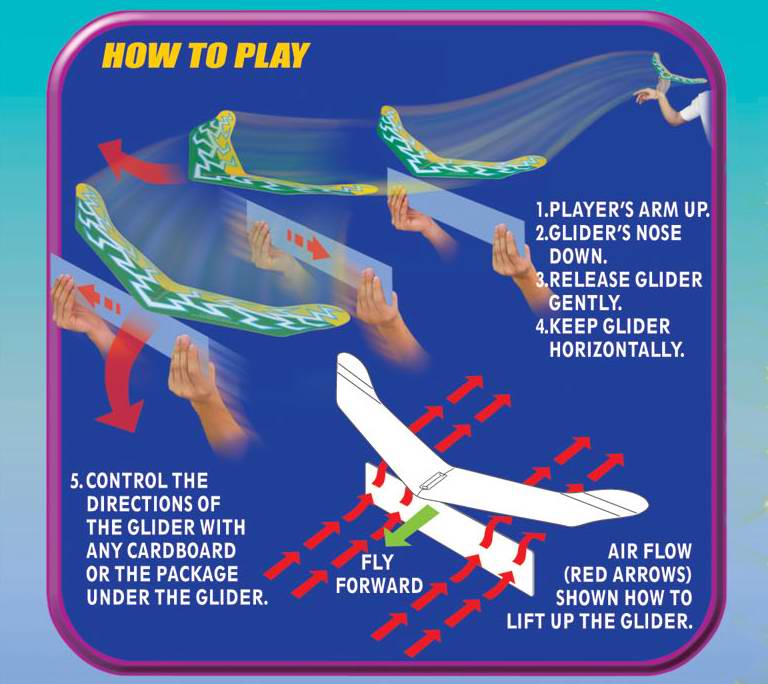
If you have never seen the term air surfing, it was invented in the 1970s by Dr. Tyler MacCready, a fellow who studied philosophy at Yale and then geology at the University of Wyoming and Monash before becoming famous in amateur aerodynamics for the 'walkalong glider' - which looks like magic to many a young person's eyes, at least the way Harrison and his team of students do it. First, here is a diagram of a walkalong glider. MacCready no longer makes these so you'd have to find it on Ebay or make your own:
One thing you probably know about black holes, no matter how much science you took, is that they have never actually been seen. Instead, the science consensus is that masses that sit at the centers of galaxies like our own Milky Way are presumed to be black holes.
Researchers in Nature Physics say a property of light called orbital angular momentum may be detectable because of a 'twist' in this momentum caused by black holes. And we could detect it, if we just know what to look for.
Is a lack of diversity in science writing a bad thing? Yes and no. Obviously if science writing relied on conservatives and the free market where people will only work for what capitalism will bear, Science 2.0 could not exist. Academics, progressives or liberals in America (I have made the case that they are quite distinct in America, however - see
Like Freedom? Thank A Scientist - How Science Made America Possible), both famous and non-famous, have contributed here for no reason other than a desire to communicate science.
I don't get excited about the singularity the way some on Science 2.0 do (and certainly elsewhere) though I admire the optimism. So when I got an email from a publicity person at PBS about
NewsHour Science Correspondent Miles O’Brien’s report on the upcoming match between Jeopardy masters Brad Runner, Ken Jennings and the super computer Watson I had to wonder if this would lead to more claims about an upcoming singularity and exponential leaps in artificial intelligence.
While many in America were happy about the collapse of the Mubarak government, they were likely happy for the wrong reasons. Optimists, it is said, are people who do not learn from experience and the toppling of a dictator in Egypt looks a lot more like Iran in 1979 than it does America in 1776.
But regardless of the irrational optimism of many in the political spectrum, plenty of scientists are going to be happy that
protesters have now turned their sights on Zawi Hawass, a man who could only have gotten his job in a dictatorship and wielded his position just like one.


 To Boomers, An AI Relationship Is Not Cheating
 'The Operating Reality Has Changed' - Without Mandates, The Electric Car Market Is Collapsing
 Berkeley STEM Teacher Peyrin Kao Criticized Israel - Was He Wrong To Get Suspended?
 Alcohol Causes Cancer - How Much Shouldn't Even Enter Your Thoughts