Fake Banner
Does Stress Make Holidate Sex More Likely?

Desire to have a short-term companion for the holidays - a "holidate" - is common enough that it...

To Boomers, An AI Relationship Is Not Cheating

A recent survey by found that over 28 percent of adults claim they have an intimate, even romantic...

'The Operating Reality Has Changed' - Without Mandates, The Electric Car Market Is Collapsing

Ford is the latest company to take a massive write-off on current electric car production- nearly...

Berkeley STEM Teacher Peyrin Kao Criticized Israel - Was He Wrong To Get Suspended?

With criticism due to an overspending frenzy funded by student loan debt still in full swing, some...

User picture.
picture for Fred Phillipspicture for Tommaso Dorigopicture for picture for Patrick Lockerbypicture for Hontas Farmerpicture for Ilias Tyrovolas
Hank CampbellRSS Feed of this column.

I founded Science 2.0® in 2006 and since then it has become the world's largest independent science communications site, with over 300,000,000 direct readers and reach approaching one billion. Read More »

Blogroll
Like puzzles?  Who doesn't?

Long-time Science 2.0 contributor Garth Sundem - and by long time I mean loooong time, since 2006, during the beta period - is in the New York Times Science section during their theme on puzzles.    
We know that light has mass and that beaming enough light at something can push it away - solar sails that will move a craft through the cosmos are based on this idea and NASA tested that concept earlier today when it launched NanoSail-D, a nanosatellite (cubesat) which will unfold to a 100 square foot polymer sail and travel in low earth orbit for a few months.

solar sail on a cubesat.
Sails?  We don't need no stinking sails.  Credit: NASA
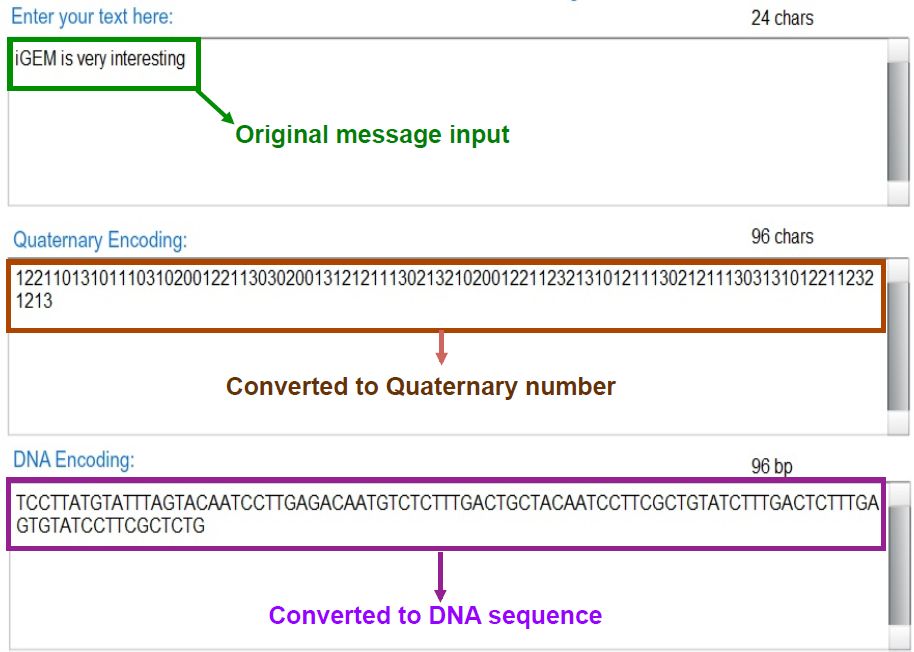
DNA computing and storage has been on the horizon for most of this decade but never gone beyond the intellectual exercise stage.   Storage limitations were far too small to merit applied science efforts so it was clever but that was the extent of it.

That may not be the situation for much longer.   GenomeWeb reports that a research team from the Chinese University of Hong Kong has encrypted and stored a hefty 90GB of data in one gram of bacteria, creating what they are calling a "massively parallel bacterial storage system."
It was hard to miss the arsenic microbe news last week.  Heck, I was in the woods of Pennsylvania with no cell phone access much less Internet and I knew about it. The NASA hype machine and mass media's need to sell eyeballs made sure of that.
Why scientists should blog is not a new topic to Science 2.0.   In a way, I think we pioneered science blogging(1) because, prior to us, the only science bloggers with any real audience mostly wrote about politics and religion and last year I chaired a panel on science outreach with two columnists here and Mike Eisen, co-founder of PLoS, and Eugenie Scott, founder of the National Center for Science Education and blogging was a key topic on how scientists should increase engagement.
It used to be that broader understanding of zoology meant intuitively that new species would be harder to find and so it followed that there would be fewer of them when found - that is the nature of rarity.

Now, because newer species are so rare, it is fashionable to label them nearly extinct even though they have just been discovered and so may not have been prolific any time in recent memory, or at all.  It can be a little numbing to the general audience. - when everything is rare, nothing is (see special snowflake).