Fake Banner
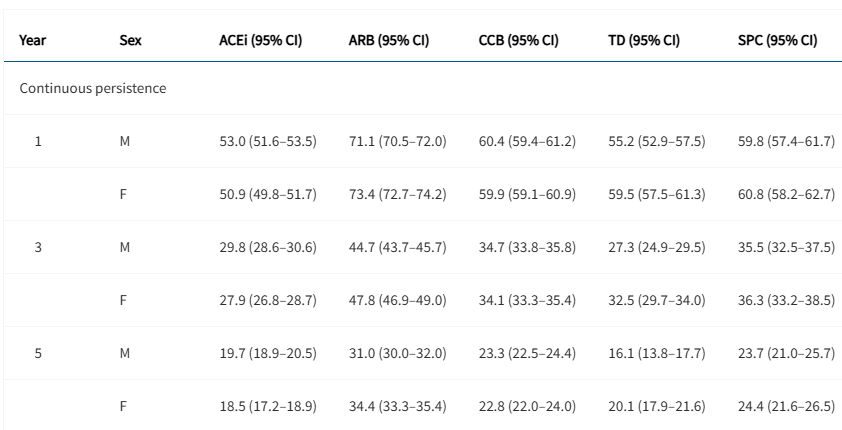
Blood Pressure Medication Adherence May Not Be Cost, It May Be Annoyance At Defensive Medicine

High blood pressure is an important risk factor for developing cardiovascular disease and premature...

On January 5th, Don't Get Divorced Because Of Hallmark Movies

The Monday after New Year's is colloquially called Divorce Day, but it's more than marriages ending...

Does Stress Make Holidate Sex More Likely?

Desire to have a short-term companion for the holidays - a "holidate" - is common enough that it...

To Boomers, An AI Relationship Is Not Cheating

A recent survey by found that over 28 percent of adults claim they have an intimate, even romantic...

User picture.
picture for Tommaso Dorigopicture for Fred Phillipspicture for picture for Patrick Lockerbypicture for Hontas Farmerpicture for Ilias Tyrovolas
Hank CampbellRSS Feed of this column.

I founded Science 2.0® in 2006 and since then it has become the world's largest independent science communications site, with over 300,000,000 direct readers and reach approaching one billion. Read More »

Blogroll
I assume all of you know this but, if not, here is the blurb I keep getting from the kind marketing folks at Science.

The upside: $25,000

The catch: The topic is limited to molecular biology.   

The criteria: This is for 'early career life scientists' so you may be excited, since the average age is now 42 years old before getting an R01 grant but, no, they mean only those who were awarded their Ph.D. in 2008.  So the only ones eligible are what you researchers call 'slave labor'.
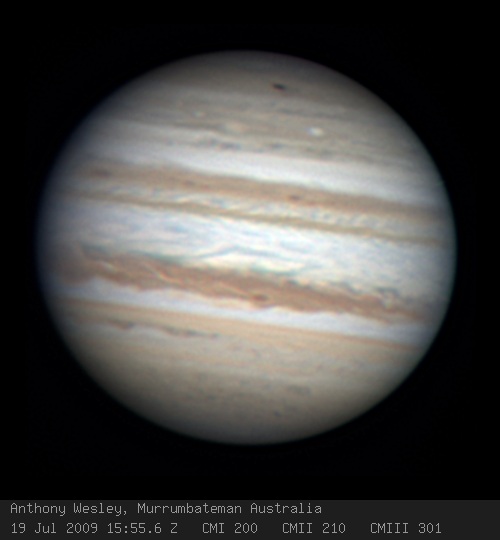
Yesterday I wrote how Anthony Wesley, who hails from Canberra, Australia, grabbed this shot of a new dark spot near the south pole of Jupiter.

It's left to bigger minds (and bigger telescopes) than mine to sort out what caused it but while the blogosphere has been buzzing, JPL has been observing.
Was there an impact on Jupiter or is that new dark spot just a  temporary anomaly?

Anthony Wesley, who hails from Canberra, Australia, grabbed this shot of a new dark spot near the south pole of Jupiter.   The great thing about astronomy is it's one of the last areas in science where 'amateurs' can still do great things before Big Science gets to it.
In case you've been living under a rock, you probably know that Monday is the 40th anniversary of the Apollo 11 moon landing.   I don't remember seeing it on TV when I was a lad, though I am told I did (I do remember watching the live liftoff of Apollo 17, since Kennedy is about an hour drive from my boyhood home in Florida and we went to that one) but most everyone middle aged and older will - it remains the most watched program in history(1).
Tangential Science: it's not necessarily science, but it's still funny.

Games2Win, an online game company, today announced the launch of Apollo 11: Mission to the Moon, which recreates the historic mission to the moon, without the mind-numbing terror of knowing you were sitting on top of a mess o' solid rocket fuel protected by nothing except parts contracted out to the lowest bidders. The game’s release is schedule to coincide with, and  commemorate, the 40th anniversary of Apollo 11’s success on July 20, 1969.

"Apollo 11: Mission to the Moon" is what the vendor calls a "free-to-play Flash game" and you can find at http://www.games2win.com/ap1.   The game play mimics pretty small parts of the first manned mission to land on the moon (without the mind-numbing terror of knowing you were sitting on top of a mess o'  ...