




There are numerous confounders. It was only 2,077 children, in Canada, and relied on memory of parents to note how much ultra-processed food kids ate. Then how poorly they behaved. It also uses a definition of ultra-processed that is arbitrary, making beliefs about "minimally" processed foods seem more evidence-based than less fad-driven epidemiologists accept. Therefore, it is just correlation, not science, and in the EXPLORATORY pile. If you are a lawyer, don't assume you can sue food companies because a child ate a Twinkie and misbehaved in school.
The authors only looked at publicly available results, the food surveys were gathered by the CHILD Cohort Study between 2011 and 2018, which included results by parents asking which of 112 foods their kids ate. Then it asked parents to rate their children, which was 99 symptoms on the Child Behavior Checklist.
They even used Perceived Stress Scale and factored in how much Captain Crunch pregnant women ate during pregnancy. UPFs have become the biggest epidemiology fad since gluten, which was the biggest epidemiology fad since small micron particulate matter (PM2.5) pollution, which was the biggest epidemiology fad since resveratrol in red wine, which was the biggest epidemiology fad since vaccines were linked to autism.
Alcohol is a legitimate class 1 carcinogen, the first lifestyle killer after cigarettes, yet epidemiologists gave it a free pass, and the American Medical Association told doctors to repeat a bizarre "in moderation" mantra about booze they never did about smoking.
Why? Alcohol is a cancer-causing agent they enjoy. And that is the problem with too much modern epidemiology. Some want to declare they have found the next Big Tobacco Smoking Gun, so they link everything to cancer, the Scary Chemical narrative. Some want to endorse their lifestyle or sell a new diet book so they produce Miracle Vegetable claims.
Ultra-processed foods cannot shape how your child behaves, any more than ice cream you make with rock salt and cream from your cow is going to lead to better outcomes in school. Epidemiology isn't science because it lacks a plausible hypothesis - it is just a "link" that "suggests" a "correlation" and never becomes science because there is nothing there. It is biologically impossible that a cupcake made from a boxed mix you buy in Kroger is giving your child ADHD while if you buy it from the deli at Whole Foods it is preventing trouble.
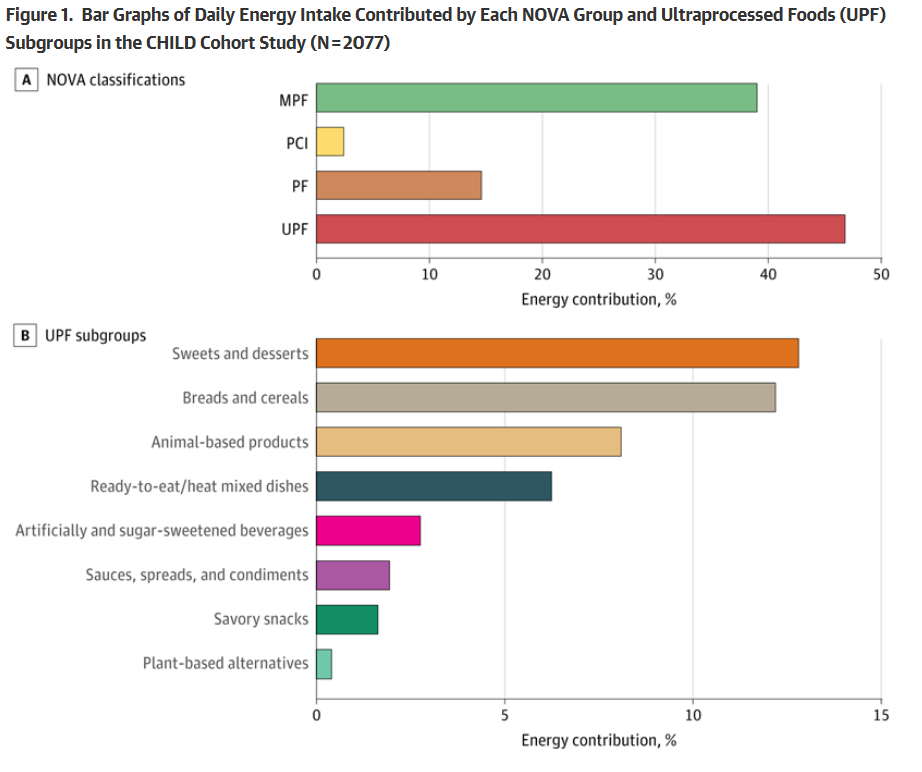
What did food activists blame for everything before 2021? Processed foods. California even tried to pass a law getting warning labels on them during the Obama administration but we noted that all bread is "processed", so is every food you purchase, so the lawyers behind all of these initiatives came up with a new approach, and "ultraprocessed" was invented.
Yet according to the latest food fetish the first is an ultra-processed food and needs bans while the second doesn't even merit a nutrition label (GMOs Won't Kill You, But That Organic Cupcake Might). The Whole Foods cupcake is far worse for you in the only way that matters in science - calories. If your child is eating a bag of Doritos per day and behaves terribly, scientists will say the Doritos are the symptom, not the issue, and the issue is parenting.
The issue in this paper is that the behavioral differences the authors tout are statistically insignificant. They went out of their way to declare Statistical Significance but p-value is routinely abused by epidemiologists and psychologists because it is meaningless. That is why I was a signatory in Nature asking journals to stop using it. It is why you can read in media that red meat causes cancer and then a month later read that it prevents cancer. It is why media said we needed to replace butter with trans fats, until those were linked to diabetes and we had to go back to butter.
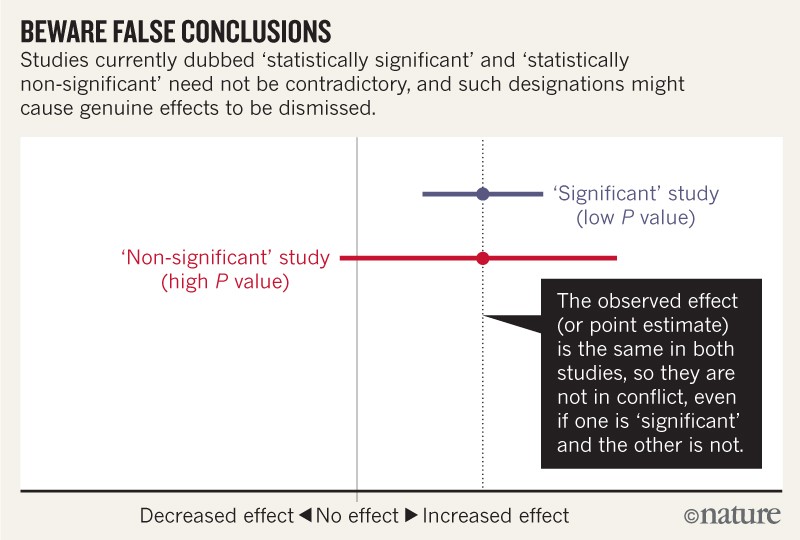
There was no null hypothesis here, and really can't be one found when you have 112 foods and 99 outcomes because, statistically, if I have 61 columns and 10 rows I can show statistical significance. I can show coin flips are prejudiced against landing on heads. Or Tails.
Credit
With 112 and 99 the results are even less meaningful but this was a paper that set out to declare one type of bread was good for you and one was bad. To our bodies, it is just bread.
Citation: Kavanagh ME, Chen ZH, Tamana SK, et al. Ultraprocessed Food Consumption and Behavioral Outcomes in Canadian Children. JAMA Netw Open. 2026;9(3):e260434. 10.1001/jamanetworkopen.2026.0434





Comments