




It isn't a new concern, though. Nor is technology new in getting blame. In 1905, The Lancet published a study saying that kids in British boarding schools were getting less sleep than was healthy, and the reason was the new popularity of affordable lighting. “Late to bed and early to rise is neither physiological nor wise,” the authors wrote.
By the 1950s, the concern was in culture again, this time due to radio and television keeping children up. In all instances, overstimulation, mental health, and poor academic achievement is invoked.
The modern world has been ruining children since writing has existed. It's easy to imagine an ancient Sumerian complaining a child read Gilgamesh twice last year and it was too much idle time wasted.
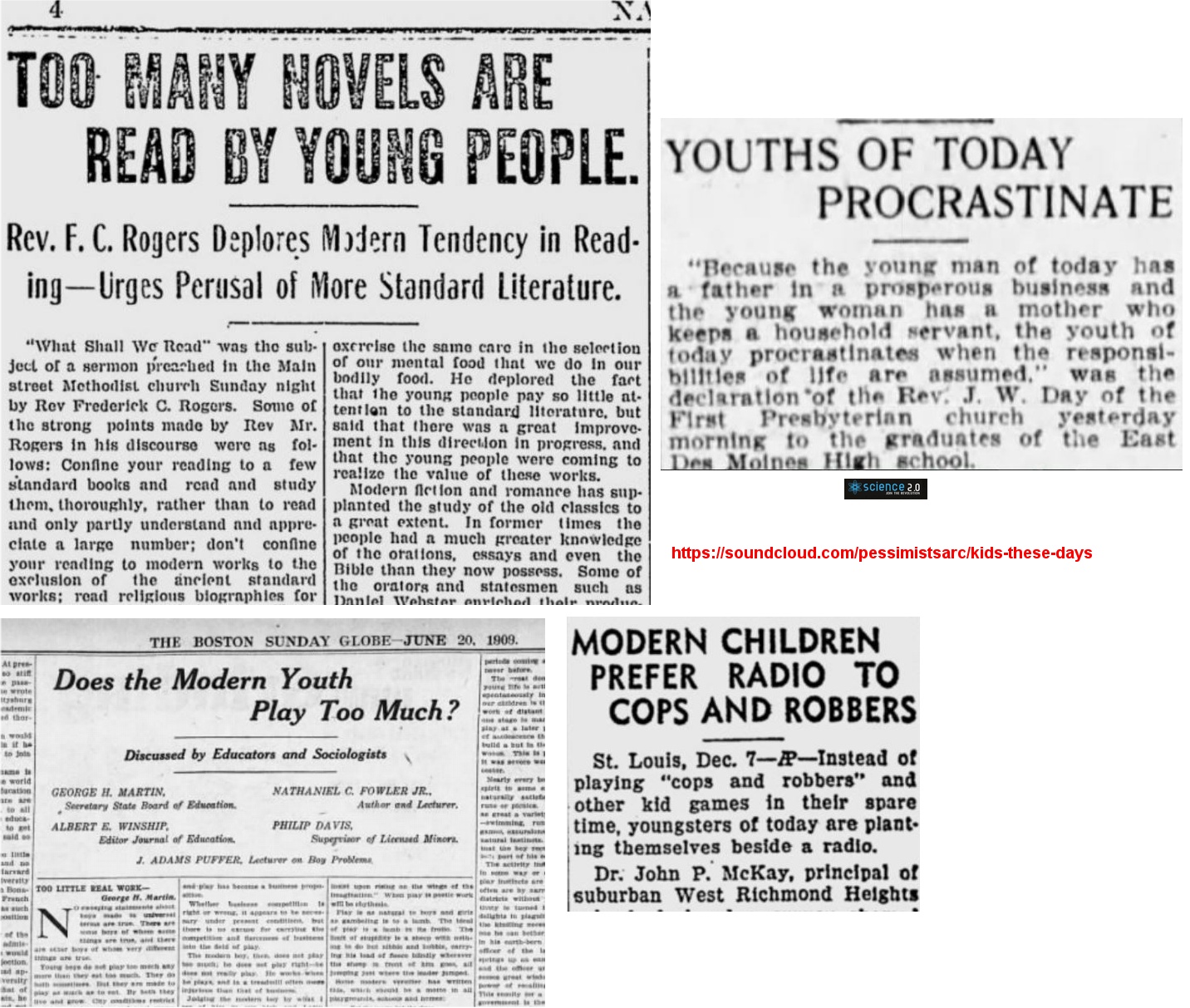
Novels were bad for children, then playing cops and robbers was making them criminals. Then adults complained kids didn't play cops and robbers, they listened to the radio, then it was television, then video games, and now phones.
Yet if these new survey results are accurate about sleep, and phones are the reason, there is actual cause for concern. Six or seven hours of sleep for older people is rather normal but not for growing bodies.
They are surveys, so they go into the EXPLORATORY pile, we should not be making policy on surveys because Gens Z and Alpha are skeptical about everything; there is no reason to believe they are being honest on a survey when even people who think surveys are accurate predictors of behavior aren't honest on surveys. But it's still worth thinking about if anywhere near 50 percent of teens sleep less than five hours per night.
This was from the Youth Risk Behavior Survey, which has been done by the U.S. CDC for decades. If you wonder how American government manufactured a teen vaping epidemic, CDC survey data are how. Their methodology is not great so results from 2007 to 2023 claiming should be taken with that grain of salt the CDC says will give you a heart attack if you exceed an epidemiological population average.
Except the result was consistent across all sub-groups. You can safely ignore links to depression and risk of diabetes, epidemiologists have also linked virtual pollution, railroad tracks, weedkillers, and the election of President Trump to both of those. The authors did control for the obvious, like reported depression, any use of a controlled substance, or no other risk factors. Including screen time.
Teens reporting eight hours of sleep per night dropped from over 30 percent in 2007 to under 25 percent in 2023.
The authors bizarrely use that as reason to advocate for later school times. While it is true that we are no longer an agrarian society, as when governments took control of education, so kids don't need to get up early for chores and be back in time to work before dark, better education outcomes would be attained by instead getting rid of summer vacations. You won't find many academics going up against education unions by arguing for that, but a later start time for schools shows no evidence it will help.
Teachers like to stay up late and then sleep in also, so they will be okay with it. Neither is a good reason to start tinkering with kids when they have already been impacted by government tinkering during the COVID-19 pandemic.
Citation: Bommersbach TJ, Olfson M, Rhee TG. Insufficient Sleep Among US Adolescents Across Behavioral Risk Groups. JAMA. Published online March 02, 2026. doi:10.1001/jama.2026.1417
NOTE:
(1) In that 1819 Washington Irving story, he got drunk with hillbillies in the Catskills and slept so long he missed the entire American Revolution. No wonder more modern people think kids don't spend enough time resting.




Comments