Banner
Here's Where Your Backyard Was 300 Million Years Ago

We may use terms like "grounded" and terra firma to mean stability and consistency but geology...

Convergent Evolution Cheat Sheet Now 120 Million Years Old

One tenet of natural selection is a random walk of genes but nature may be more predictable than...

Synchrotron Could Shed Light On Exotic Dark Photons

There are many hypothetical particles proposed to explain dark matter and one idea to explore how...

The Pain Scale Is Broken But This May Fix It

Chronic pain is reported by over 20 percent of the global population but there is no scientific...

User picture.
News StaffRSS Feed of this column.

News Releases From All Over The World, Right To You... Read More »

Blogroll

The van der Waals force, named after Dutch chemist Johannes Diderik van der Waals, is the total forces between molecules not due due to covalent bonds. The famous sticking power of the geckos is thanks to the van der Waals force. 

Although it was discovered in the 19th century, it is still difficult to quantify when predicting the behavior of solids, liquids, and molecules because precise measurements were only possible for single atoms. That won't do for understanding biomolecules and proteins. They are also responsible for the functioning of certain adhesives and are the reason why geckos can adhere so amazingly well to surfaces, even allowing them to climb smooth walls. 

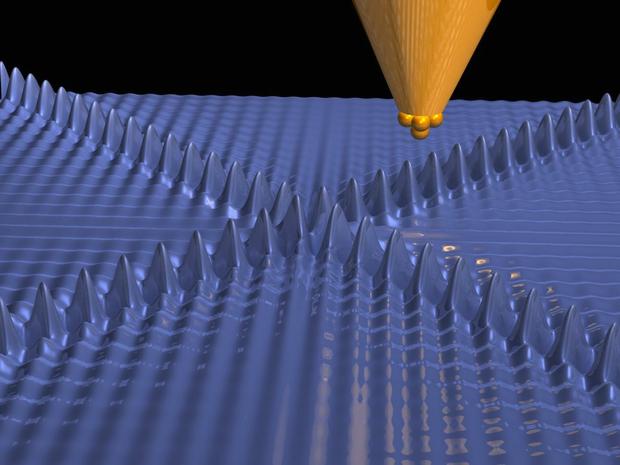
In metals like copper and aluminium, conduction electrons move around freely, in the same way as particles in a gas or a liquid.

But when impurities are introduced into the metal's crystal lattice, electrons cluster together in a uniform pattern around the point of interference, resembling the ripples that occur when a stone is thrown into a pool of water. Scientists have now discovered how to strengthen these Friedel oscillations and focus them, almost like using a lens, in different directions.

They've discovered (Nature Communications, DOI: 10.1038/ncomms6558) that at a range of 50 nanometers, these "giant anisotropic charge density oscillations" are many times greater than normal.

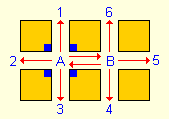
In a famous mathematical thought experiment, the goal is to make randomness deterministic by closed-form equation, so mathematicians tried to determine the path of a 'drunken sailor' staggering around a town. 

If there are street lamps, he will run into them, change his direction and keep moving until he gets out of the city. Logically, the time he spends in the area depends on the number of street lamps but the surprising answer is that the number of streetlamps are not the big factor.

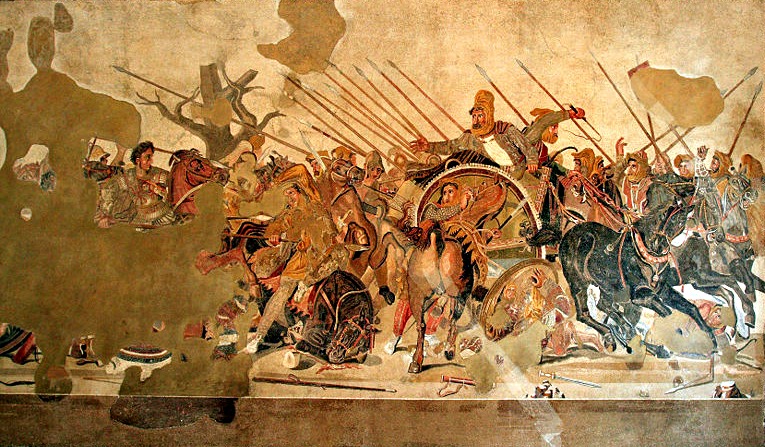
Necessity may be the mother of invention, at least if war is a necessity. And perhaps it is.

In the early days of humanity, survival was a combination of hardiness, keen engineering and intelligence - and nothing spurred on technological progress and vast social changes like the need to work together to kill other people, according to a new paper in Journal of the Royal Society Interface.

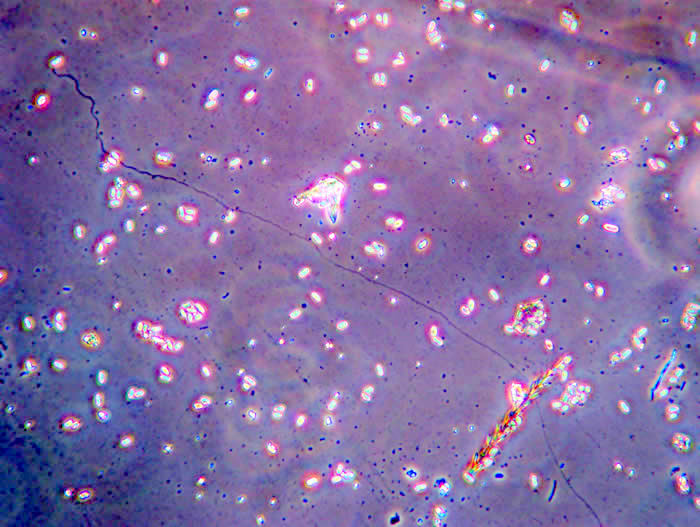
For a short window, it appeared that bees were dying off. Environmentalist were quick to blame a new kind of pesticide, Neonicotinoids, known in short form as neonics, but then it turned out that the die-offs were in just one geographical area, which would not be the case if it were due to a pesticide.

Instead, it was likely a combination of environmental changes and perhaps a different sort of pest may try to kill them in the future; the exotic parasite Nosema ceranae and its original native relative Nosema apis. The exotic honey bee parasite may become more common not only due to its superior competitive ability, but also because of climate, according to a new study in Proceedings of the Royal Society B.

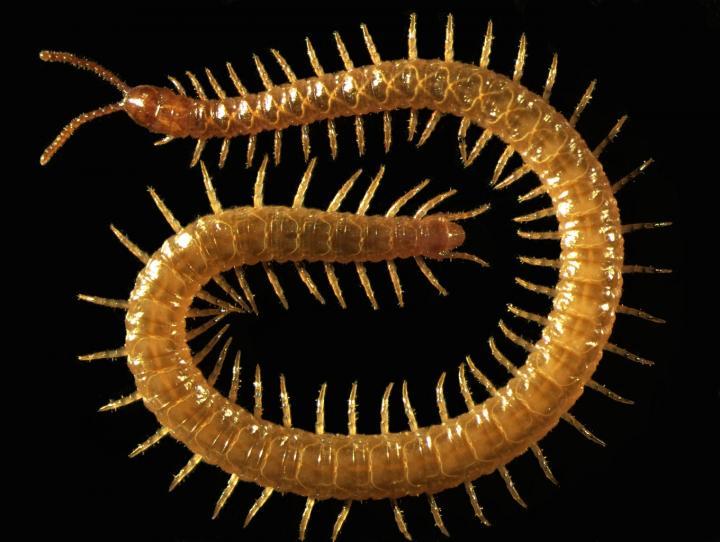
Usually blind sages revealing the secrets of the universe are Asian. Scotland doesn't get enough respect that way but a centipede is defying the stereotype.

Arthropods are one of Earth's real success stories, with more species than any other animal phylum. Genome sequencing has been skewed towards the more popular insects, and even an arachnid and a crustacean, and now finally the myriapods (centipedes and millipedes) are emerging from the dark.