Banner
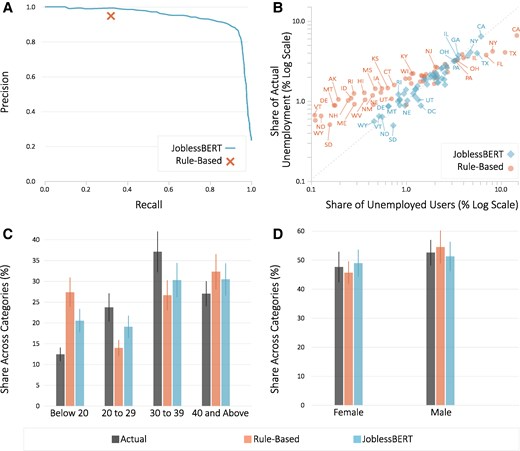
Social Media Is A Faster Source For Unemployment Data Than Government

Government unemployment data today are what Nielsen TV ratings were decades ago - a flawed metric...

Gestational Diabetes Up 36% In The Last Decade - But Black Women Are Healthiest

Gestational diabetes, a form of glucose intolerance during pregnancy, occurs primarily in women...
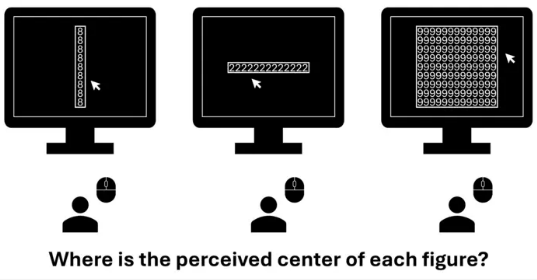
Object-Based Processing: Numbers Confuse How We Perceive Spaces

Researchers recently studied the relationship between numerical information in our vision, and...
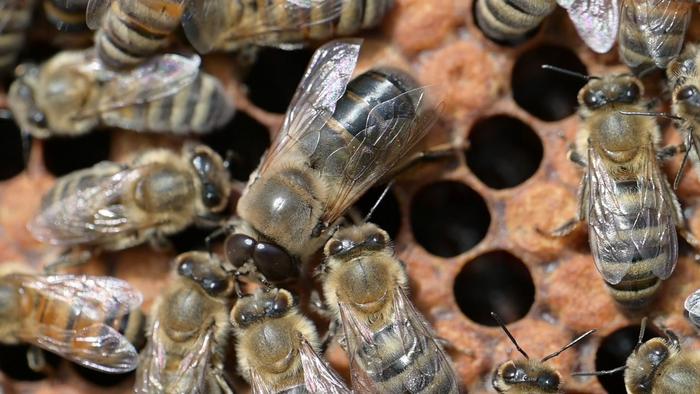
Males Are Genetically Wired To Beg Females For Food

Bees have the reputation of being incredibly organized and spending their days making sure our...

User picture.
News StaffRSS Feed of this column.

News Releases From All Over The World, Right To You... Read More »

Blogroll

The theory of loss aversion is used in many contexts to explain why potential loss has a greater mitigating influence on behavior than potential gain.

In trading situations, consumers will most likely opt to keep what they have, tending to place a larger value on the items already in their possession (also known as the “endowment effect”). However, these theories generally assume that consumers like what they have enough to want to keep it. What happens when we’re in possession of something we hate?

A new study appearing in the Journal of Consumer Research uses experimental results to show a situation in which the endowment effect is reversed. The authors differentiate between two types of loss aversion:

A tiny galaxy,SDSSJ0737+3216 (lens redshift 0.3223, source redshift 0.5812), nearly halfway across the universe and the smallest in size and mass known to exist at that distance, has been identified by an international team of scientists.

The scientists used data collected by NASA's Hubble Space Telescope and the W. M. Keck Observatory in Hawaii.

Consumers are told that leaving electrical devices in standby mode wastes large amounts of energy and makes a significant contribution to carbon dioxide emissions. Should 'standby mode' be regulated by governments?

Not according to results of a study published in the International Journal of Environment and Sustainable Development.

Sound counter-intuitive? Their reasoning is that as electrical devices get more efficient, the amount of energy saved through stricter regulation becomes ever smaller and effort should instead be spent improving the overall efficiency of devices in operation.

People understand the irony of sentences like "I am from the federal government and I am here to help you" yet are comfortable with local initiatives to reduce global warming, even if it means more money.

According to a survey conducted by GfK Public Affairs and the Yale School of Forestry & Environmental Studies, 74 percent of Americans would support local regulations requiring all newly constructed homes to be more energy efficient, even if it would increase the initial cost of a new home by roughly $7,500.

A plant-like micro-organism mostly found in oceans could make the manufacture of products, from iridescent cosmetics, paints and fabrics to credit card holograms, cheaper and ‘greener’.

The tiny single-celled ‘diatom’, which first evolved hundreds of millions of years ago, has a hard silica shell which is iridescent – in other words, the shell displays vivid colours that change depending on the angle at which it is observed. This effect is caused by a complex network of tiny holes in the shell which interfere with light waves.

Diatoms are classified as eukaryotic algae and represent one of the commonest types of phytoplankton. Each diatom is encased in a silica frustule, or cell wall. Although usually microscopic, some species of diatom may grow to as much as 2mm long.

Lubrication oil appears to be an important yet little-recognized source of toxic particle emissions from motor vehicles -- even those fueled by clean-burning hydrogen, according to a joint study by government and academic researchers in Washington State and Minnesota.

Scientists have long recognized diesel-fueled vehicles as important sources of air pollution that can increase the risk of asthma, bronchitis, and other health problems. Most research, however, has focused on diesel soot, rather than emissions produced by lubrication oil.

In the new study, Arthur L. Miller and colleagues modified a truck diesel engine to run on clean-burning hydrogen instead of diesel fuel, allowing the researchers to focus solely on particle emissions from lubrication oil.