Banner
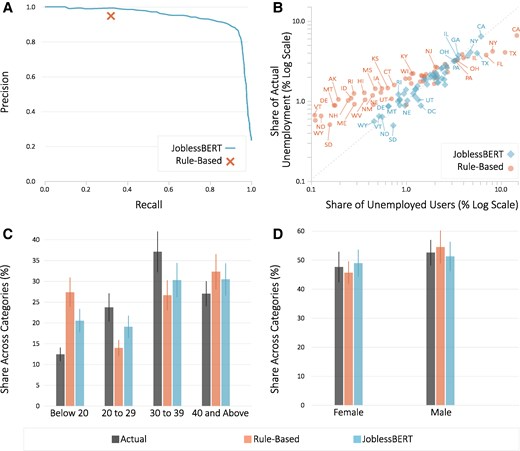
Social Media Is A Faster Source For Unemployment Data Than Government

Government unemployment data today are what Nielsen TV ratings were decades ago - a flawed metric...

Gestational Diabetes Up 36% In The Last Decade - But Black Women Are Healthiest

Gestational diabetes, a form of glucose intolerance during pregnancy, occurs primarily in women...
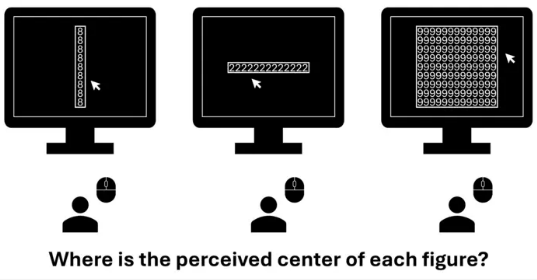
Object-Based Processing: Numbers Confuse How We Perceive Spaces

Researchers recently studied the relationship between numerical information in our vision, and...
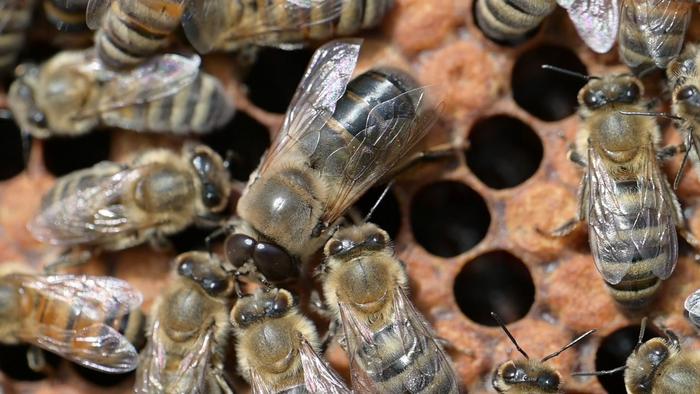
Males Are Genetically Wired To Beg Females For Food

Bees have the reputation of being incredibly organized and spending their days making sure our...

User picture.
News StaffRSS Feed of this column.

News Releases From All Over The World, Right To You... Read More »

Blogroll

A team of researchers has determined through analysis of the earliest known hominid fossils outside of Africa, recently discovered in Dmanisi, Georgia, that the first human ancestors to inhabit Eurasia were more primitive than previously thought.

The fossils, dated to 1.8 million years old, show some modern aspects of lower limb morphology, such as long legs and an arched foot, but retain some primitive aspects of morphology in the shoulder and foot. The species had a small stature and brain size more similar to earlier species found in Africa.

"Thus, the earliest known hominins to have lived outside Africa in temperate zones of Eurasia did not yet display the full set of derived skeletal features," the researchers conclude.

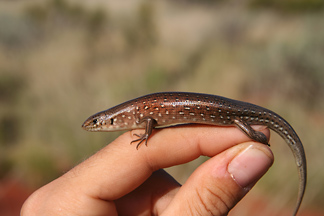
A new study of finger-sized Australian lizards sheds light on one of the most striking yet largely unexplained patterns in nature: Why is it that some groups of animals have evolved into hundreds, even thousands of species, while other groups include only a few?

The study takes a look at Australia's most diverse group of vertebrates -- more than 252 species of lizards called skinks. Researchers at the Cornell Lab of Ornithology have found evidence that the "drying up" of Australia over the past 20 million years triggered this explosive diversification.


Skinks have incredible species diversity throughout the Australian deserts. In fact, this group contains so many species that most do not even have a common English name.

A win for embryonic stem cell research may be the kind of symbolic pyrrhic victory politicans engage in after bold action is no longer necessary.

It may not be necessary if research from Weill Cornell Medical College in New York City holds up. They say adult stem cells found in a male patient's testicles might someday be used to create a wide range of tissue types to help him fight disease -- getting around the need for more controversial embryonic stem cells.

Using spermatogonial progenitor stem cells (SPCs) obtained from the mouse's testes, the researchers were able to redirect the cells' development in the lab to form so-called "multi-potent adult spermatogonial-derived stem cells" (MASCs).

Biofuels are a wash environmentally and a negative economically because they requite subsidies to be competitive but there is one way they are a boon: the increase in world agriculture prices caused by the global boom in biofuels could benefit many of the world’s rural poor, according to a new book, Biofuels for Transport: Global Potential and Implications for Energy and Agriculture, written by the Worldwatch Institute.

“Decades of declining agricultural prices have been reversed thanks to the growing use of biofuels,” says Christopher Flavin, president of the Institute. “Farmers in some of the poorest nations have been decimated by U.S. and European subsidies to crops such as corn, cotton, and sugar.

Scientists believe that shortly after Earth was formed, it had a glowing surface of molten rock extending down hundreds of miles. As that surface cooled, a rigid crust was produced near the surface and solidified slowly downward to complete the now-solid planet.

Some scientists have suggested that Earth lost all of its initial gases, either during the molten stage or as a consequence of a massive collision, and that the catastrophically expelled gases formed our early atmosphere and oceans. Others contend that this early “degassing” was incomplete, and that primordial gases still remain sequestered at great depth to this day. New research by E. Bruce Watson, Institute Professor of Science at Rensselaer, supports this latter theory.

Researchers at the University of Bristol say their analysis of sediments from a British bog suggest that methane emissions increased around 55 million years ago due to intense global warming - not the other way around, as some have said.

Dr Richard Pancost and colleagues show that carbon isotope values of hopanoids – compounds made by bacteria – suddenly decrease in a manner that can only be explained by switching to a diet of methane. This suggests that methane emissions must have increased at that time.

Their data point is an important one but shouldn't be overstated, he said.