
Banner
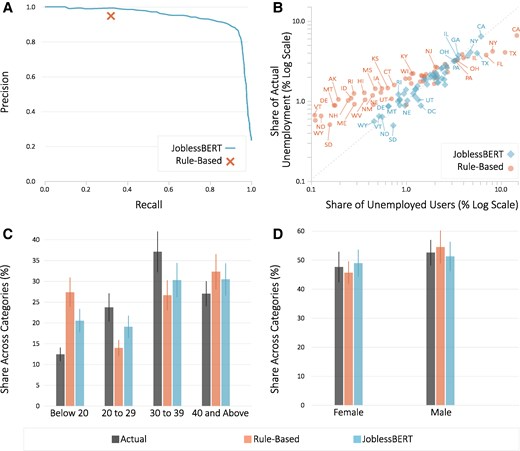
Social Media Is A Faster Source For Unemployment Data Than Government

Government unemployment data today are what Nielsen TV ratings were decades ago - a flawed metric...
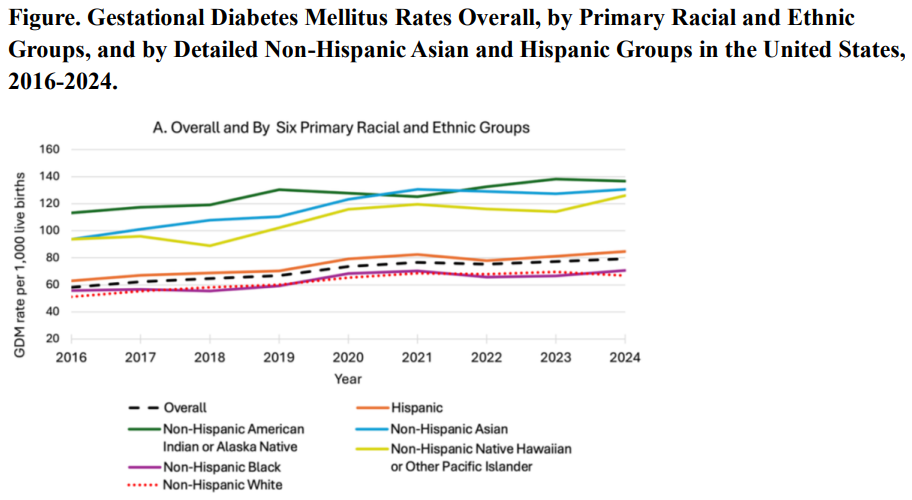
Gestational Diabetes Up 36% In The Last Decade - But Black Women Are Healthiest

Gestational diabetes, a form of glucose intolerance during pregnancy, occurs primarily in women...

Object-Based Processing: Numbers Confuse How We Perceive Spaces

Researchers recently studied the relationship between numerical information in our vision, and...

Males Are Genetically Wired To Beg Females For Food

Bees have the reputation of being incredibly organized and spending their days making sure our...

User picture.
News StaffRSS Feed of this column.

News Releases From All Over The World, Right To You... Read More »

Blogroll

Approximately one third of the total carbon dioxide (CO2) emissions in the world come from energy production. It's possible to make CO2-free gas-powered plants but that relies on it being removed from the waste gases and deposited in the ground, an expensive and not environmentally friendly method since current techniques require the use of chemicals.

A patent-pending membrane technology based on the human lung is going to change that. Researchers at The Norwegian University of Science and Technology (NTNU) in Trondheim say the new membrane uses nanotechnology and is made from a plastic material. It captures CO2 but lets other waste gases pass freely.

Biologists have found a major clue in a 50-year-old mystery about what happens to green sea turtles after they crawl out of their sandy nests and vanish into the surf, only to reappear several years later relatively close to shore.

Three University of Florida sea turtle scientists say they found the clue by analyzing chemical elements ingrained in the turtles’ shells. Their conclusion: The turtles spend their first three to five “lost years” in the open ocean, feeding on jellyfish and other creatures as carnivores. Only after this period do they move closer to shore and switch to a vegetarian diet of sea grass – the period in their lives when they have long been observed and studied.

A molecular “recycling plant” permits nerve cells in the brain to carry out two seemingly contradictory functions – changeable enough to record new experiences, yet permanent enough to maintain these memories over time.

The discovery of this molecular recycling plant provides new insights into how the basic units of learning and memory function. Individual memories are “burned onto” hundreds of receptors that are constantly in motion around nerve synapses – gaps between individual nerve cells crucial for signals to travel throughout the brain.

While the visual regions of the brain have been intensively mapped, many important regions for auditory processing remain terra incognita. Now, researchers have identified the region responsible for a key auditory process—perceiving “sound space,” the location of sounds. The findings settle a controversy in earlier studies that failed to establish the auditory region, called the planum temporale, as responsible for perceiving auditory space.

Leon Y. Deouell and colleagues published their findings in the September 20, 2007 issue of the journal Neuron, published by Cell Press.

Studies by other researchers had shown that the planum temporale was activated when people were asked to perform tasks in which they located sounds in space.

Retrieving material for composting from open dumps across the developing world could reduce the environmental impact of growing mountains of waste, according to researchers in India.

People in the developing world are encouraged to compost garden waste or dispose of it in "green" garbage bins for collection and processing. In the developing world, the problems are very different. Open dumps are prevalent and have a poor environmental record, according to environmental engineer Kurian Joseph and colleagues at Anna University in Chennai, India.

Joseph's team is proposing landfill mining as a viable means of rehabilitating these open dumps.

Your mother called it 'settling.' Crosby, Stills, Nash and Young said “If you can’t be with the one you love, love the one you’re with.” Let's face it, not everyone can have their perfect mate so you have to make do.

Yet in the animal kingdom, females and males apparently have ways to compensate that increase the chance their offspring will survive even if the parents are not genetic ideals.

Patricia Adair Gowaty calls it the "Compensation Hypothesis."





