Banner
Social Media Is A Faster Source For Unemployment Data Than Government

Government unemployment data today are what Nielsen TV ratings were decades ago - a flawed metric...

Gestational Diabetes Up 36% In The Last Decade - But Black Women Are Healthiest

Gestational diabetes, a form of glucose intolerance during pregnancy, occurs primarily in women...

Object-Based Processing: Numbers Confuse How We Perceive Spaces

Researchers recently studied the relationship between numerical information in our vision, and...

Males Are Genetically Wired To Beg Females For Food

Bees have the reputation of being incredibly organized and spending their days making sure our...

User picture.
News StaffRSS Feed of this column.

News Releases From All Over The World, Right To You... Read More »

Blogroll

Imagine turning a bad micro-organism, like E. coli, into a micro-factory that produces pharmaceutical compounds to fight aging or obesity.

University at Buffalo researchers say they can do it and have filed for a patent.

First Wave Technologies, Inc. recently received a Phase I Small Business Innovation Research (SBIR) grant from the National Science Foundation to focus on the biosynthesis of a popular group of flavonoids called isoflavonoids.

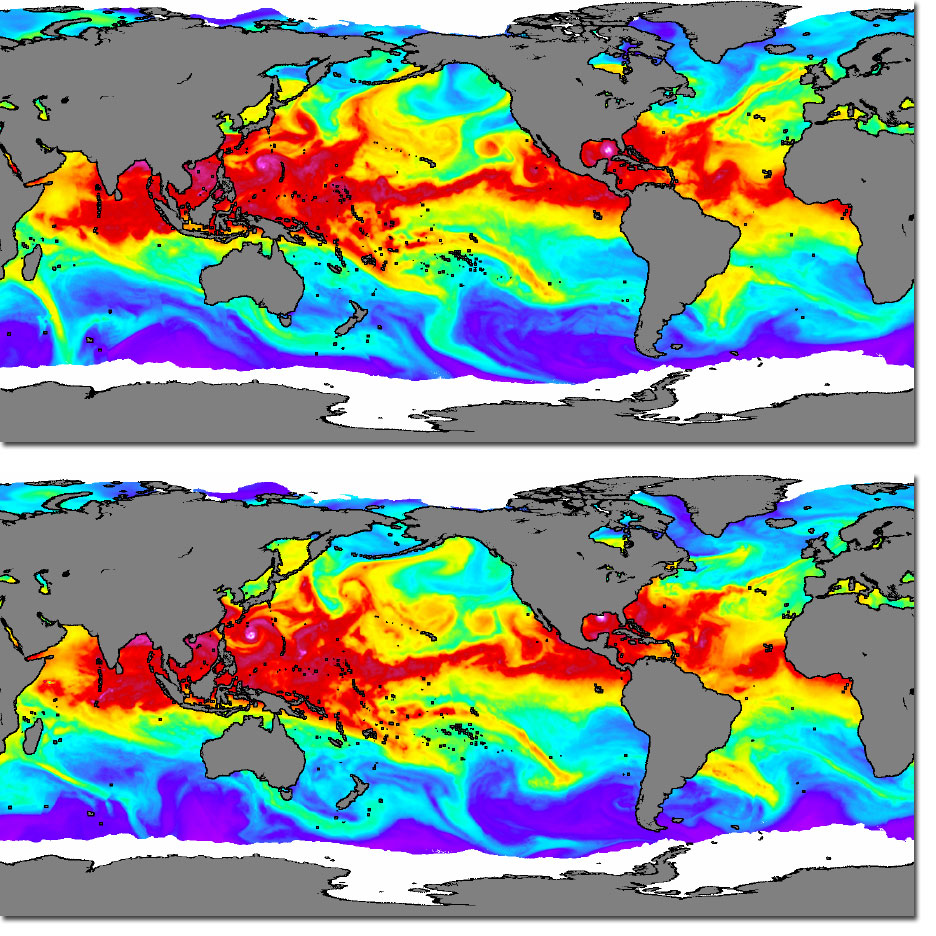
Observations and climate model results confirm that human-induced warming of the planet is having a pronounced effect on the atmosphere’s total moisture content.

“When you heat the planet, you increase the ability of the atmosphere to hold moisture,” said Benjamin Santer, lead author from Lawrence Livermore National Laboratory’s Program for Climate Modeling and Intercomparison. “The atmosphere’s water vapor content has increased by about 0.41 kilograms per cubic meter (kg/m²) per decade since 1988, and natural variability in climate just can’t explain this moisture change.

Phosgene is most famous for being part of the chemical arsenal used in the trenches during World War I - generals preferred it over chlorine because soldiers coughed less and therefore inhaled more. It was still stockpiled in military arsenals after the Second World War but its presence in the atmosphere today is due to man-made chlorinated hydrocarbons used in the chemical industry.

Phosgene still plays a major role in the preparation of pharmaceuticals, herbicides, insecticides, synthetic foams, resins and polymers.

Professor Peter Bernath of the Department of Chemistry at the University of York and a research team have carried out the first study of the global distribution of the gas.

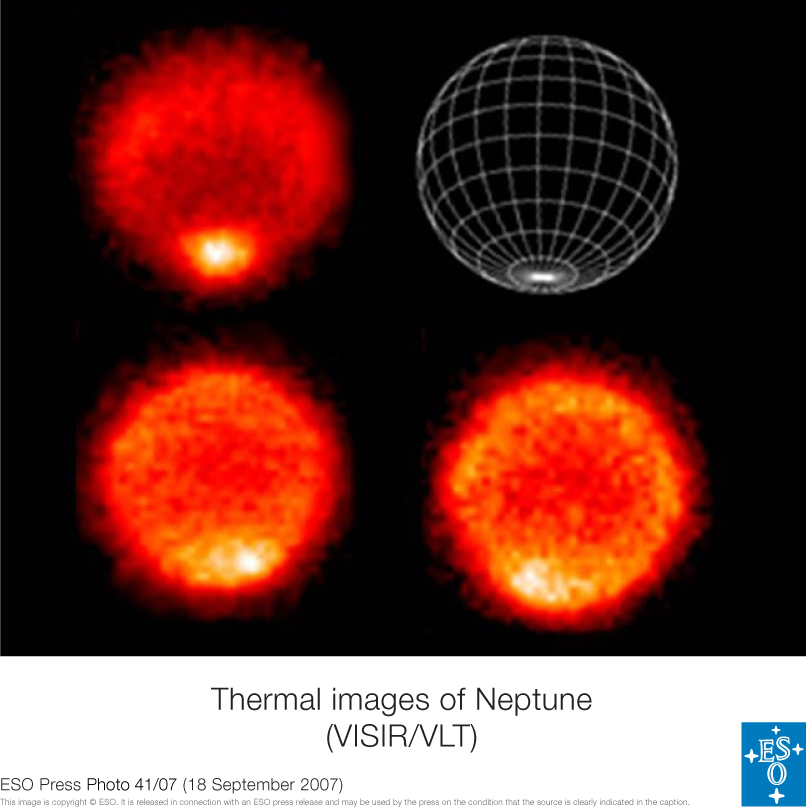
An international team of astronomers using ESO's Very Large Telescope has discovered that the south pole of Neptune is much hotter than the rest of the planet. This is consistent with the fact that it is late southern summer and this region has been in sunlight for about 40 years.

The scientists are publishing the first temperature maps of the lowest portion of Neptune's atmosphere, showing that this warm south pole is providing an avenue for methane to escape out of the deep atmosphere.

"The temperatures are so high that methane gas, which should be frozen out in the upper part of Neptune's atmosphere (the stratosphere), can leak out through this region," said Glenn Orton, lead author of the paper reporting the results.

Everyone knows that how you say something can be as important as what you say. "Framing" is the science buzzword for 2007 and, as discussed in Do scientists need to 'frame' the debate for non-scientists? framing can be used for good or evil.

Both sides of the global warming debate accuse each other of framing and even some science sites persistently use framing to advance whatever agenda they are promoting. This has led to a great deal of discussion and research.

It's been recognized that most scientists are quite ethical in their research but discussions with non-experts is more of a grey area.

The Georgia Institute of Technology and Emory University have received a $1.5 million grant from the National Science Foundation to establish "The Origins Project," a center for integrated research, education and public outreach focused on the chemistry that may have led to the origin of life.