Banner
Object-Based Processing: Numbers Confuse How We Perceive Spaces

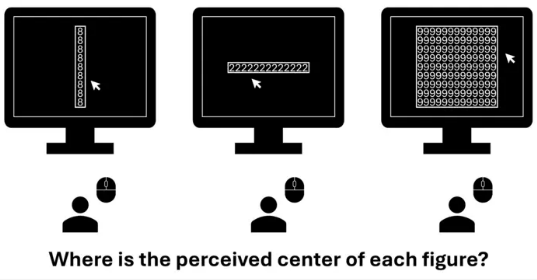
Researchers recently studied the relationship between numerical information in our vision, and...
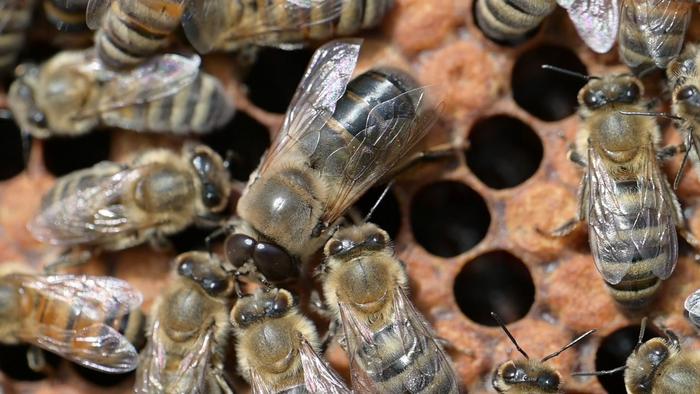
Males Are Genetically Wired To Beg Females For Food

Bees have the reputation of being incredibly organized and spending their days making sure our...

The Scorched Cherry Twig And Other Christmas Miracles Get A Science Look

Bleeding hosts and stigmatizations are the best-known medieval miracles but less known ones, like ...

$0.50 Pantoprazole For Stomach Bleeding In ICU Patients Could Save Families Thousands Of Dollars

The inexpensive medication pantoprazole prevents potentially serious stomach bleeding in critically...

User picture.
News StaffRSS Feed of this column.

News Releases From All Over The World, Right To You... Read More »

Blogroll

So vital is the p53 tumor suppressor gene in controlling cancer that its dysfunction is linked to more than half of human cancers. At the same time, the gene’s capacity for shutting down cell growth, even causing cells to commit suicide if necessary, is so absolute that it must be tightly regulated to maintain the optimal balance between protecting against cancer and permitting normal growth.

Now, a study by scientists at The Wistar Institute reveals new levels of subtlety in the body’s management of this all-important tumor suppressor gene and the protein it produces.

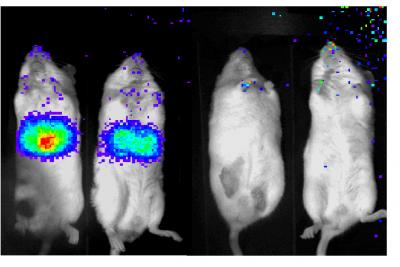
With the help of genetically engineered mice whose livers turned into glowing light bulbs, researchers at the Salk Institute for Biological Studies have illuminated the underpinnings of an insidious and growing health concern— type II diabetes.

In the study published in the September 5 advanced online edition of Nature, the researchers report that a protein called TORC2 serves as a key biochemical control point linking feeding, insulin, and elevated blood sugar production in the liver.

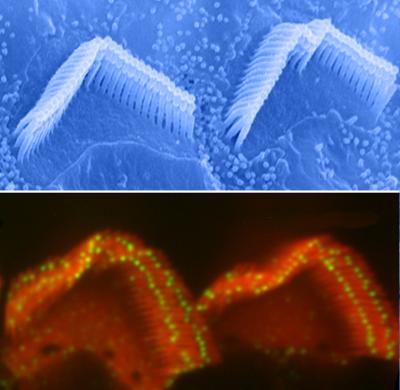
According to new research, two key proteins join together at the precise location where energy of motion is turned into electrical impulses. These proteins, cadherin 23 and protocadherin 15, are part of a complex of proteins called “tip links” that are on hair cells in the inner ear. The tip link is believed to have a central function in the conversion of physical cues into electrochemical signals.

“Mutations in [the genes] cadherin 23 and protocadherin 15 can cause deafness as well as Usher syndrome, the leading cause of deaf-blindness in humans,” says Professor Ulrich Mueller, of the Scripps Research Department of Cell Biology and Institute for Childhood and Neglected Diseases.

A new research study at Northwestern University is investigating innovative ways to rehabilitate people with lousy health habits.

Bonnie Spring, a professor of preventive medicine at Northwestern's Feinberg School of Medicine, says the way to improve eating habits is to make change as easy as possible. Her method is based on the Behavioral Economics Theory used by Nobel Prize winner Daniel Kahneman.

The study uses high-tech tools, including a specially programmed Palm Pilot to monitor eating and exercise, virtual visits with a personal coach and an accelerometer which straps around the waist to record the intensity of their movements. Participants are assigned to eat more veggies and fruits or cut down on saturated fat and are encouraged to exercise.

Cholera is an infectious disease caused by a bacterium, the bacillus Vibrio cholerae. In 2004 there were 101,383 cases - 95,000 in Africa - resulting in 2,345 deaths, according to the World Health Organization. Increases in the frequency of torrential rain, floods and periods of drought, said by some to result from global climate change, has contributed to the spread of cholera.

In studies aiming to understand better the emergence and persistence of cholera in Africa, IRD and CNRS researchers showed the strong correlation that exists between outbreaks and the different parameters linked to climate changes in West Africa.

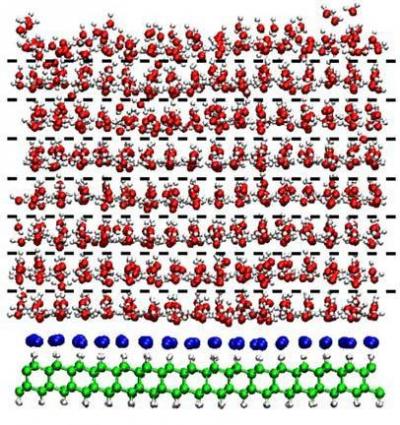
A recent simulation has shown that thin layers of ice could persist on specially treated diamond coatings at temperatures well above body temperature, which could make ice-coated-diamond films an ideal coating for artificial heart valves, joint replacements, and wear-resistant prosthetics.

Physicists Alexander D. Wissner-Gross and Efthimios Kaxiras of Harvard modeled water ice on top of a diamond surface coated with sodium ions. They found that ice layers should persist on the treated diamond up to temperatures of 108 degrees Fahrenheit (42 Celsius), and in some circumstances could remain frozen beyond the boiling point of water.